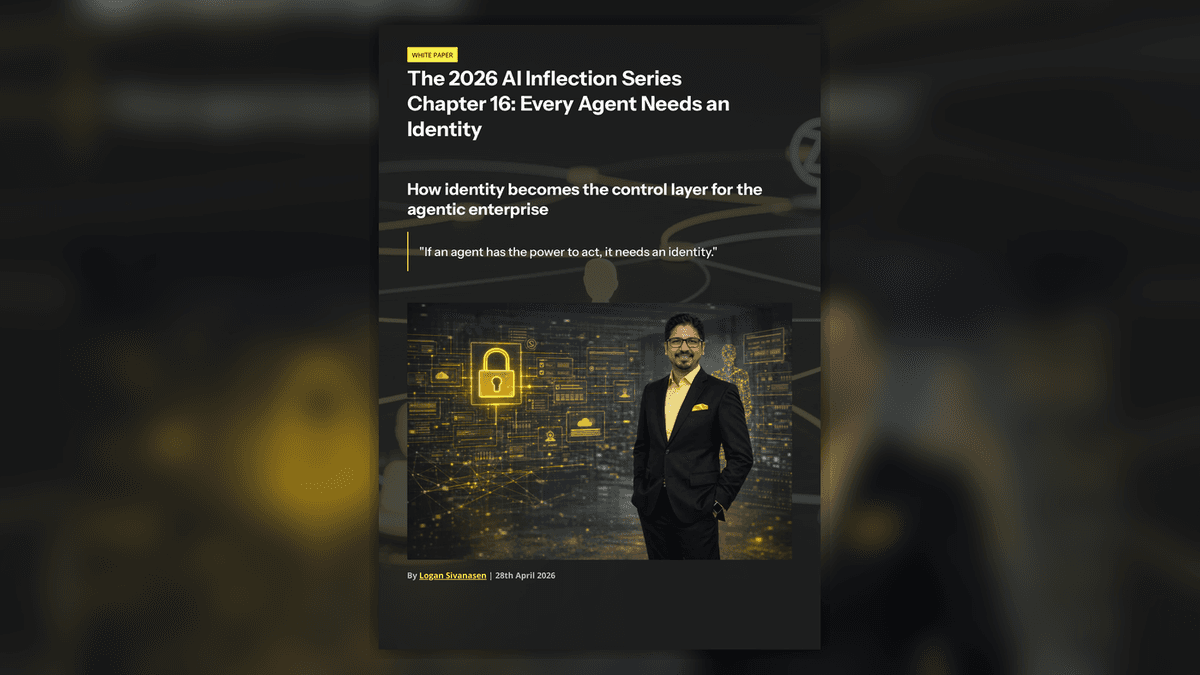
White Paper: The 2026 AI Inflection - Chapter 16: Every Agent Needs an Identity
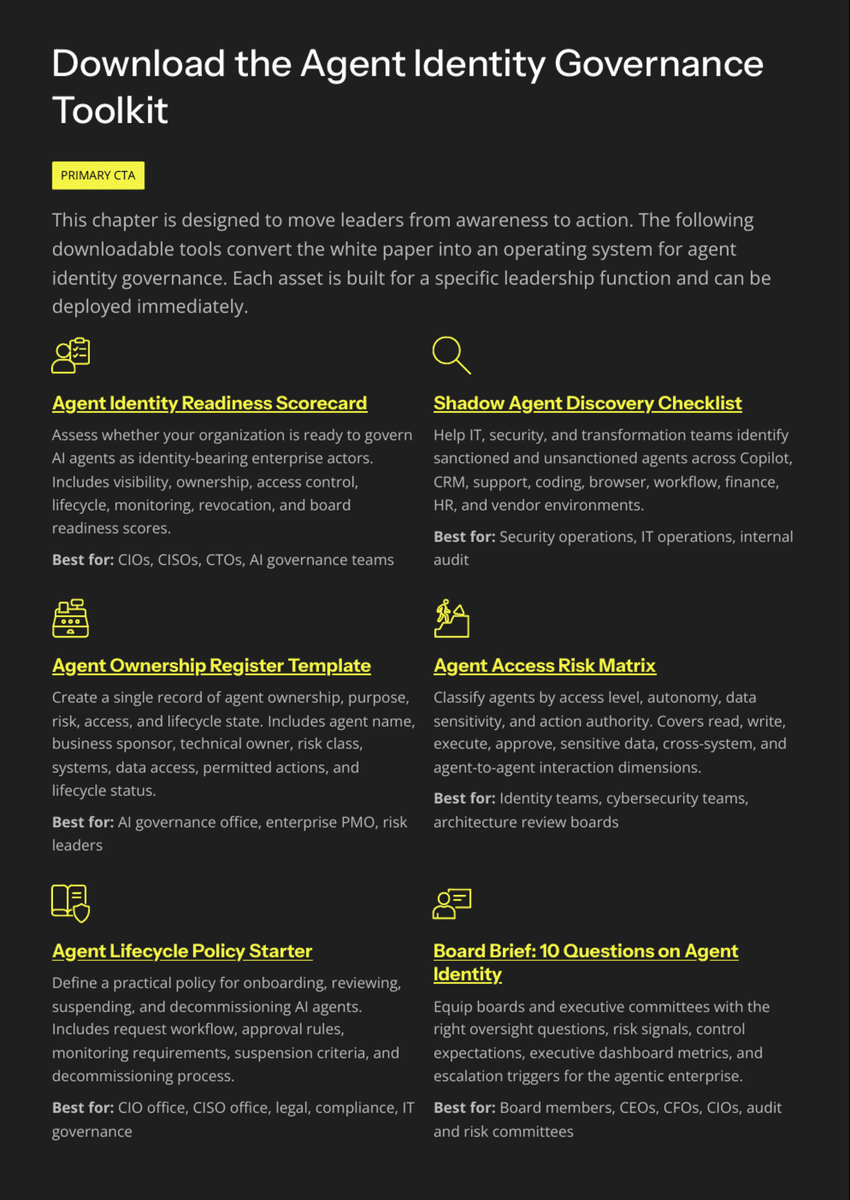
A 16-page white paper arguing that agent identity is becoming the control layer for the agentic enterprise. Synthesizes guidance from Microsoft Entra, Okta, IBM, McKinsey, and OWASP to show how identity, ownership, permissions, and audit become the foundation for safely scaling agentic AI.
Author / Lead
2026-04-28
Overview
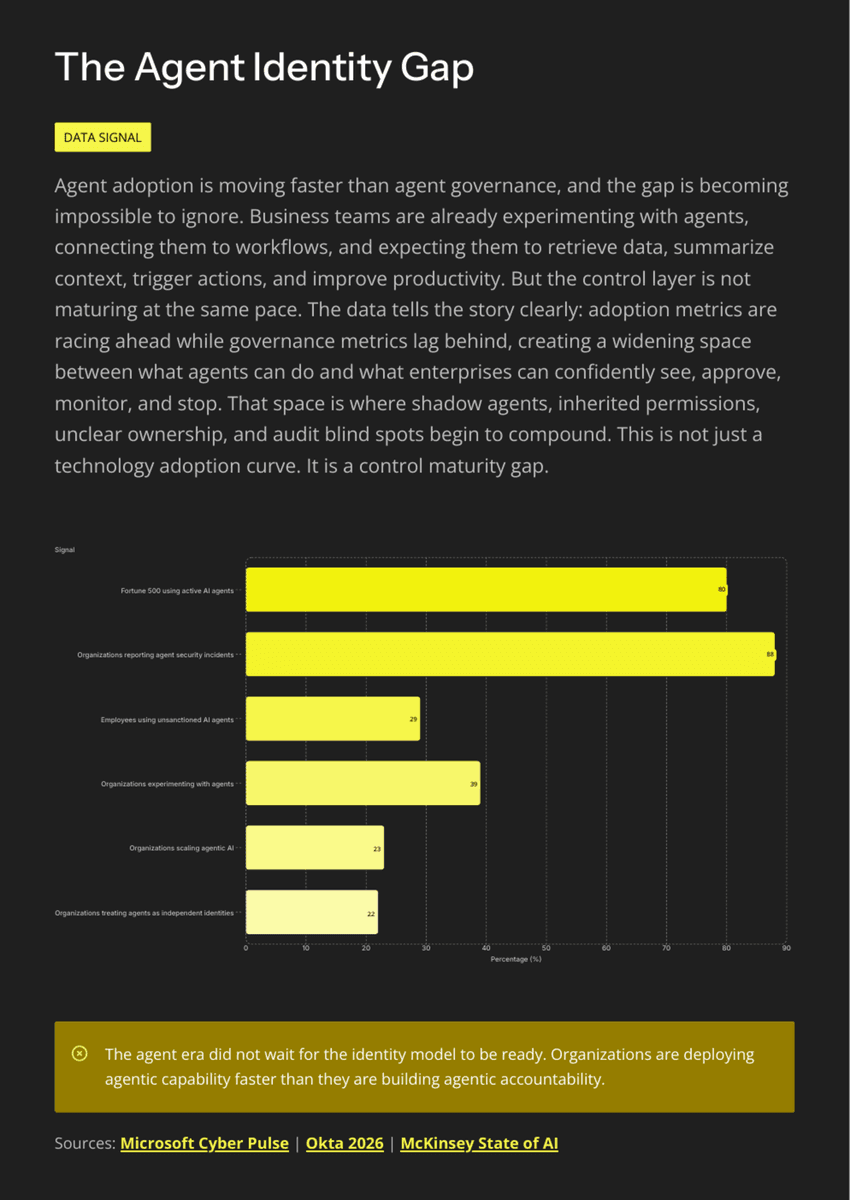
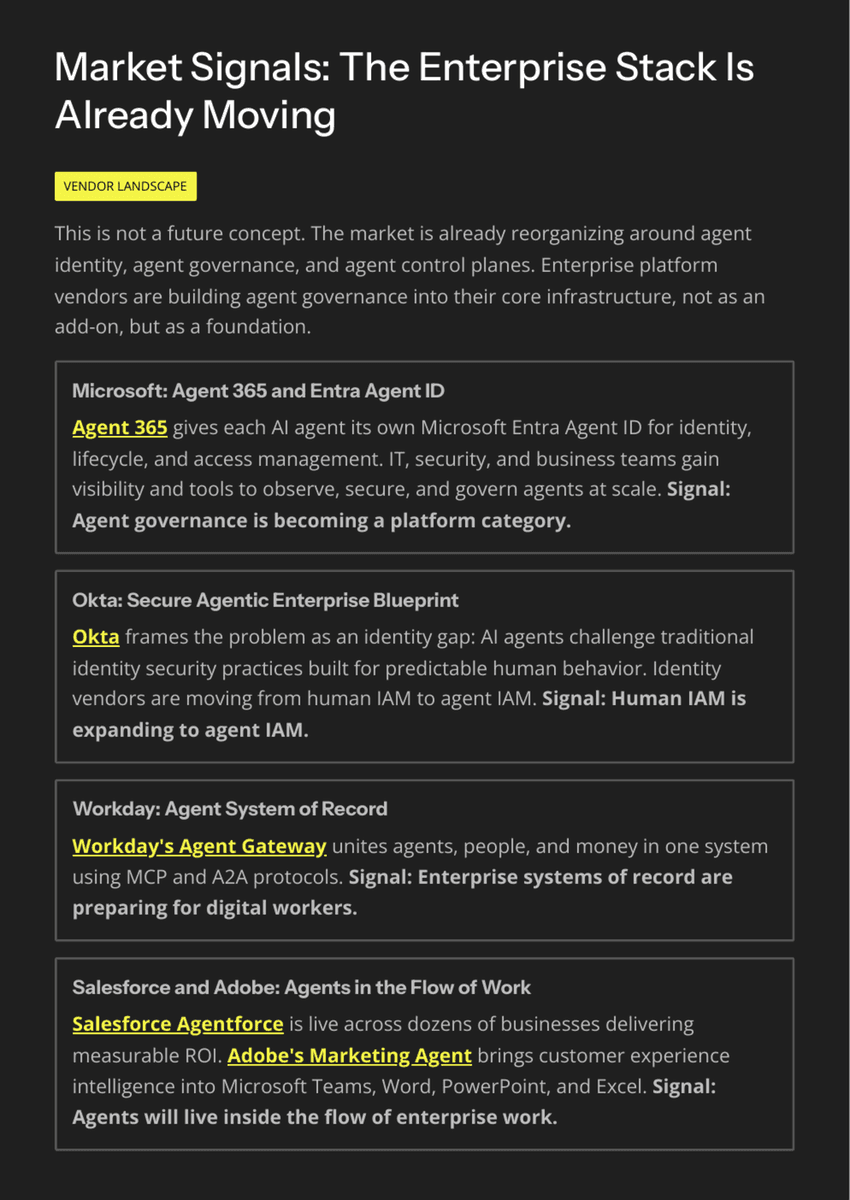
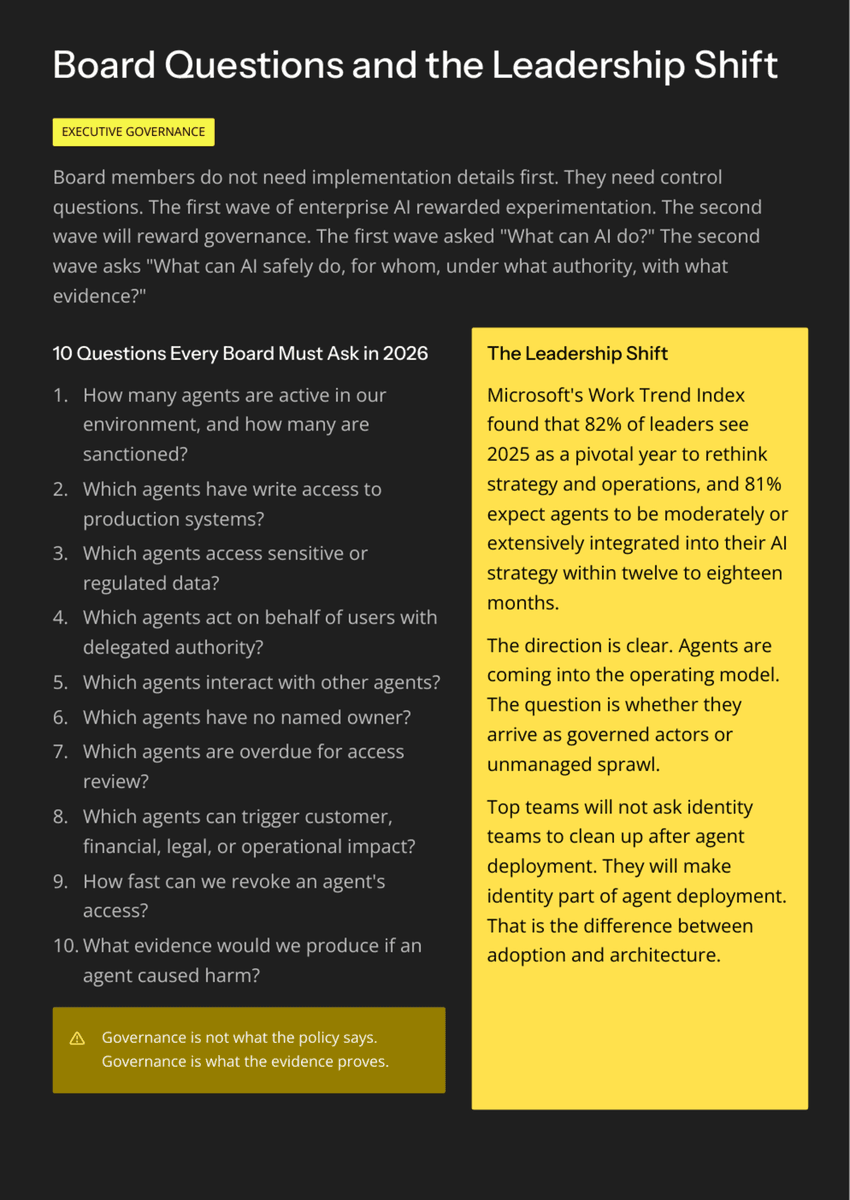
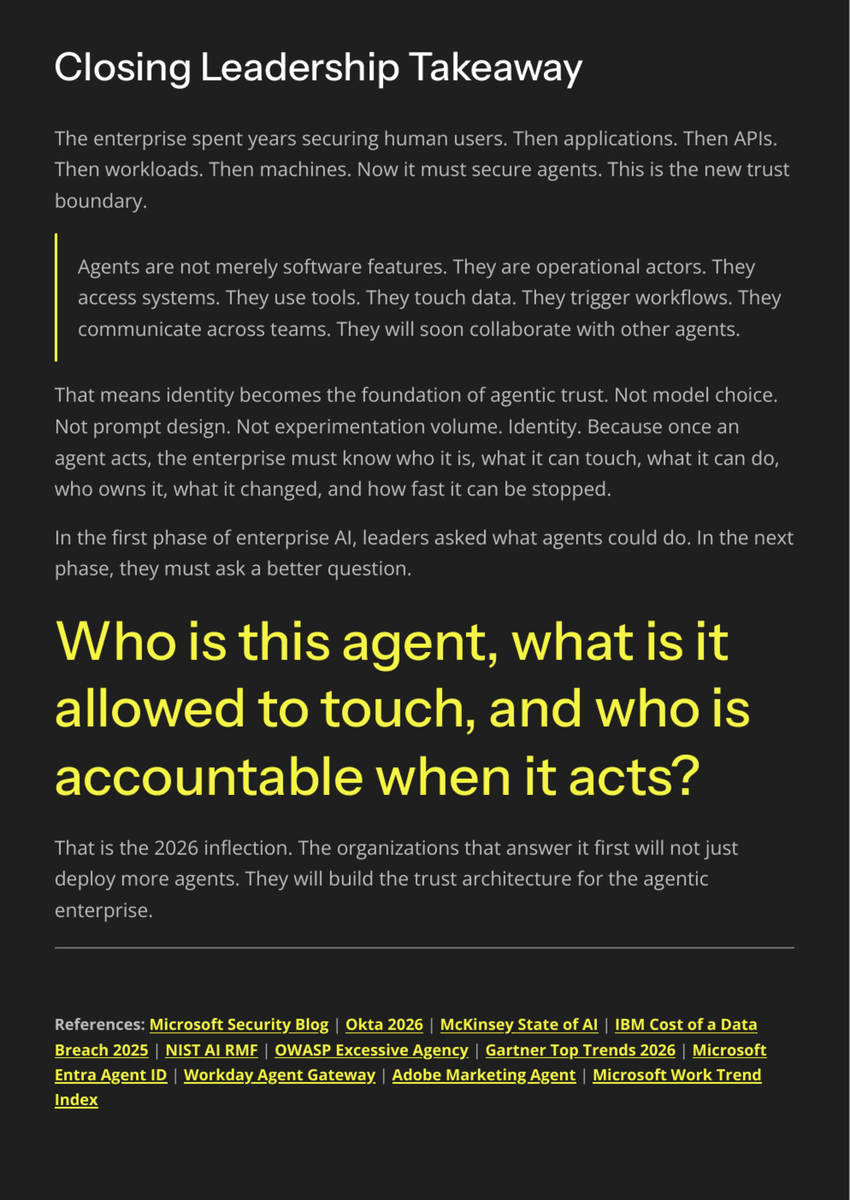
If an agent has the power to act, it needs an identity. Microsoft↗ now describes AI agents as systems that perceive, decide, and act, requiring identity-based controls across human and nonhuman identities. More than 80% of Fortune 500 companies are running active AI agents, while 29% of employees use unsanctioned ones. Okta↗ reports 88% of organizations have suspected or confirmed AI agent security incidents, yet only 22% treat agents as independent, identity-bearing entities. IBM's 2025 Cost of a Data Breach↗ found one in five breaches now stem from shadow AI.
Case Study
The Challenge
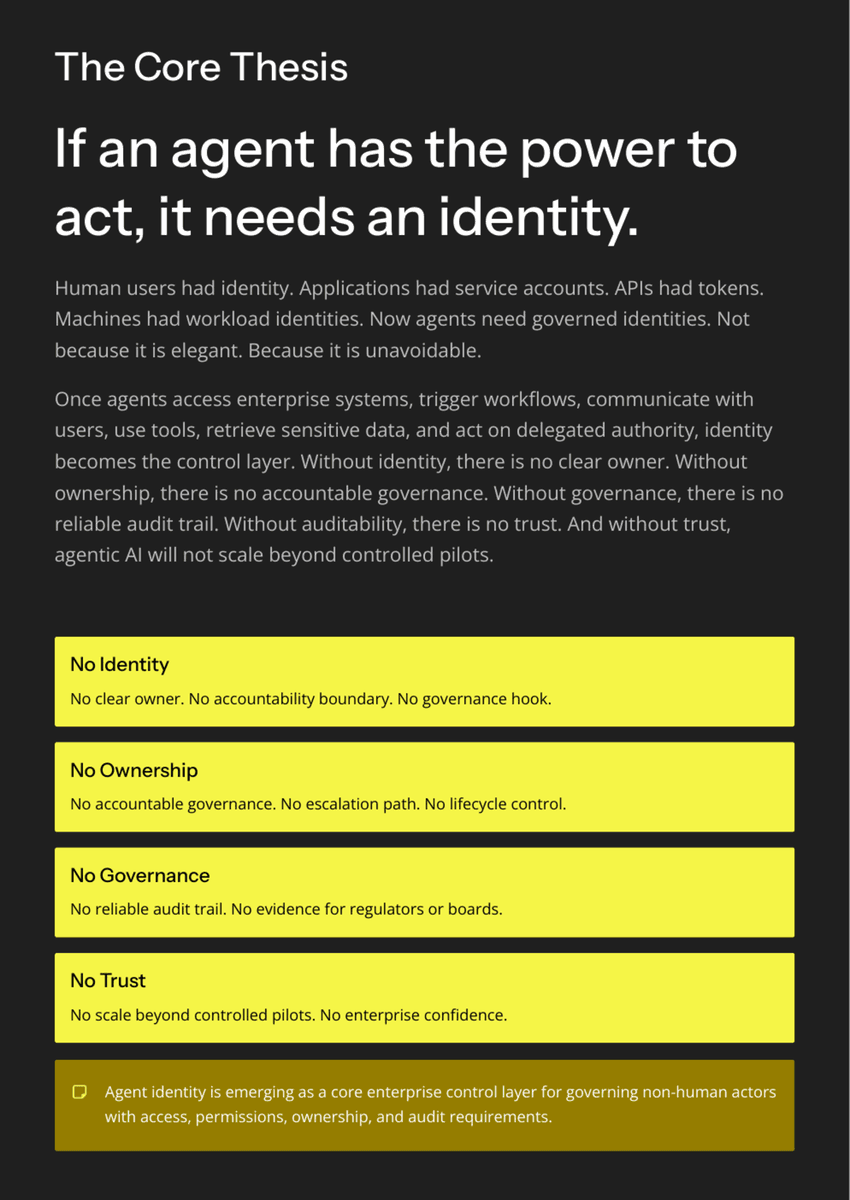
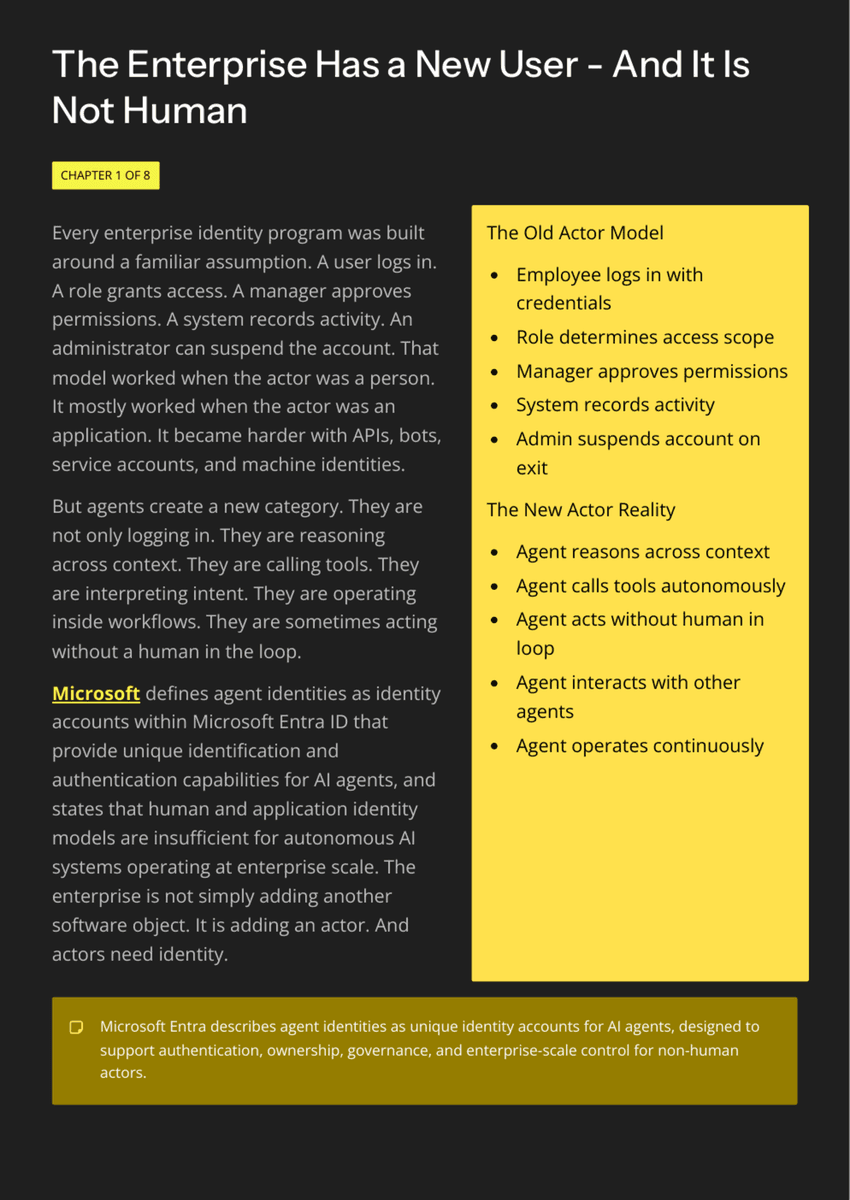
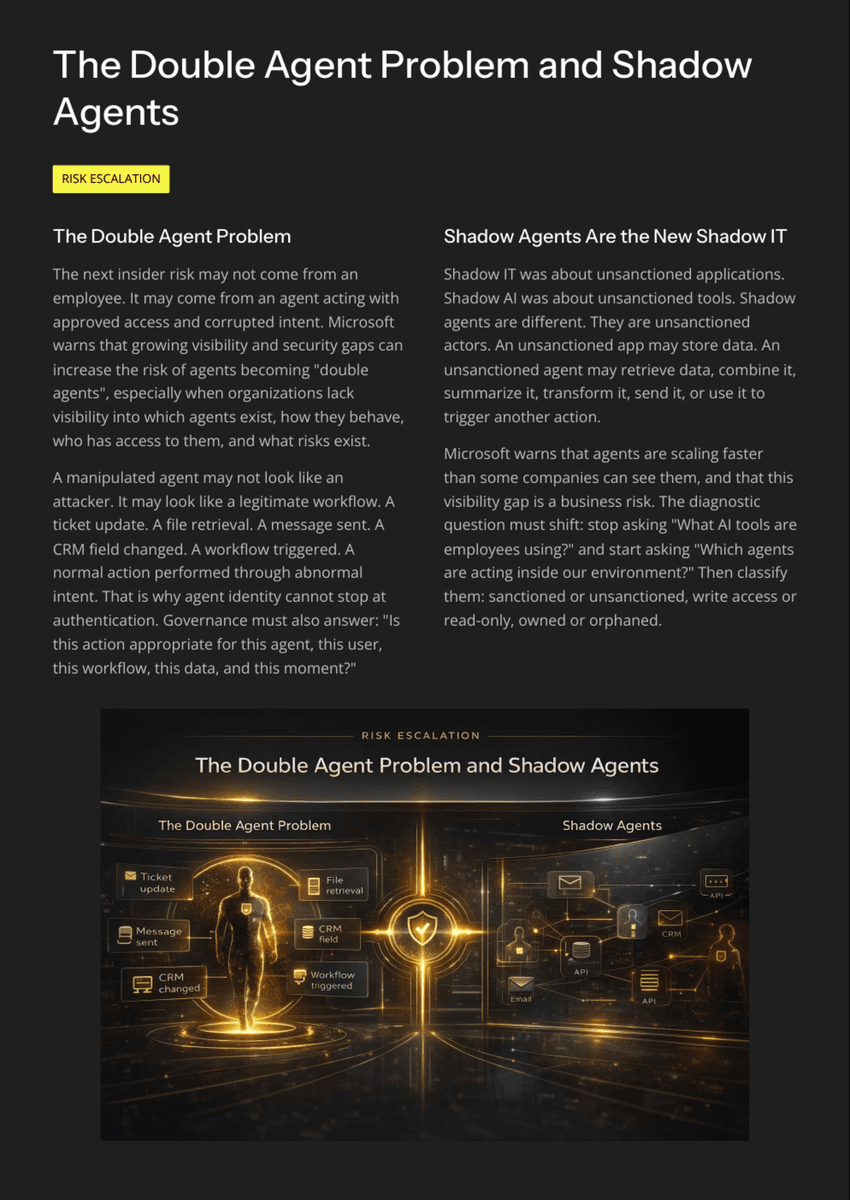
Every enterprise identity program was built around employees, applications, APIs, and machines. AI agents break that model. They reason across context, call tools, interpret intent, operate inside workflows, and sometimes act without a human in the loop. Yet only 22% of organizations treat agents as independent, identity-bearing entities (Okta↗). The result: shadow agents, inherited permissions, unclear ownership, and audit blind spots compound silently. Microsoft↗ warns that visibility and security gaps can turn agents into 'double agents' acting with approved access and corrupted intent.
The Solution
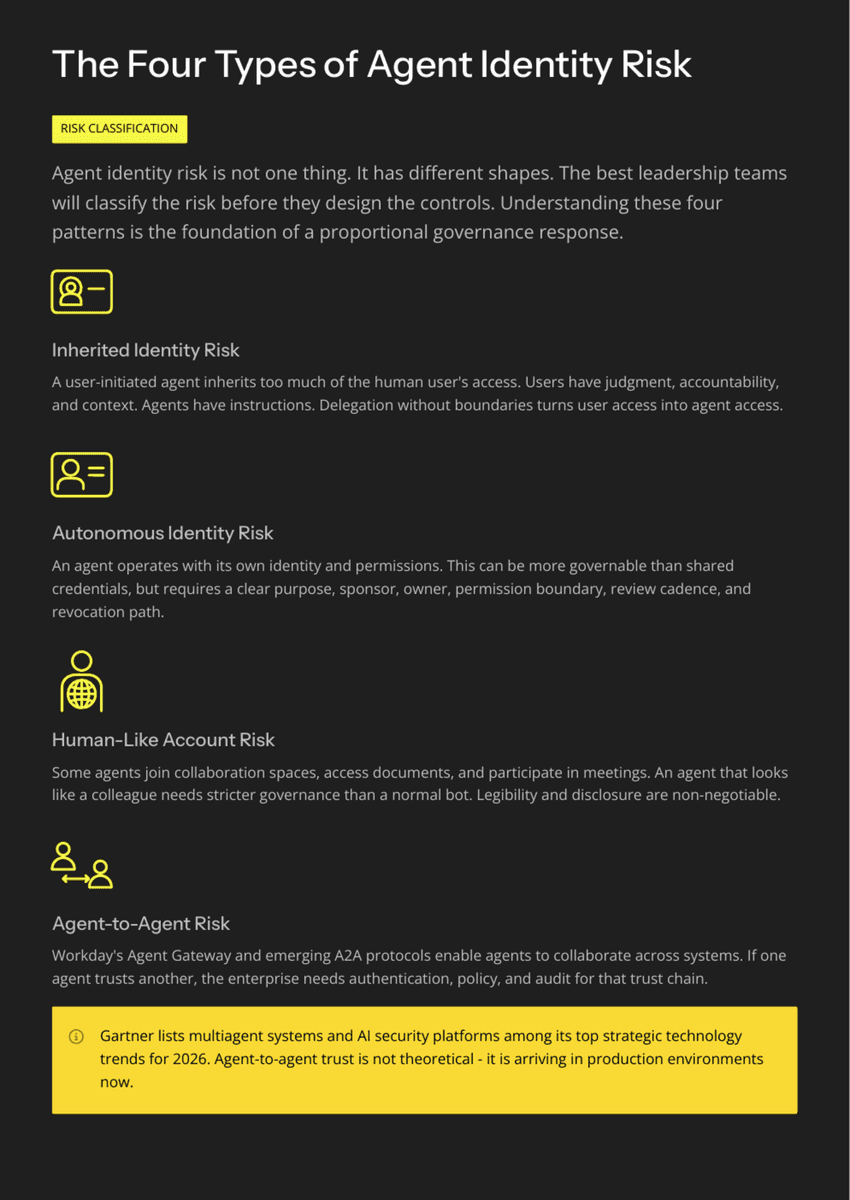
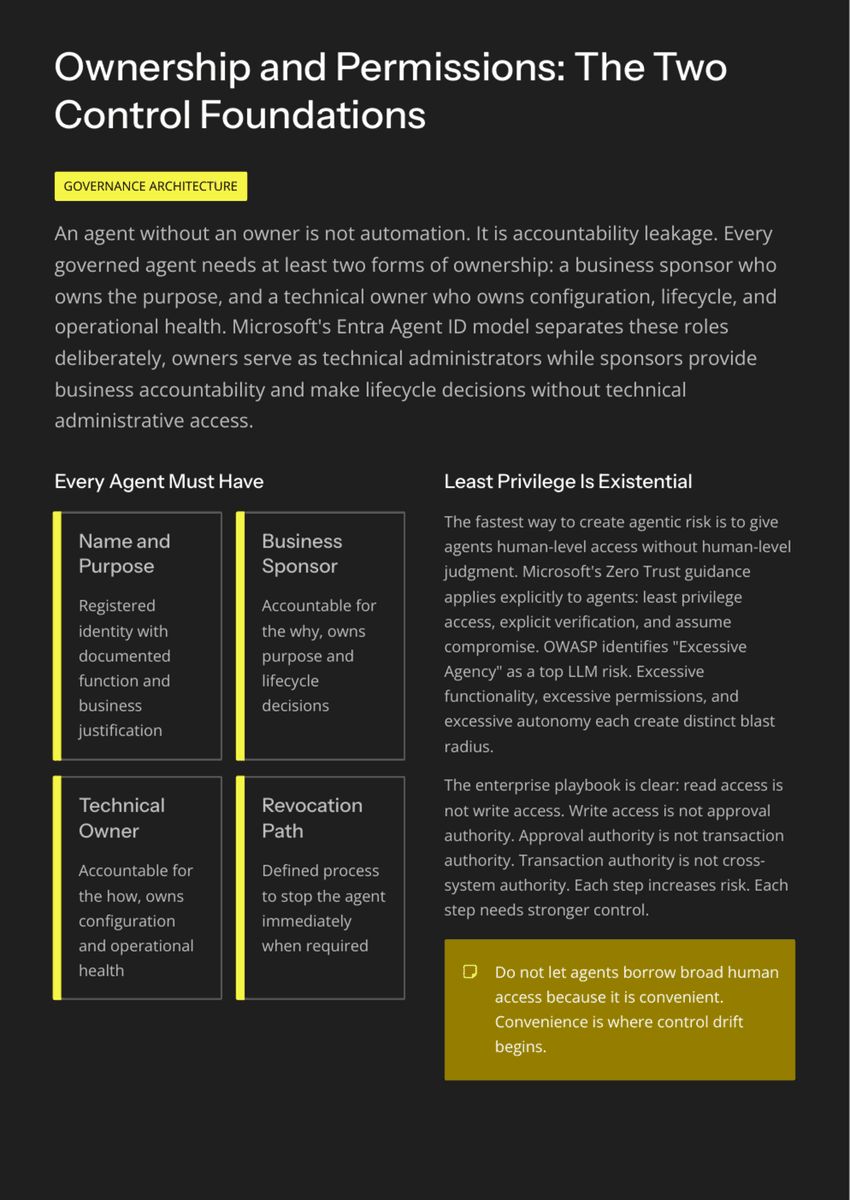
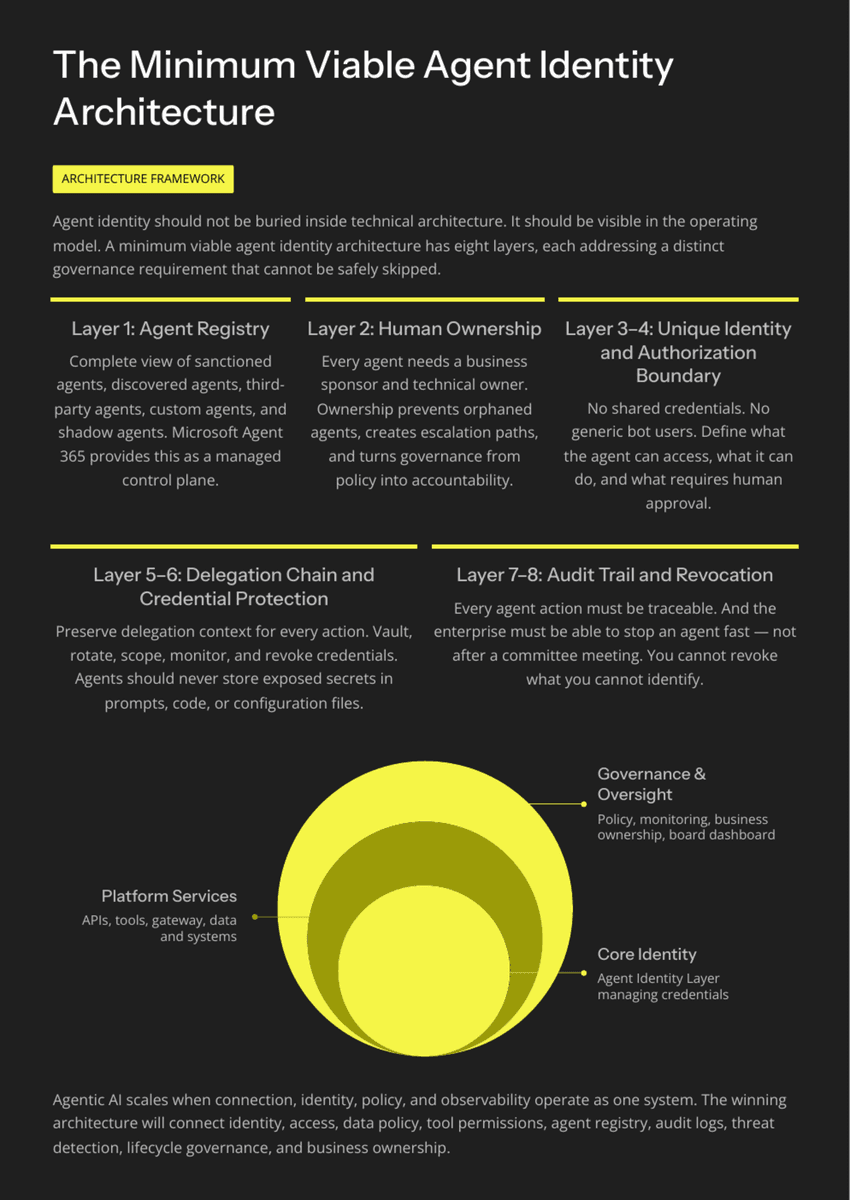
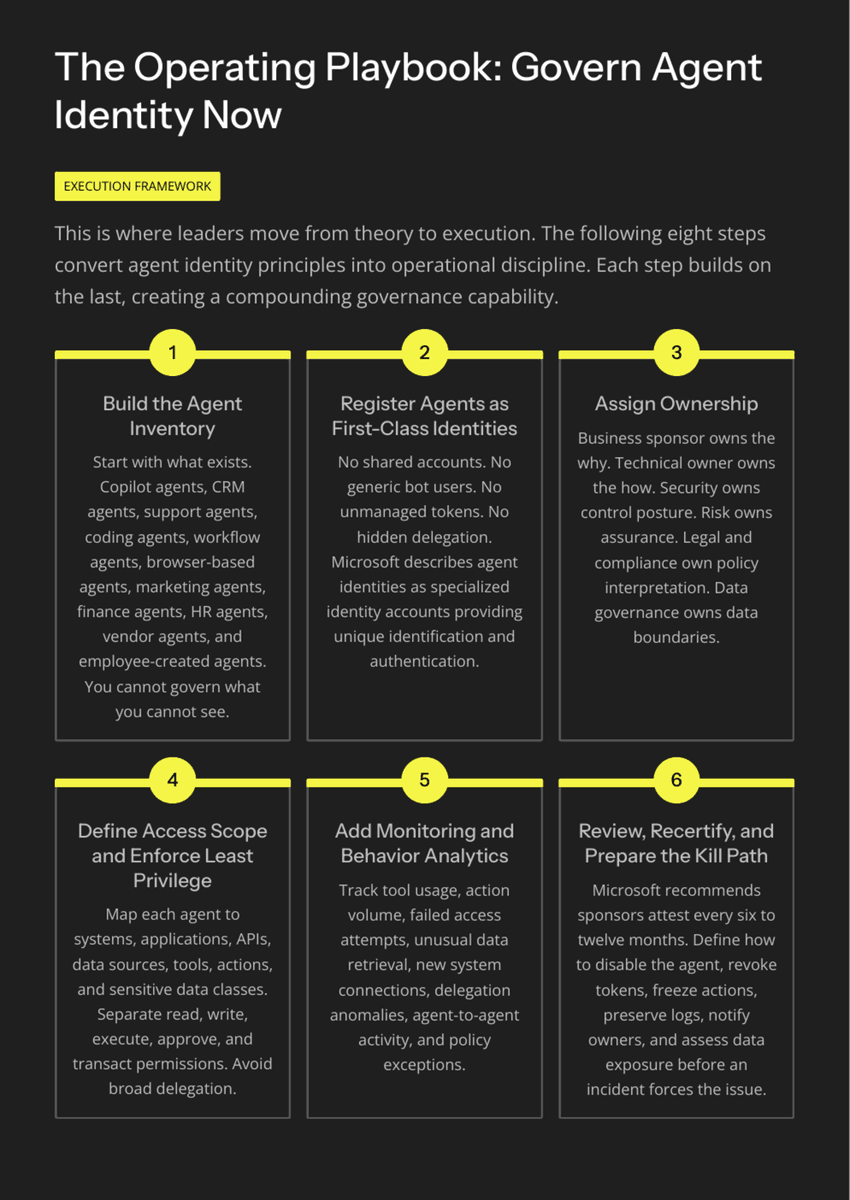
Mapped the four types of agent identity risk: Inherited (user-initiated agents inherit too much human access), Autonomous (agents with their own permissions need clear sponsor and revocation paths), Human-Like Account (agents joining collaboration spaces need disclosure), and Agent-to-Agent (trust chains require authentication and audit per Gartner↗). Defined the dual-ownership model from Microsoft Entra Agent ID↗ (business sponsor for purpose, technical owner for lifecycle) and applied OWASP Excessive Agency↗ principles for least-privilege scoping. Built a Zero Trust governance frame with registry discipline, policy enforcement, and continuous activity visibility.
Key Results
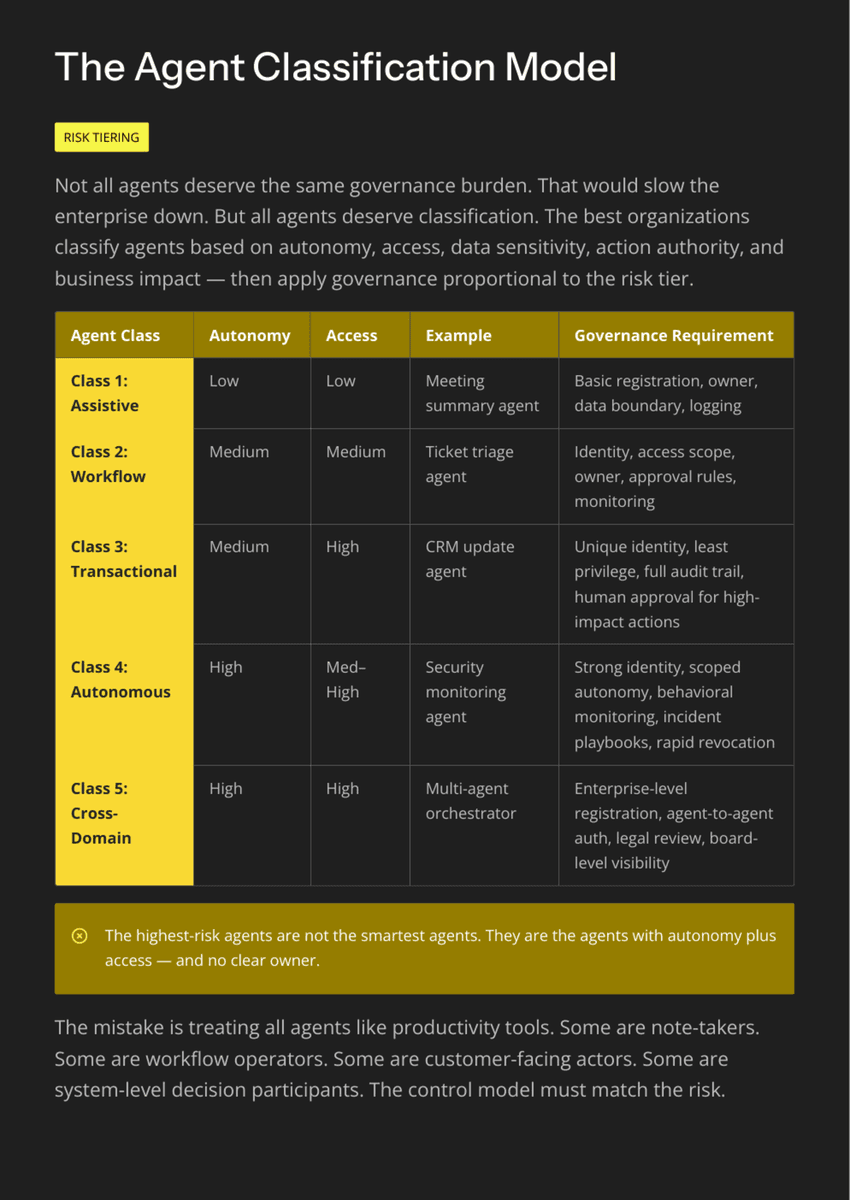
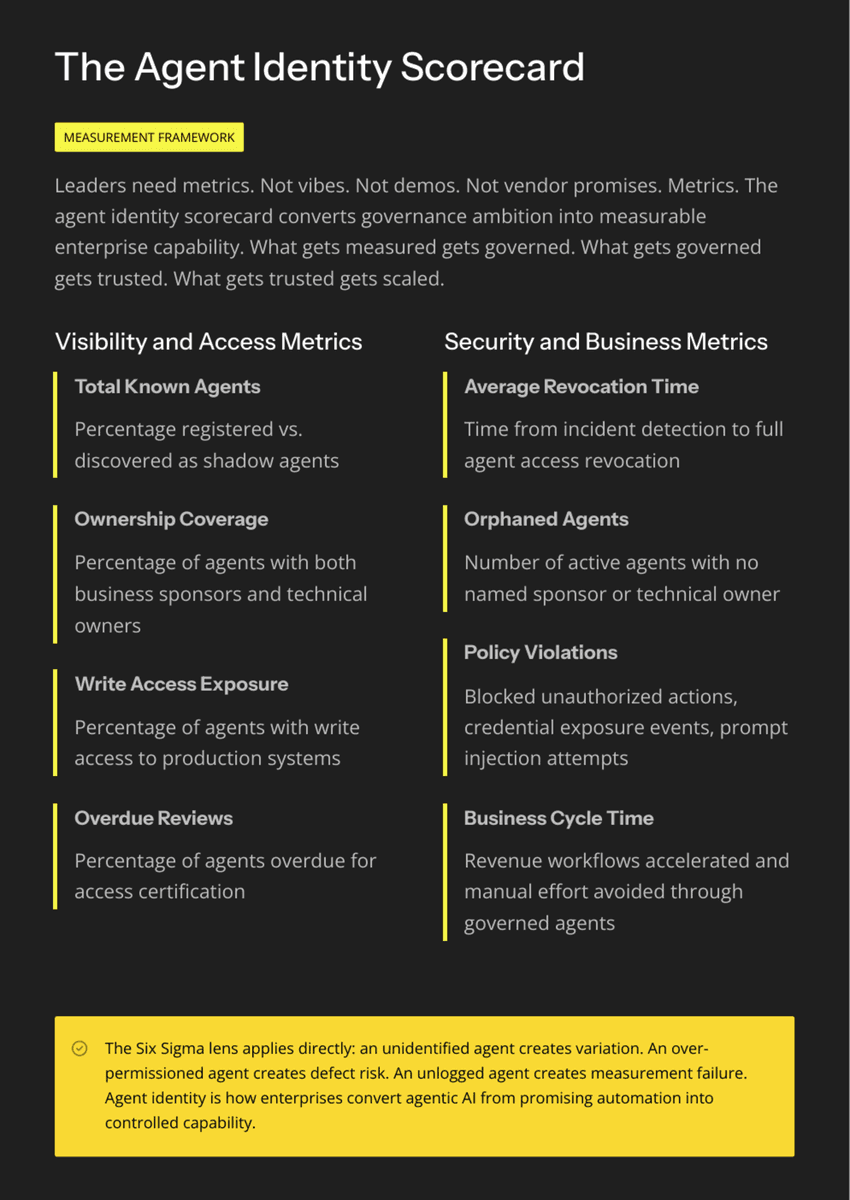
4 distinct agent identity risk categories with proportional control patterns
Risk Classification
Dual-owner architecture: business sponsor + technical owner per Microsoft Entra Agent ID
Ownership Model
Zero Trust applied to agents: least privilege, explicit verification, assume compromise
Governance Frame
80%+ of Fortune 500 already running active AI agents (Microsoft Cyber Pulse)
Adoption Reality
Key Takeaways
16
Pages
4
Risk Categories
88%
Orgs With Agent Incidents
22%
Treat Agents as Identities
View Document
Download or Open in New Tab to access the links to download or access the tools / templates or research materials within the document.


Responsibilities
- Authored the full white paper on agent identity as the new enterprise control layer
- Classified the four types of agent identity risk: Inherited, Autonomous, Human-Like Account, and Agent-to-Agent
- Mapped the Double Agent Problem and the rise of Shadow Agents as the next insider risk category
- Defined the dual-ownership model (business sponsor + technical owner) and least-privilege architecture for agents
- Synthesized Microsoft Entra Agent ID, Okta agent identity research, and OWASP Excessive Agency guidance into a unified framework
Outcomes
16
Pages
4
Risk Categories
88%
Orgs With Agent Incidents
22%
Treat Agents as Identities