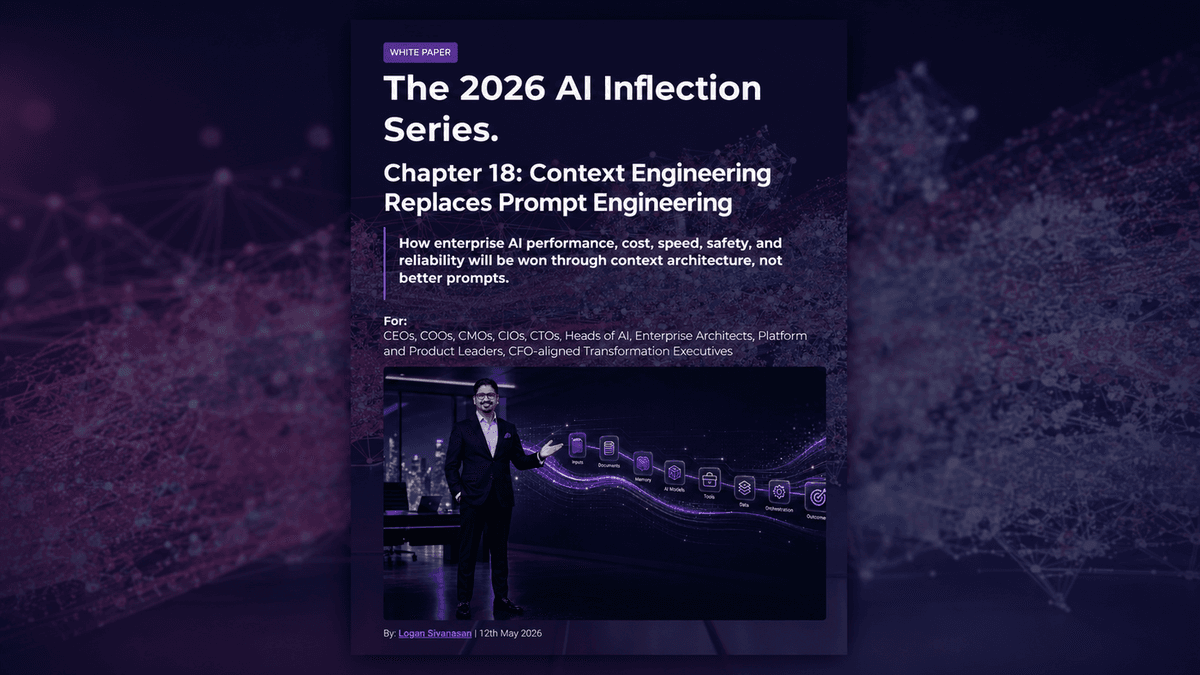
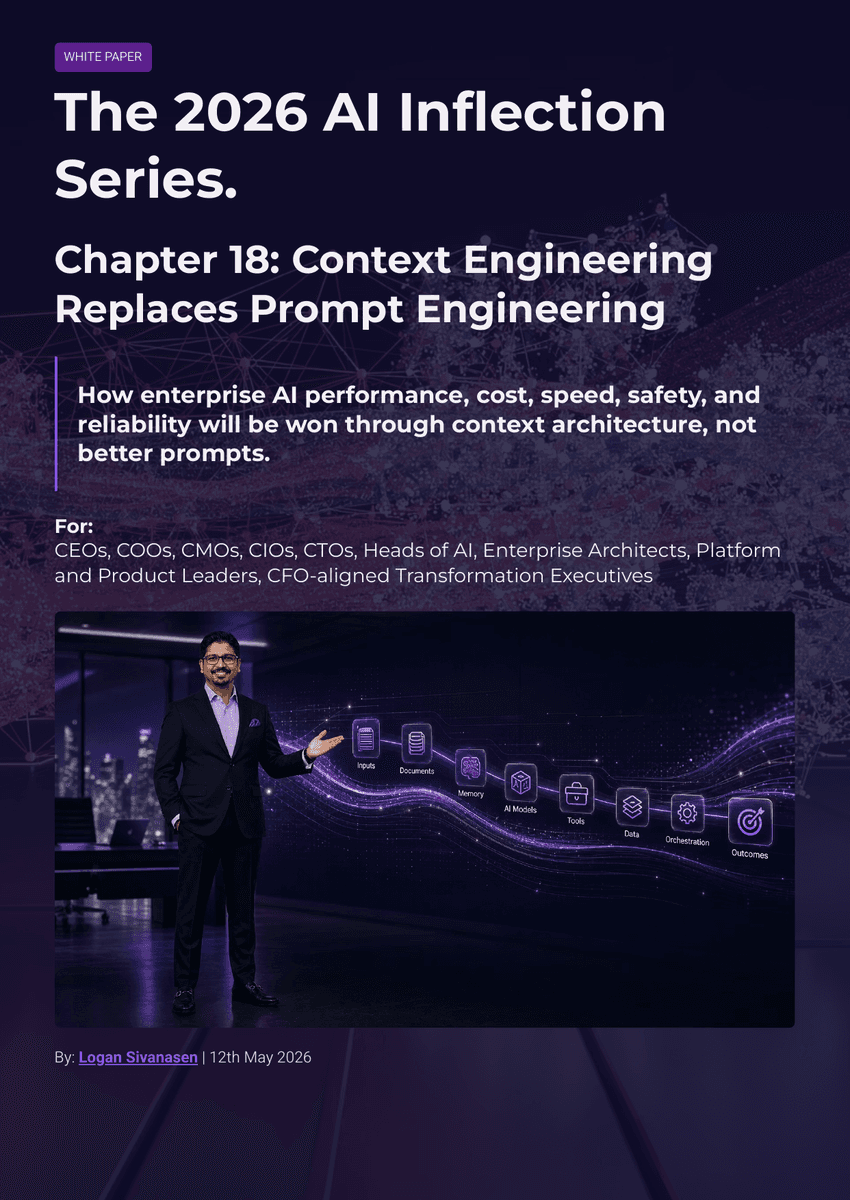
The 2026 AI Inflection Series - Chapter 18: Context Engineering Replaces Prompt Engineering
A white paper on how enterprise AI performance, cost, speed, safety, and reliability will be won through context architecture, not better prompts. Written for CEOs, COOs, CMOs, CIOs, CTOs, Heads of AI, Enterprise Architects, Platform and Product Leaders, and CFO-aligned Transformation Executives.
Author / Lead
2026-05-12
Overview
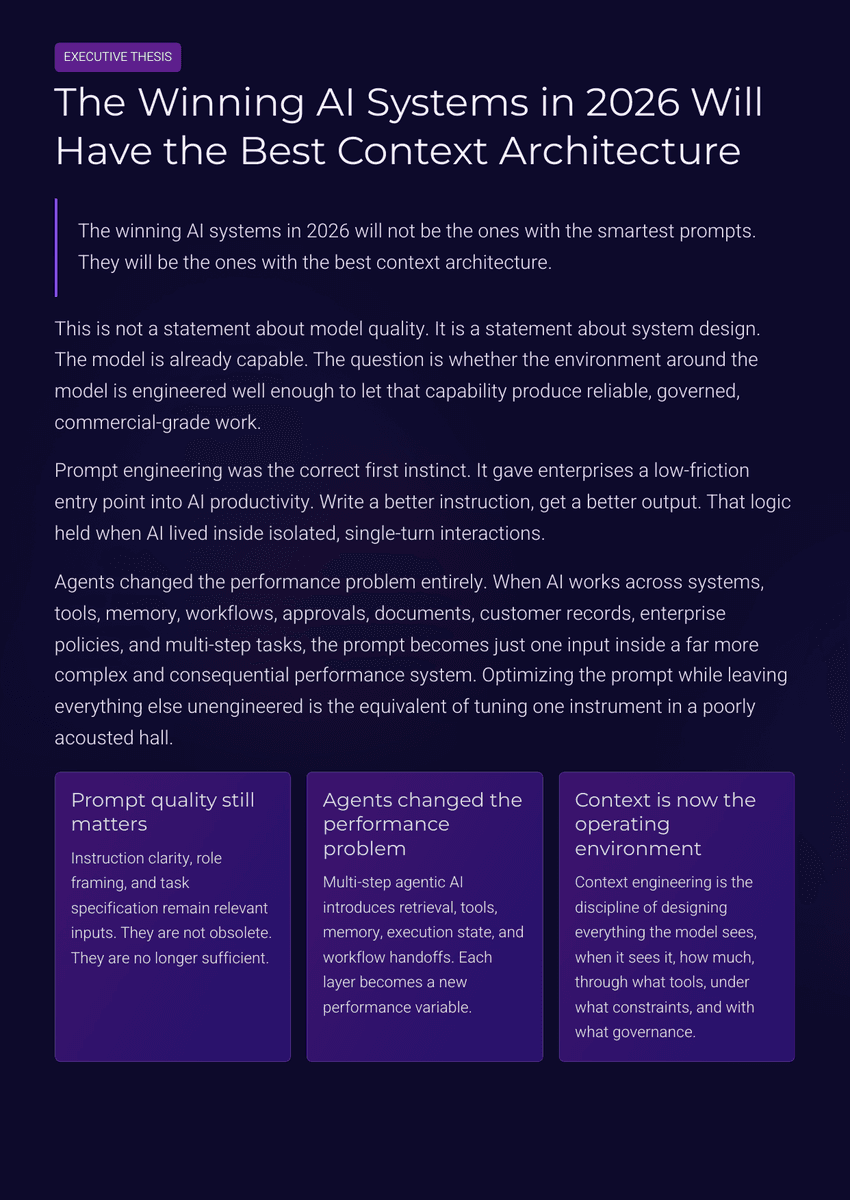
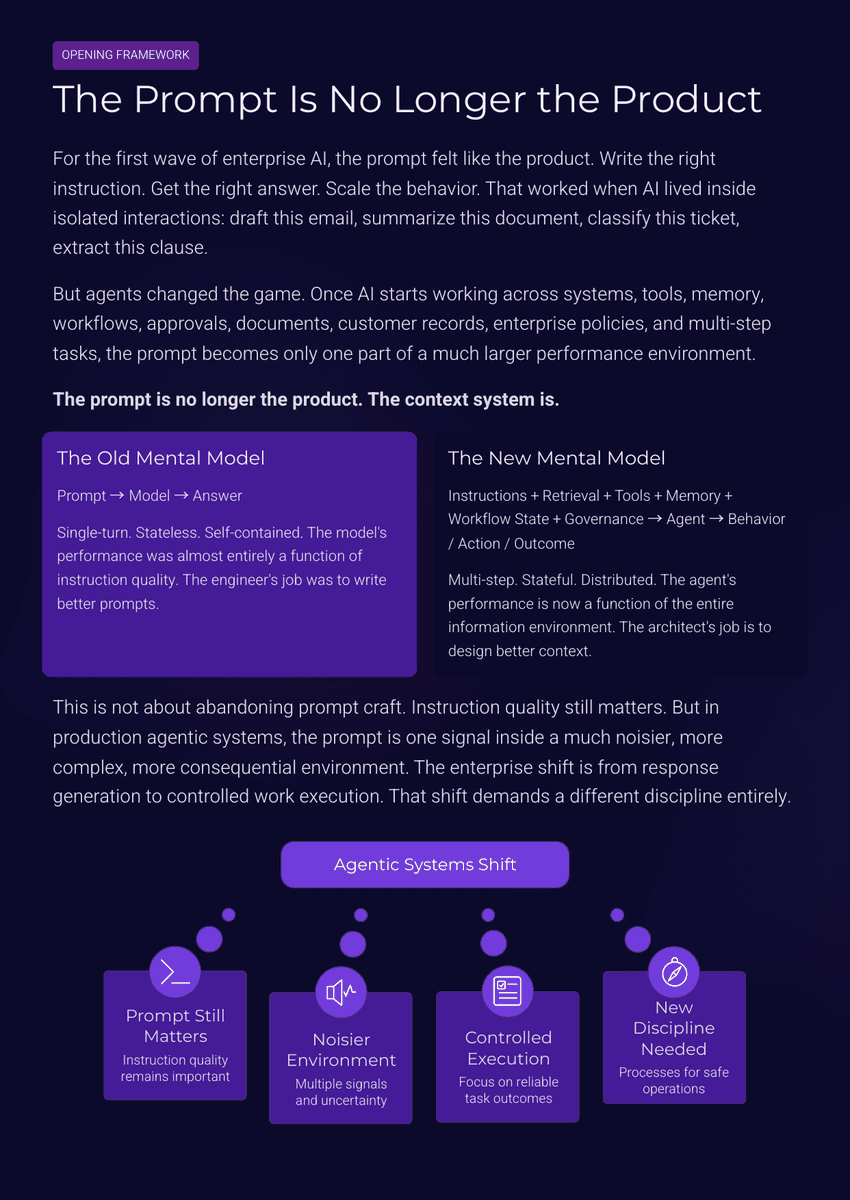
The winning AI systems in 2026 will not be the ones with the smartest prompts. They will be the ones with the best context architecture. This chapter sets out the seven layers of context engineering, the economics of context as a CFO-level design variable, the governance case for context boundaries, and a leadership scorecard for measuring context quality across enterprise AI programs.
Case Study
The Challenge
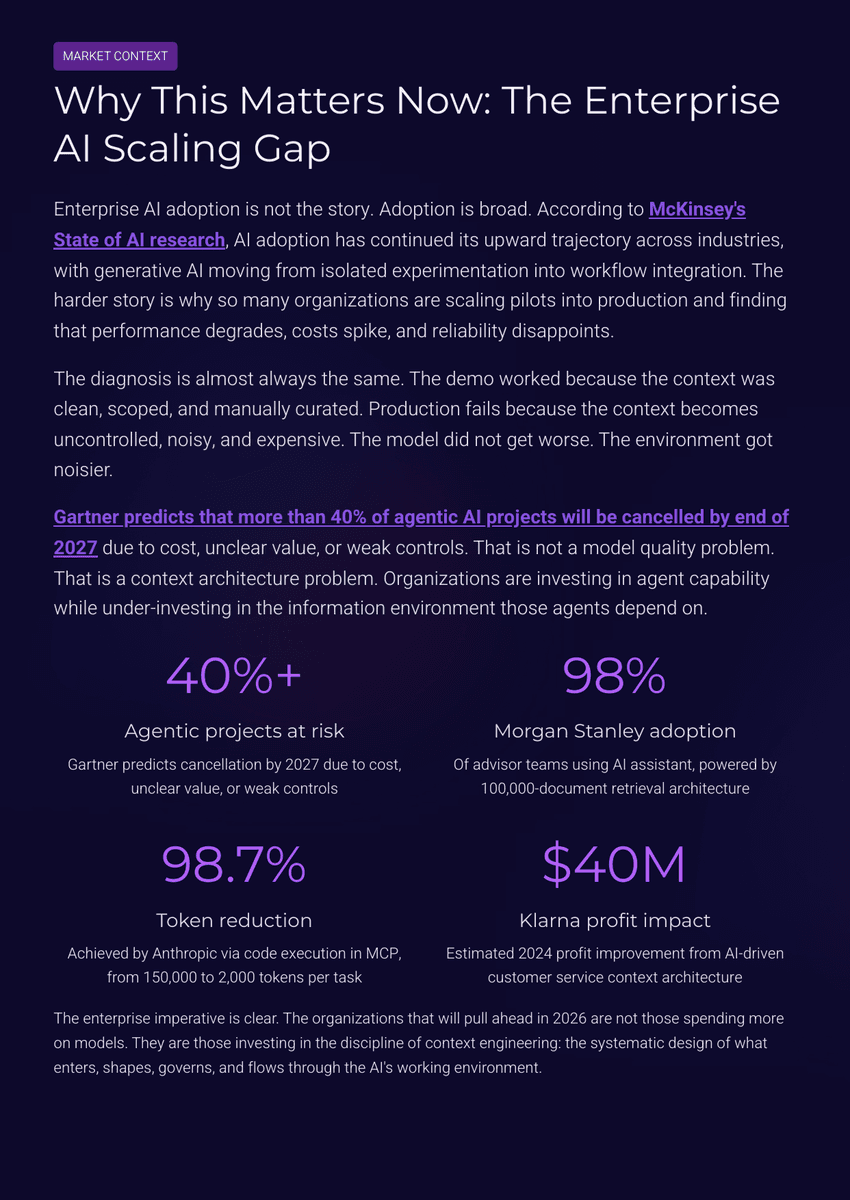
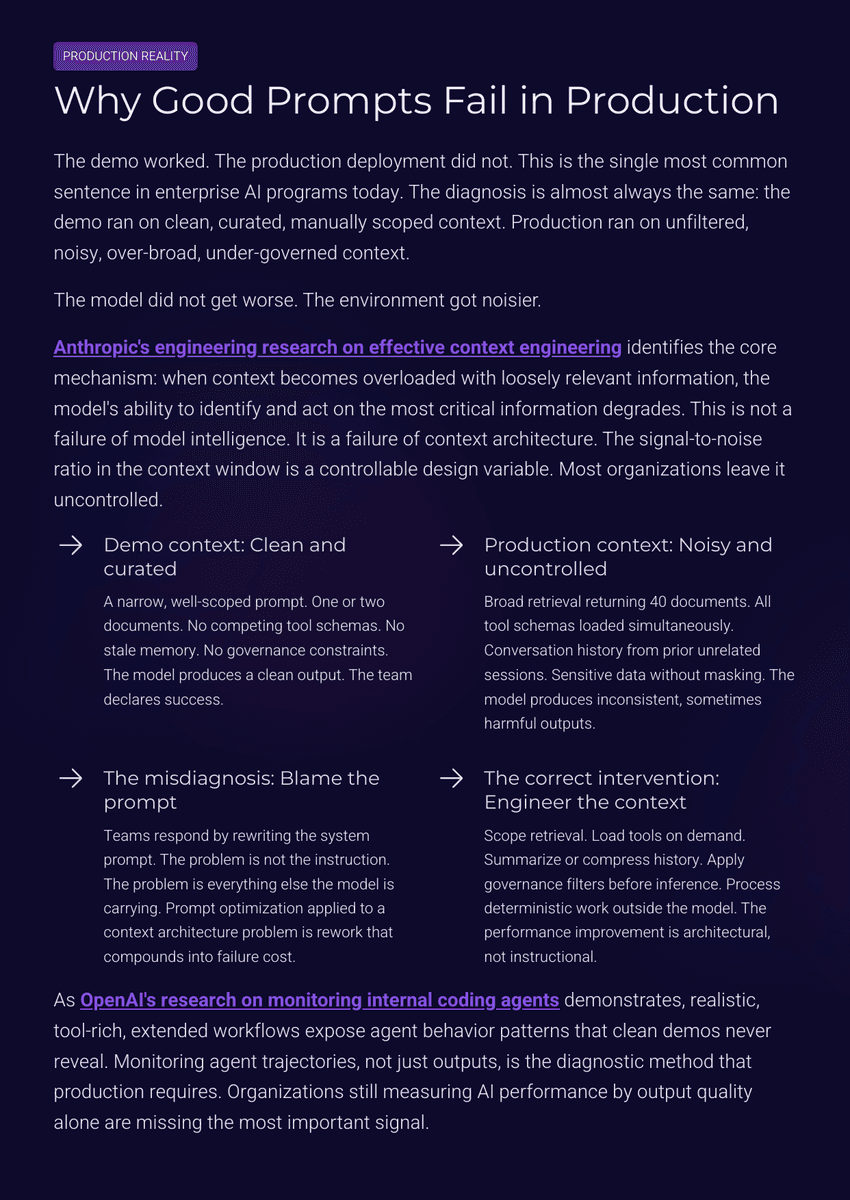
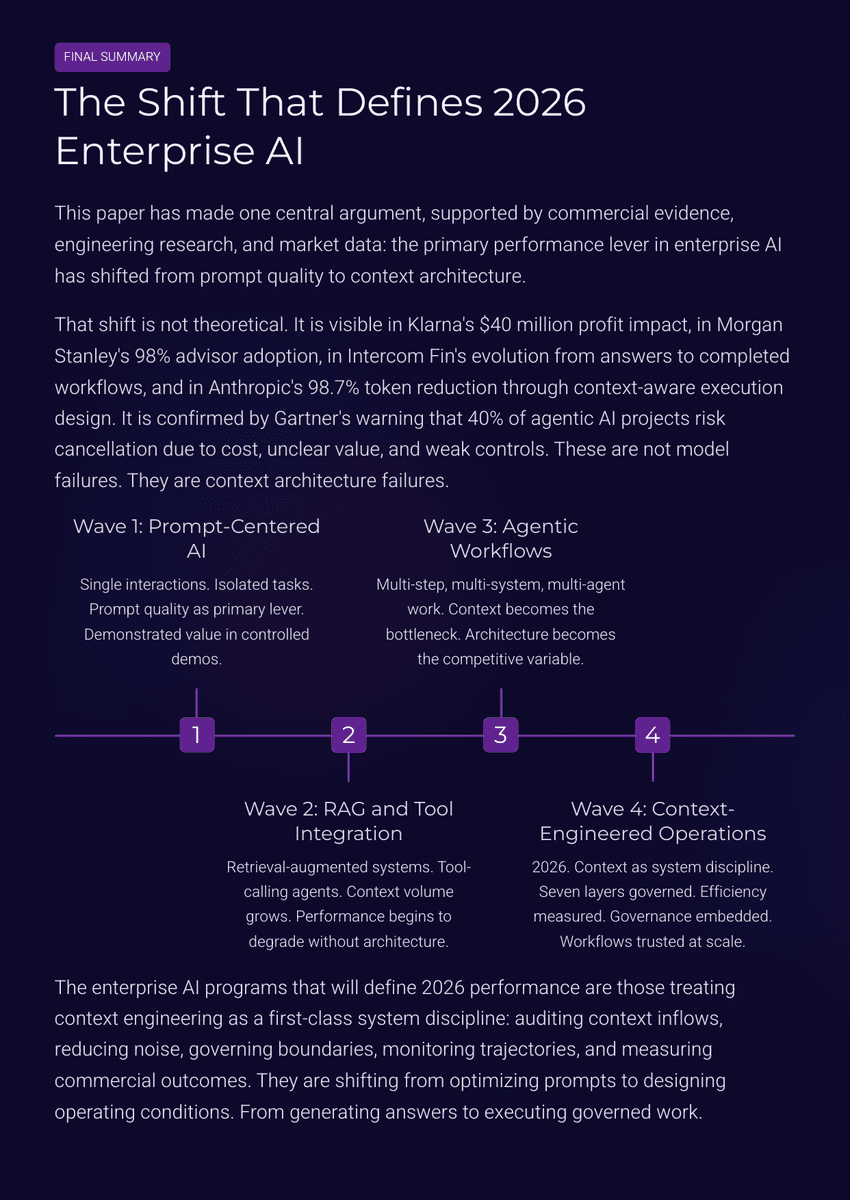
Enterprise AI pilots demo cleanly and fail in production. Gartner expects more than 40% of agentic AI projects to be cancelled by end of 2027 on cost, unclear value, or weak controls. The diagnosis is consistent: organizations invest in models and prompts while leaving the information environment around the model unengineered, noisy, and uncontrolled.
The Solution
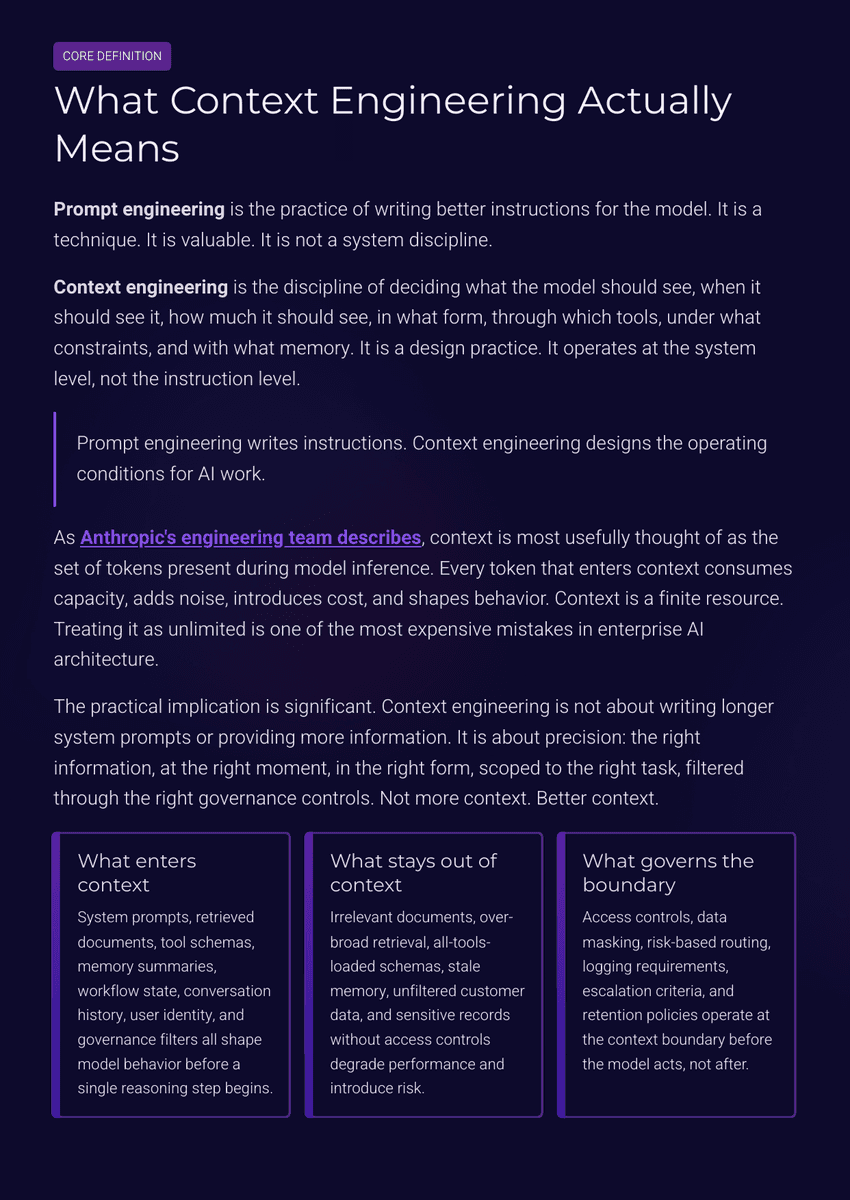
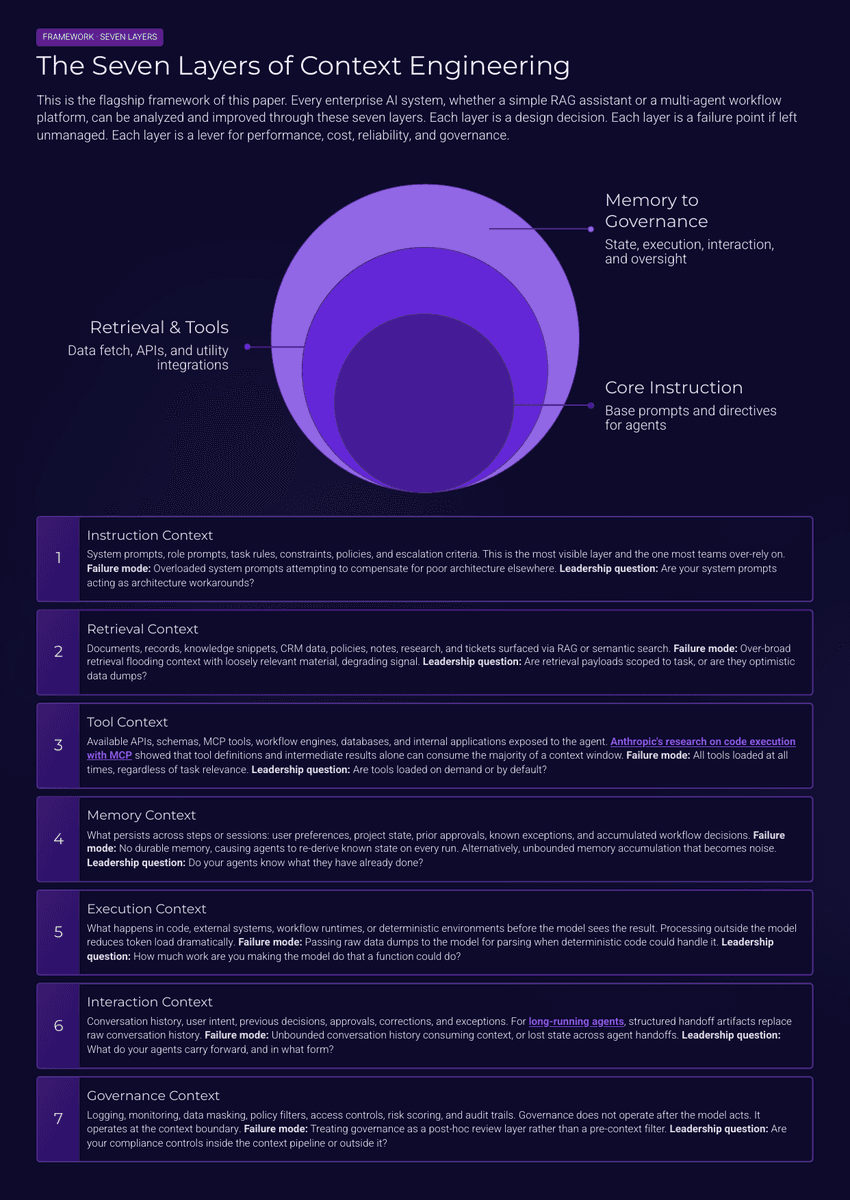
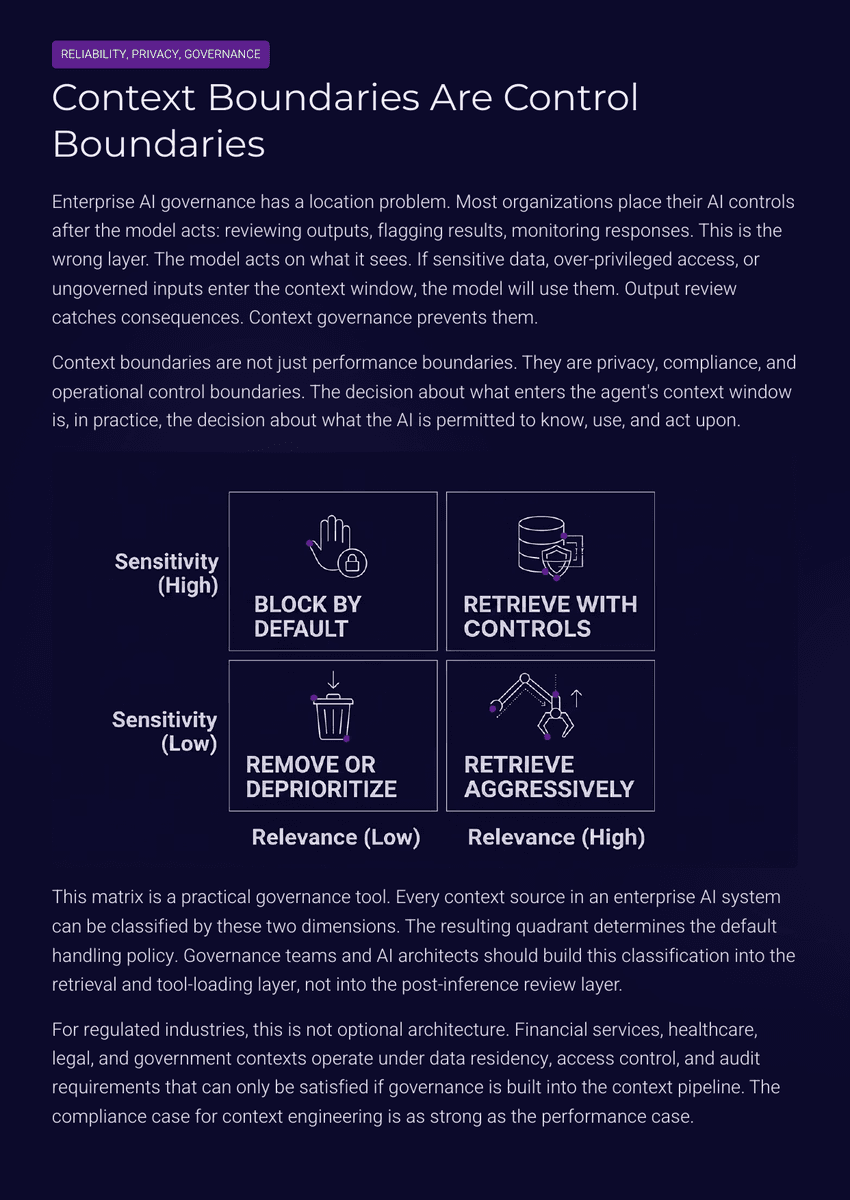
Set out context engineering as a system discipline across seven layers (instruction, retrieval, tool, memory, execution, interaction, governance), with a CFO-level view of context economics, a risk-based governance matrix at the context boundary, and a leadership scorecard that brings context efficiency and commercial impact into the same report as model performance.
Key Results
7 context layers defined as design and failure points across enterprise AI systems
Framework
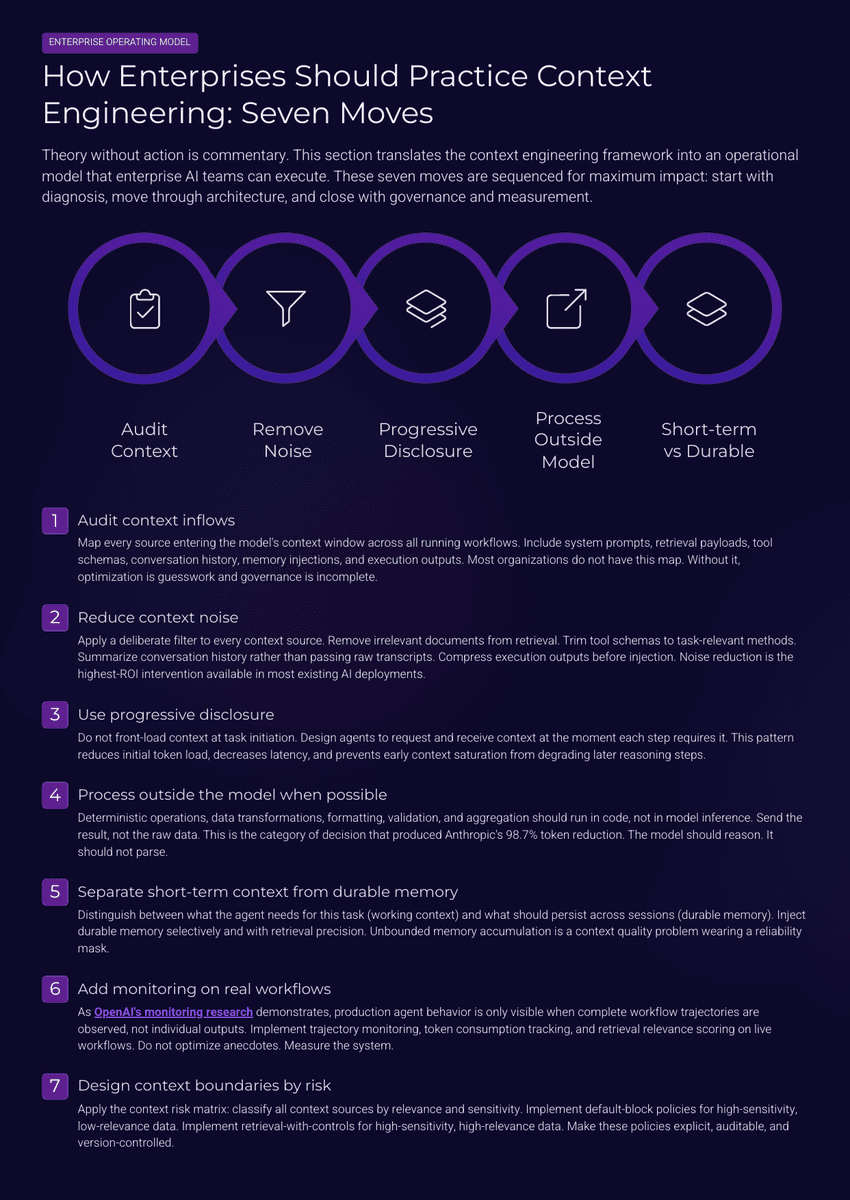
7 sequenced moves from context audit through risk-based context boundaries
Operating Model
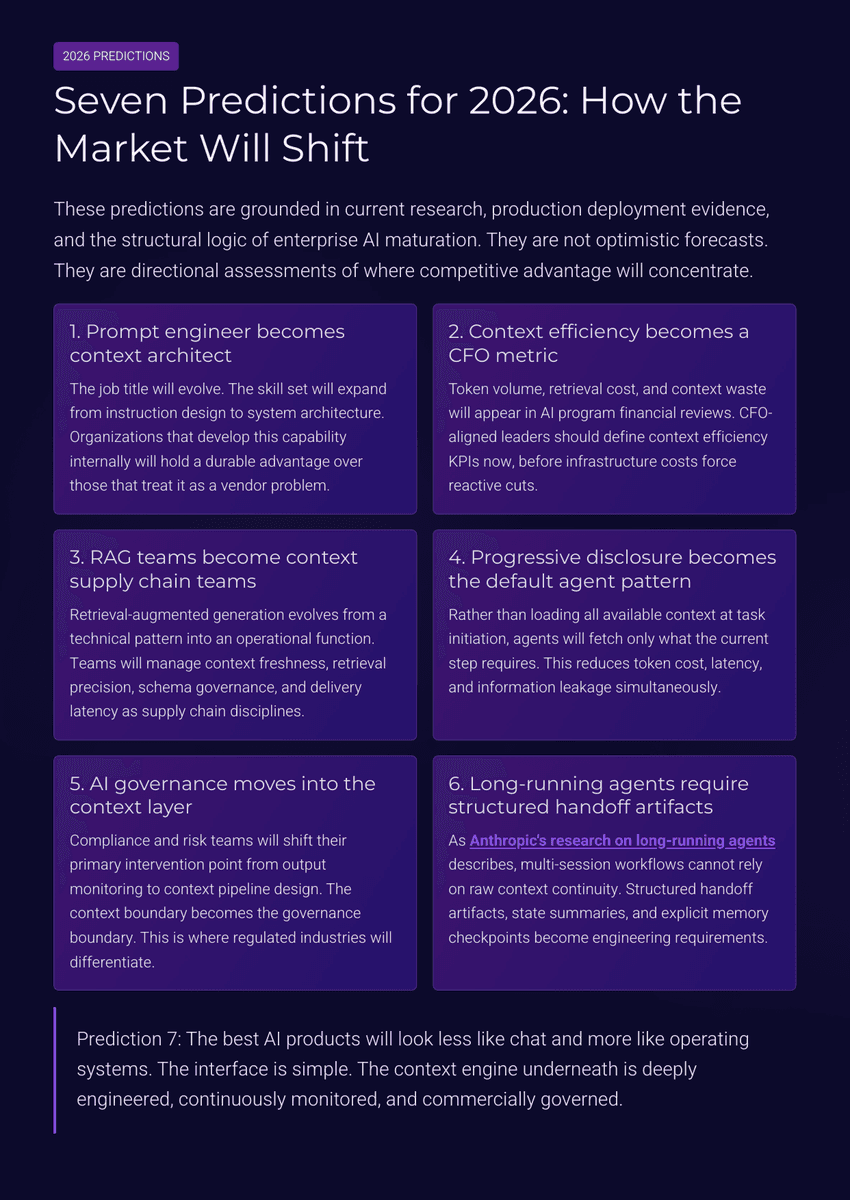
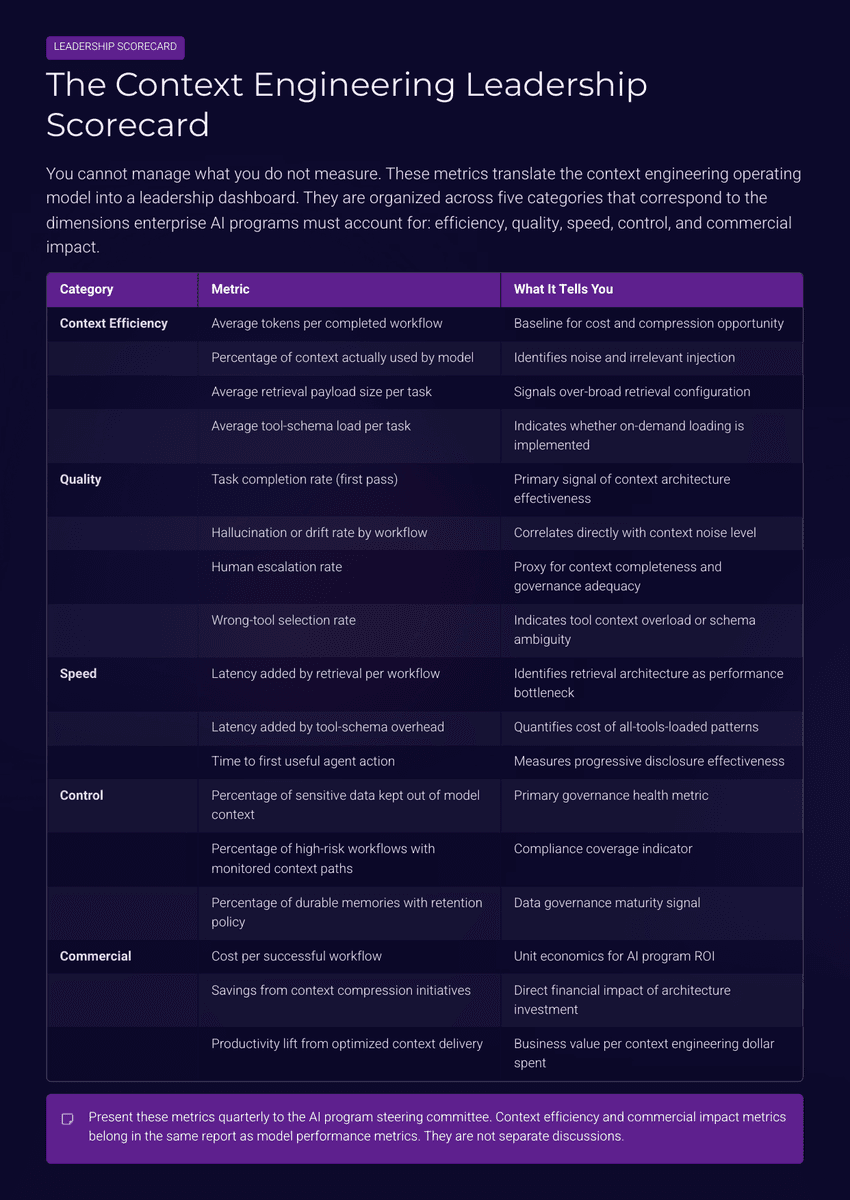
5 categories of metrics covering efficiency, quality, speed, control, and commercial impact
Scorecard
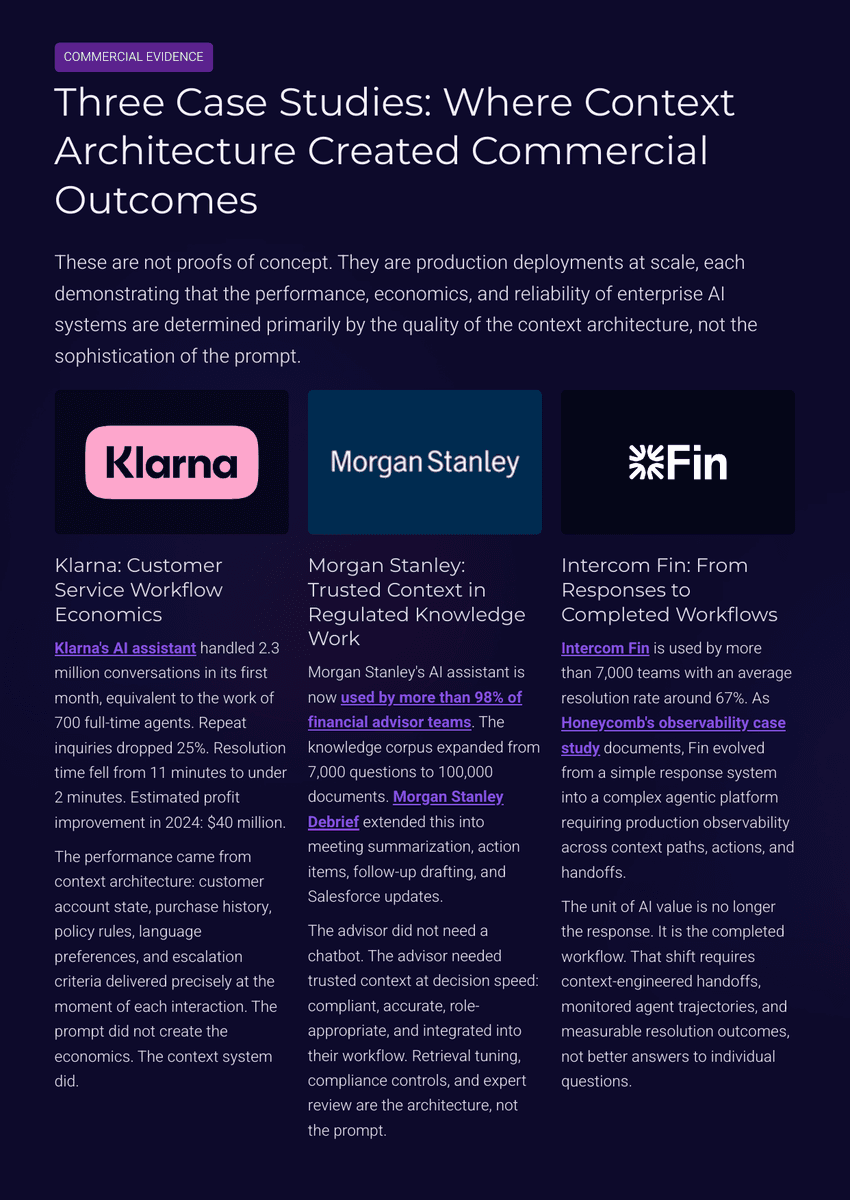
Klarna, Morgan Stanley, and Intercom Fin production deployments analysed alongside Anthropic and OpenAI research
Evidence Base
Key Takeaways
20
Pages
7
Context Layers Defined
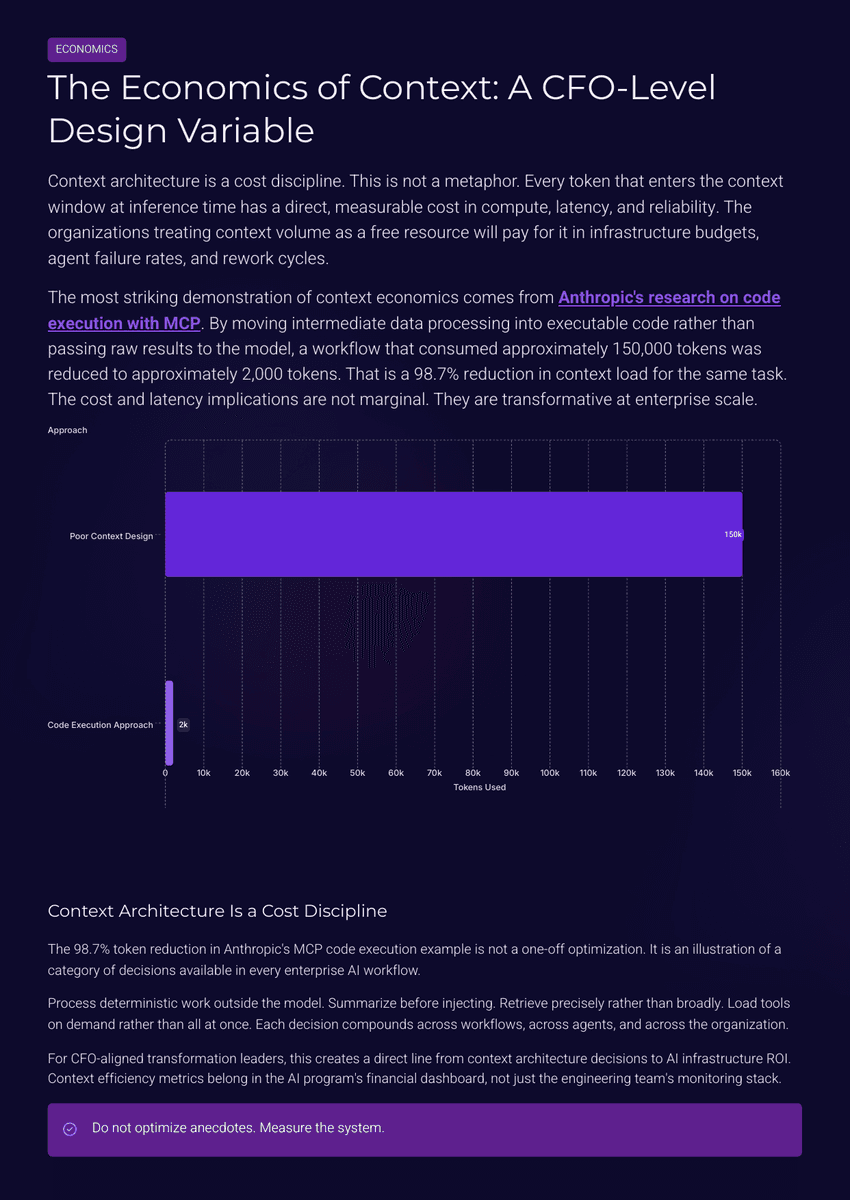
98.7%
Token Reduction Case (Anthropic MCP)
40%+
Agentic Projects At Risk by 2027 (Gartner)
View Document
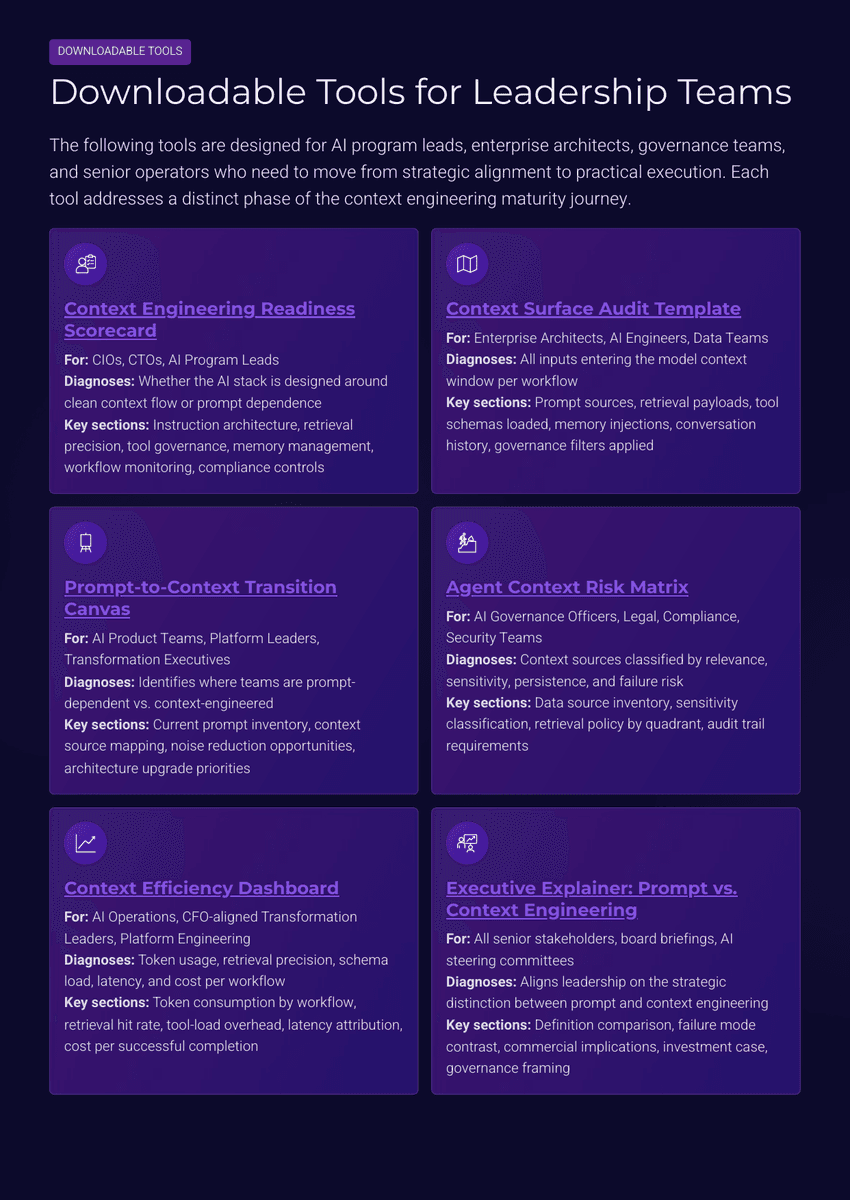
Download or Open in New Tab to access the links to download or access the tools / templates or research materials within the document.
Responsibilities
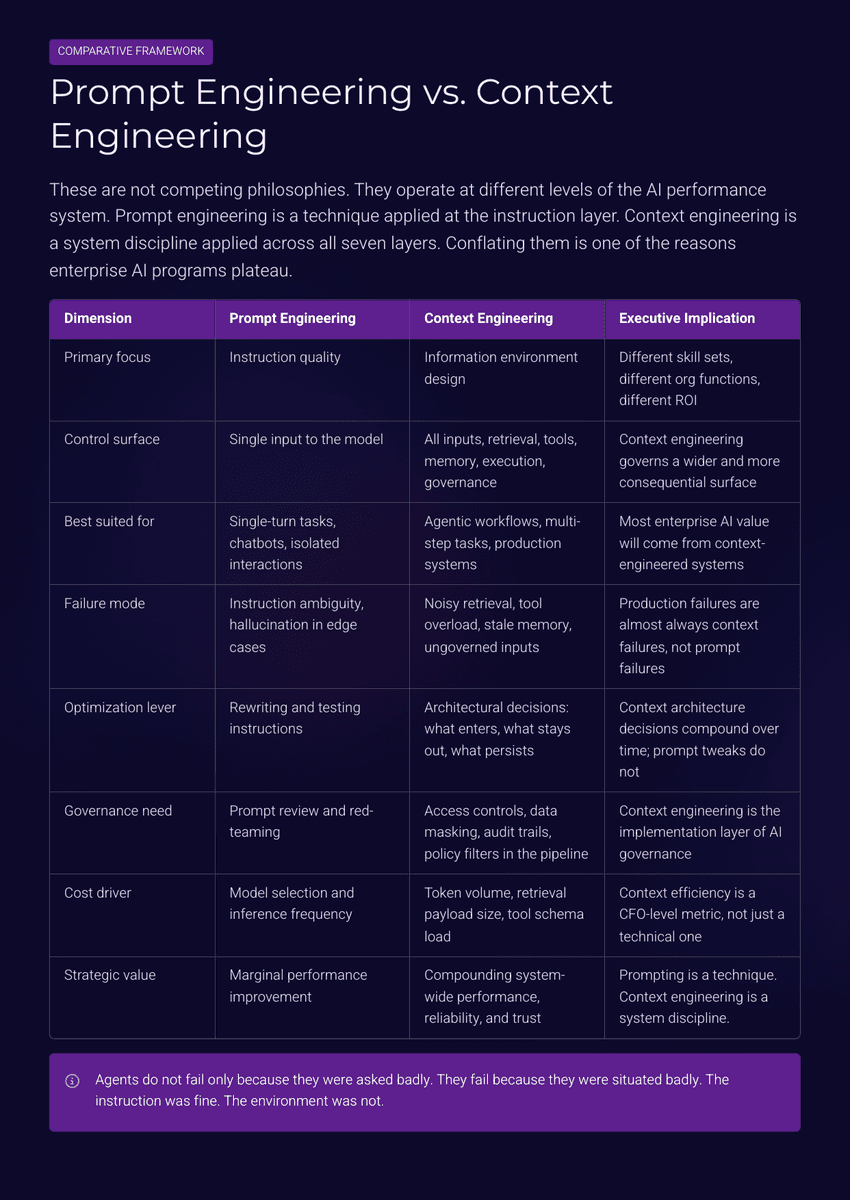
- Authored the full white paper on the shift from prompt engineering to context engineering in enterprise AI
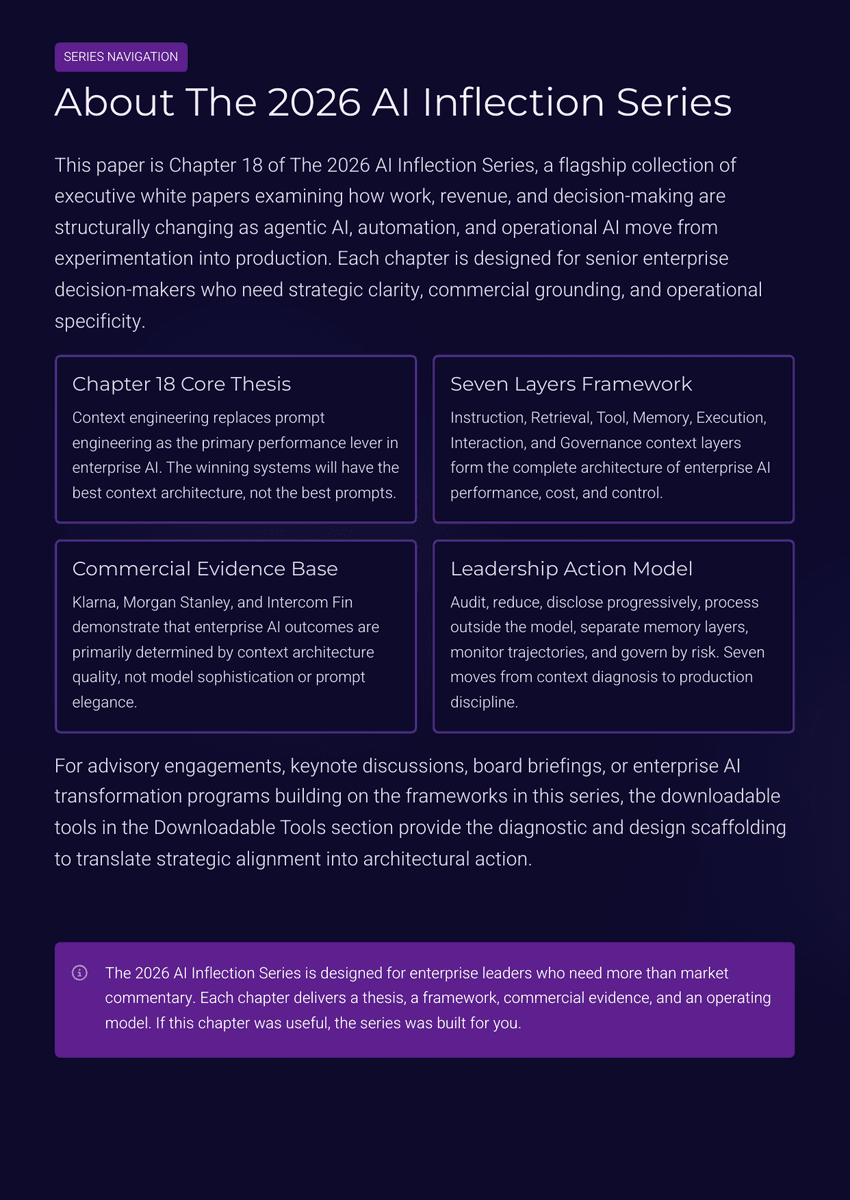
- Defined the seven layers of context engineering: instruction, retrieval, tool, memory, execution, interaction, and governance
- Built the Context Engineering Leadership Scorecard across efficiency, quality, speed, control, and commercial impact
- Mapped seven enterprise operating moves from context audit through risk-based context boundaries
- Synthesized Anthropic, OpenAI, McKinsey, Gartner, Klarna, Morgan Stanley, and Intercom Fin evidence into a single architectural framework
Outcomes
20
Pages
7
Context Layers Defined
98.7%
Token Reduction Case (Anthropic MCP)
40%+
Agentic Projects At Risk by 2027 (Gartner)