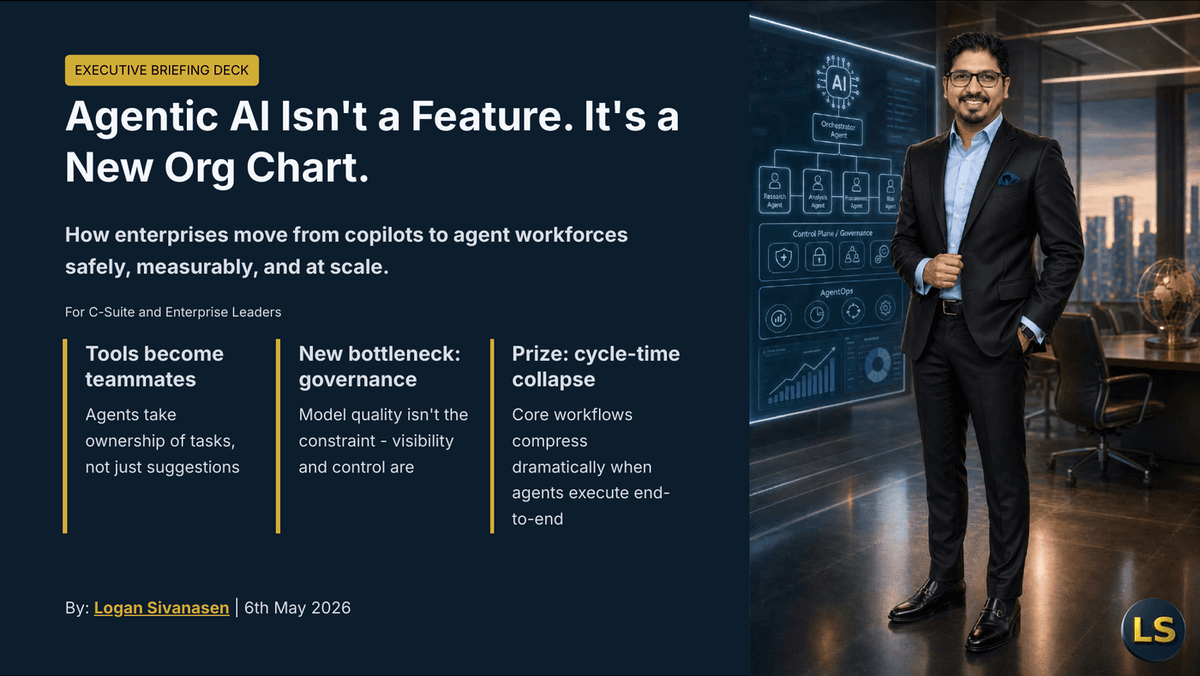
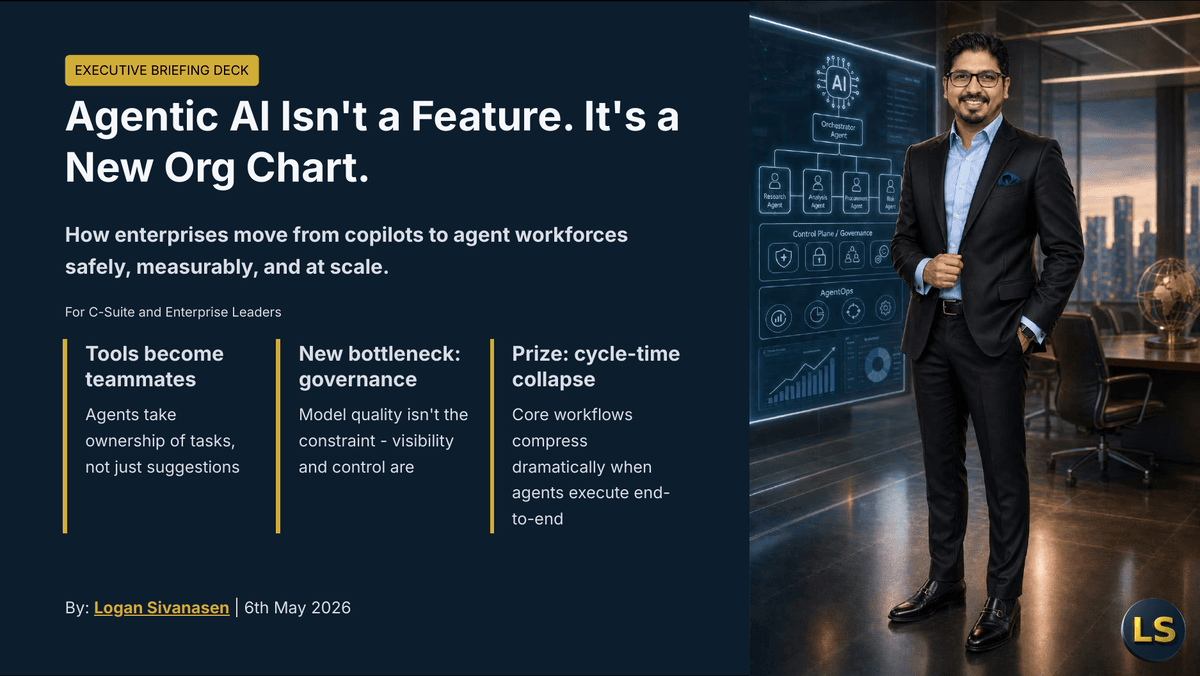
Agentic AI Isn't a Feature. It's a New Org Chart.
An 18-page executive briefing for C-suite and enterprise leaders on how agentic AI fundamentally restructures workforce design, accountability, and governance - not just tooling. Covers the three-layer architecture (Agent Factory, Control Plane, Runtime), tier-based agent classification, and the KPI framework needed to manage an agent workforce at scale. Draws on Gartner, Microsoft, McKinsey, and live enterprise deployments at Citi, Accenture, and Microsoft.
Author / Lead
2026-05-06
Overview
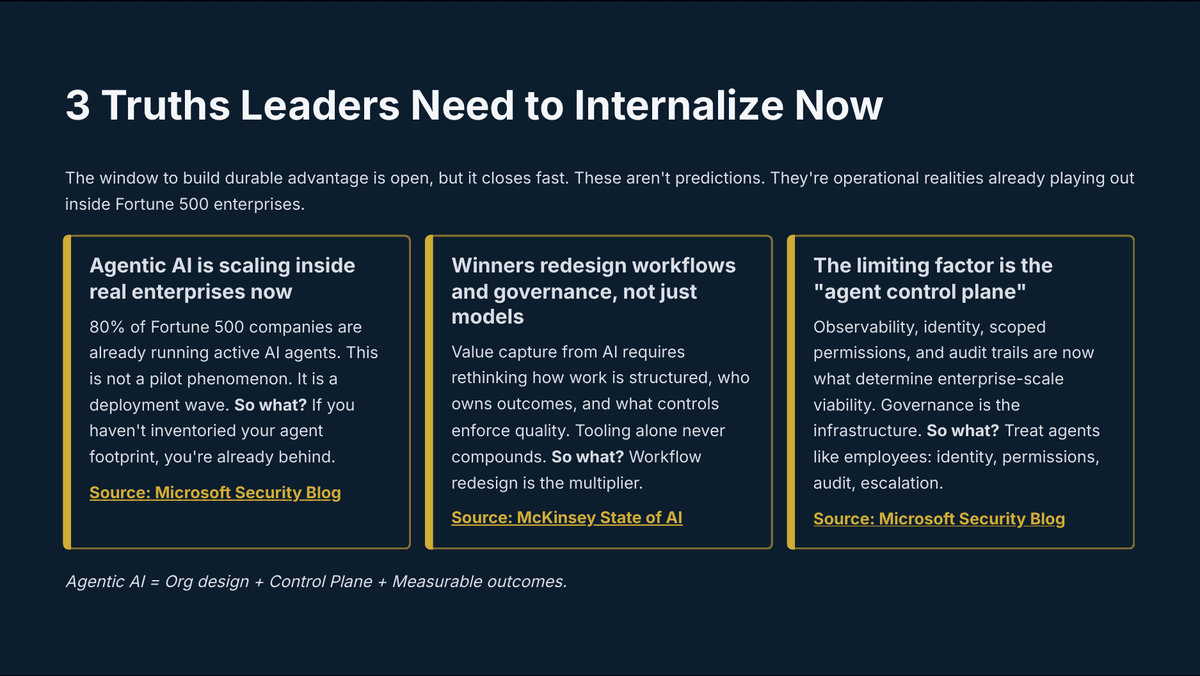
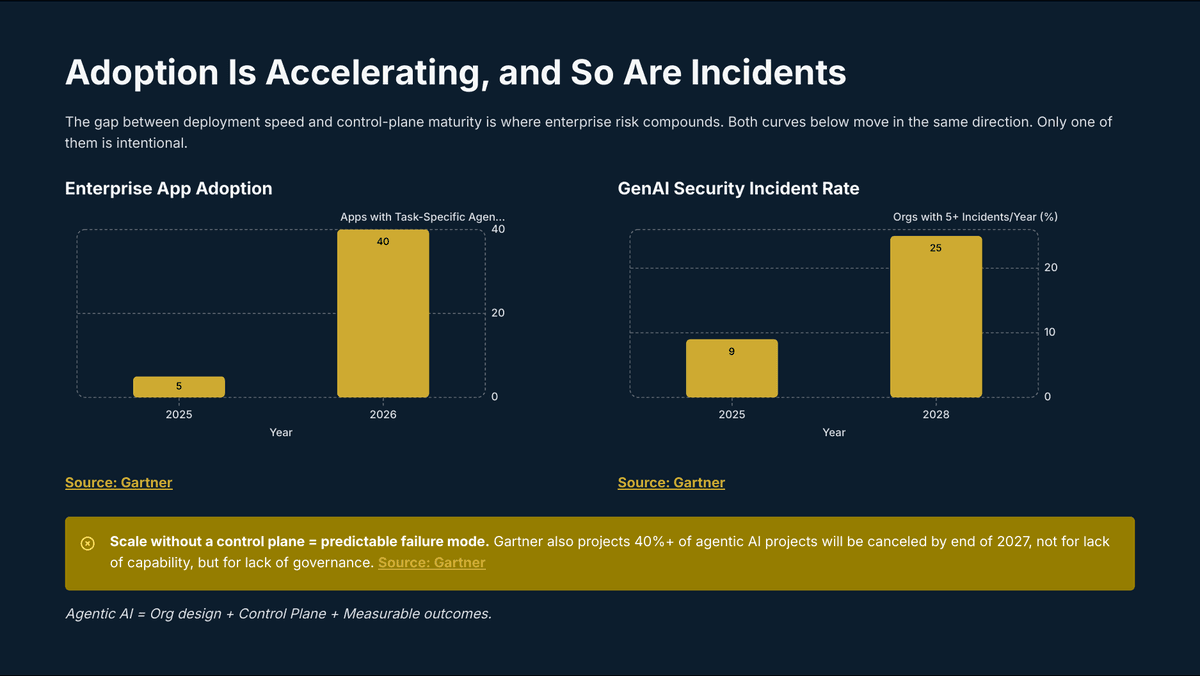
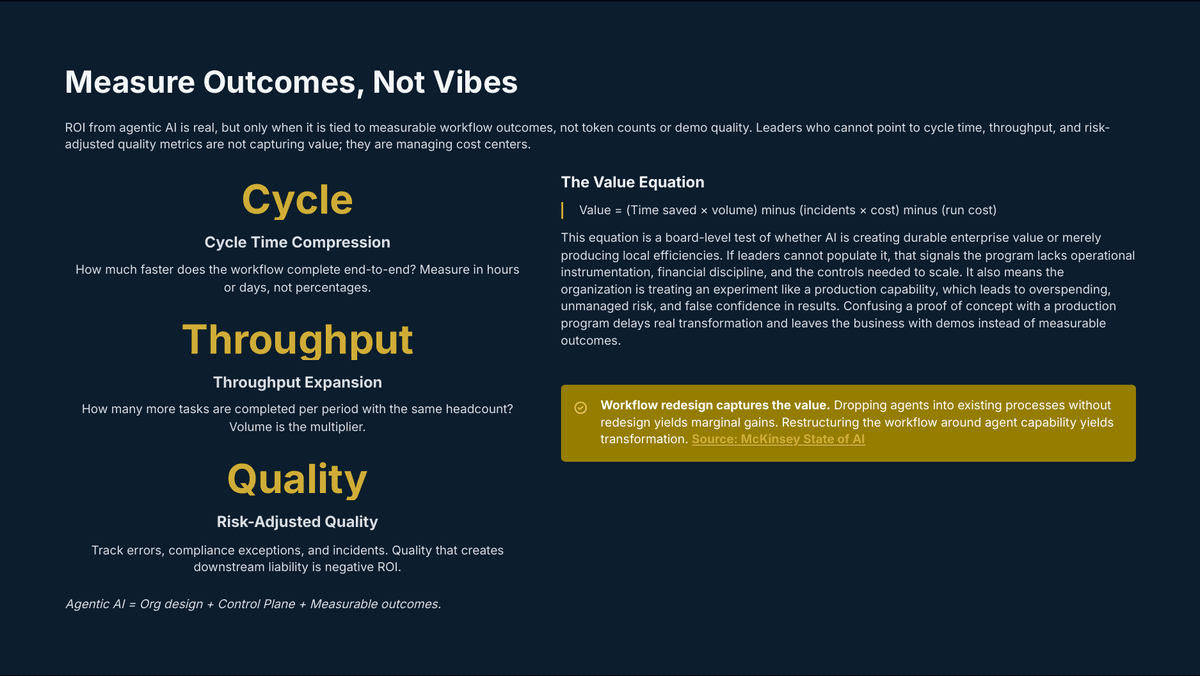
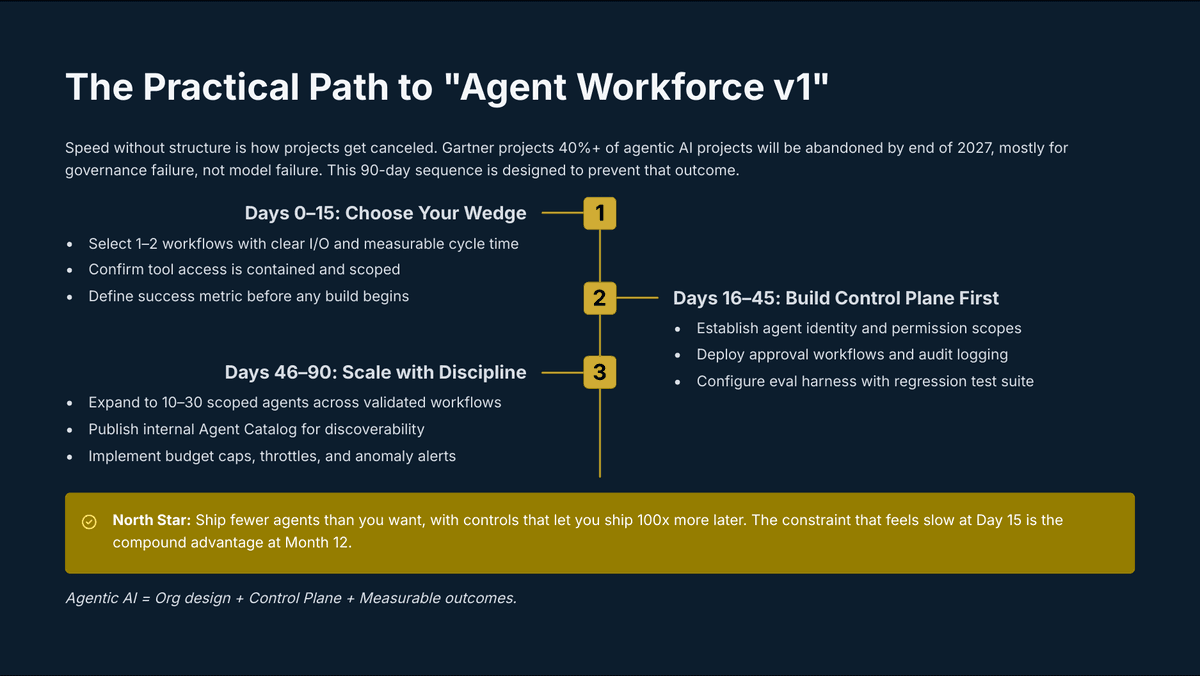
Agentic AI isn't a feature upgrade - it's a workforce restructuring event. 80% of Fortune 500 companies↗ are already running active AI agents, yet most organizations treat governance as an afterthought. Gartner projects↗ that 40%+ of agentic AI projects will be canceled by end of 2027 - not for lack of capability, but for lack of control infrastructure. This briefing reframes the challenge: agents require org design (who owns the outcome), a control plane (identity, permissions, audit), and measurable outcomes (not just deployment counts). The same pattern that played out with SaaS sprawl is now repeating at the agent layer, except the blast radius is larger.
Case Study
The Challenge
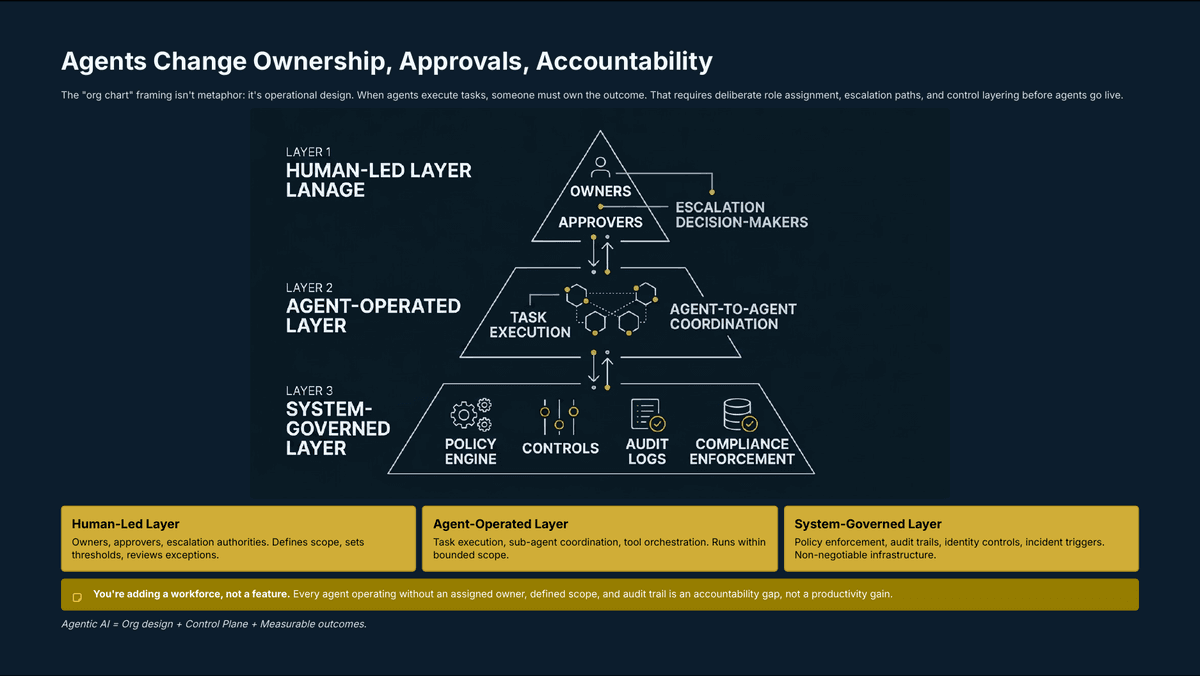
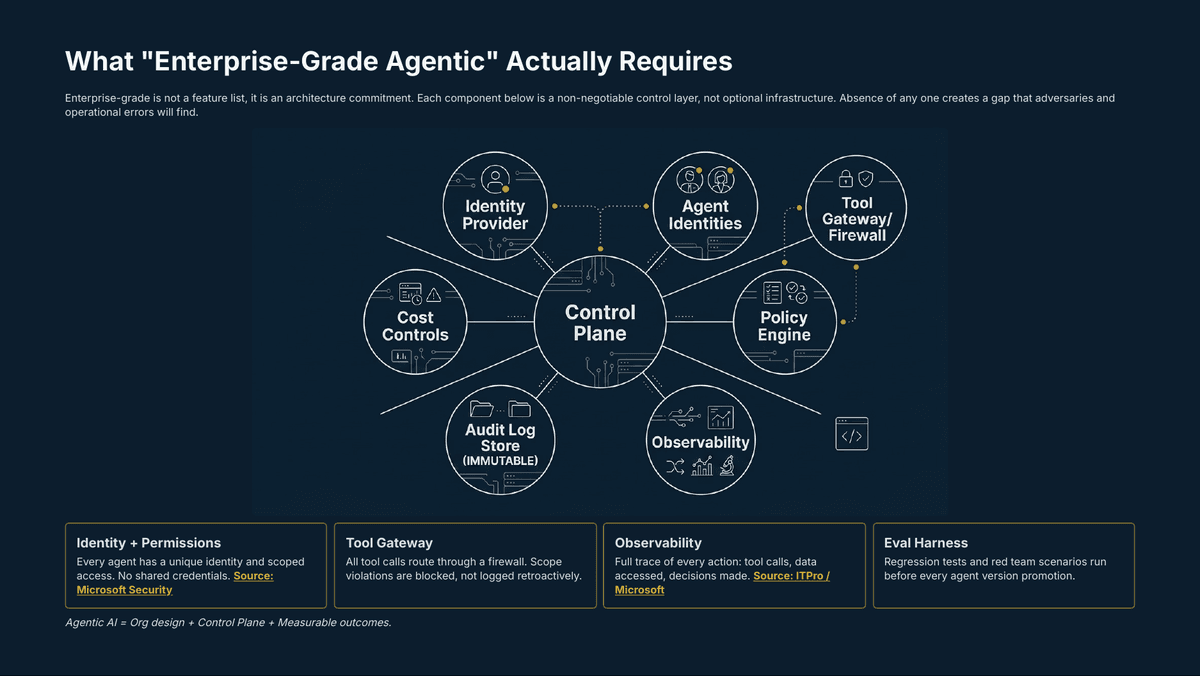
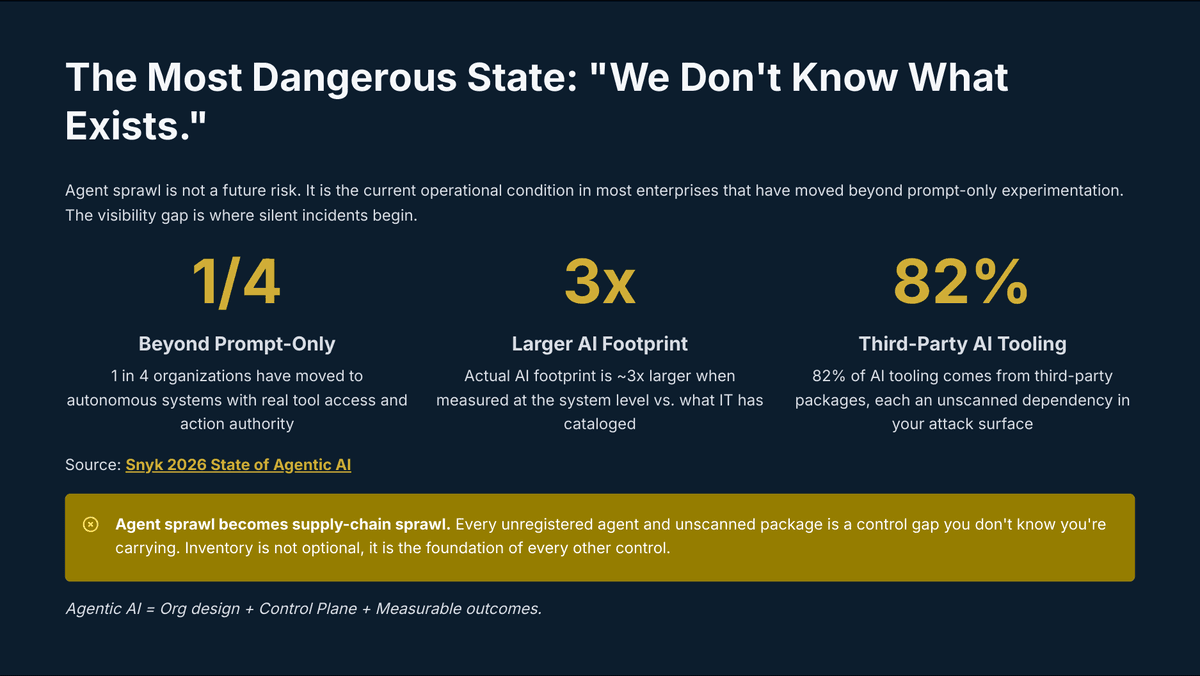
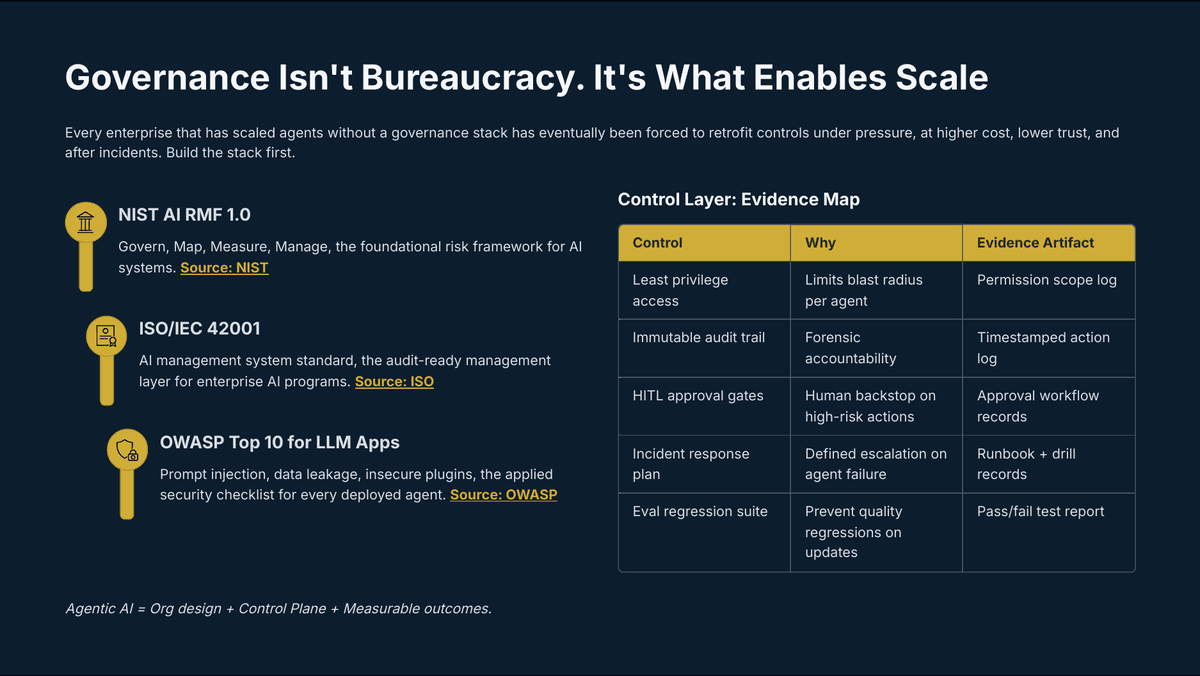
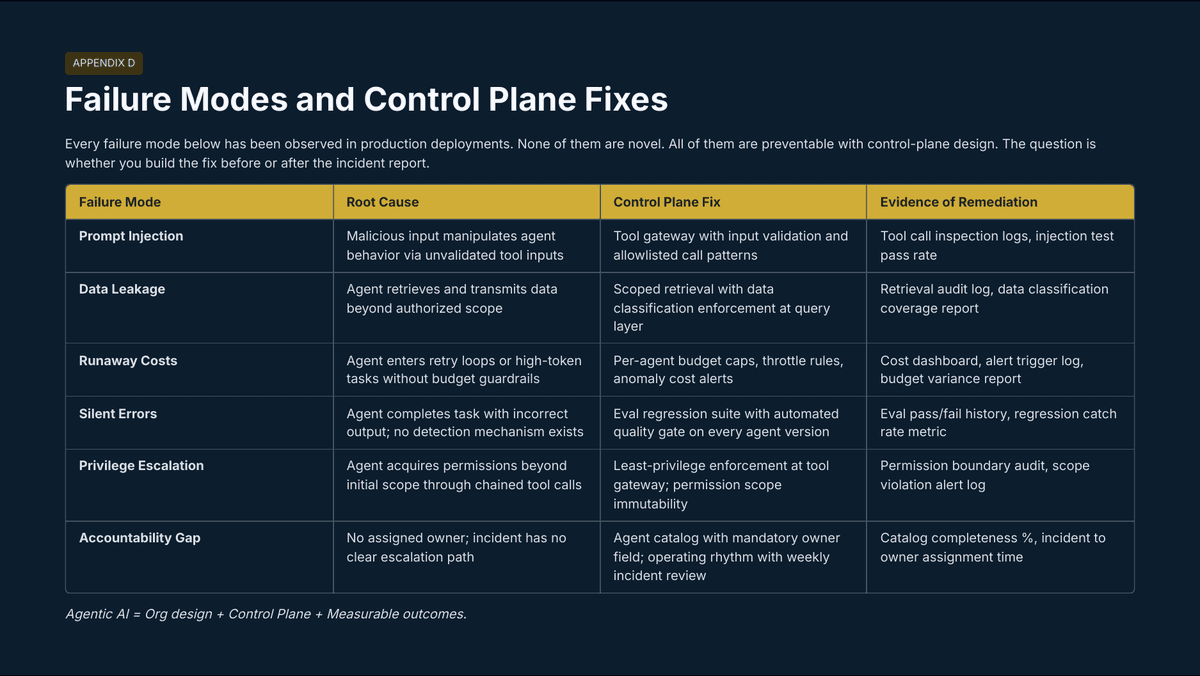
Enterprise leaders are deploying agents at speed without the governance infrastructure to match. The result is a growing accountability gap: agents execute tasks autonomously, but ownership of outcomes is undefined, permissions are unchecked, and audit trails are absent. Microsoft's security research↗ confirms that ungoverned agent expansion follows the same failure pattern as early cloud adoption - fast deployment, slow controls, compounding risk. Meanwhile, McKinsey's State of AI↗ shows that value capture from AI requires workflow redesign and governance, not just model access. Most organizations are scaling Runtime first - the execution layer - while skipping the Factory (standardized templates, evaluation gates) and Control Plane (identity, scoped permissions, approval workflows) that make Runtime safe.
The Solution
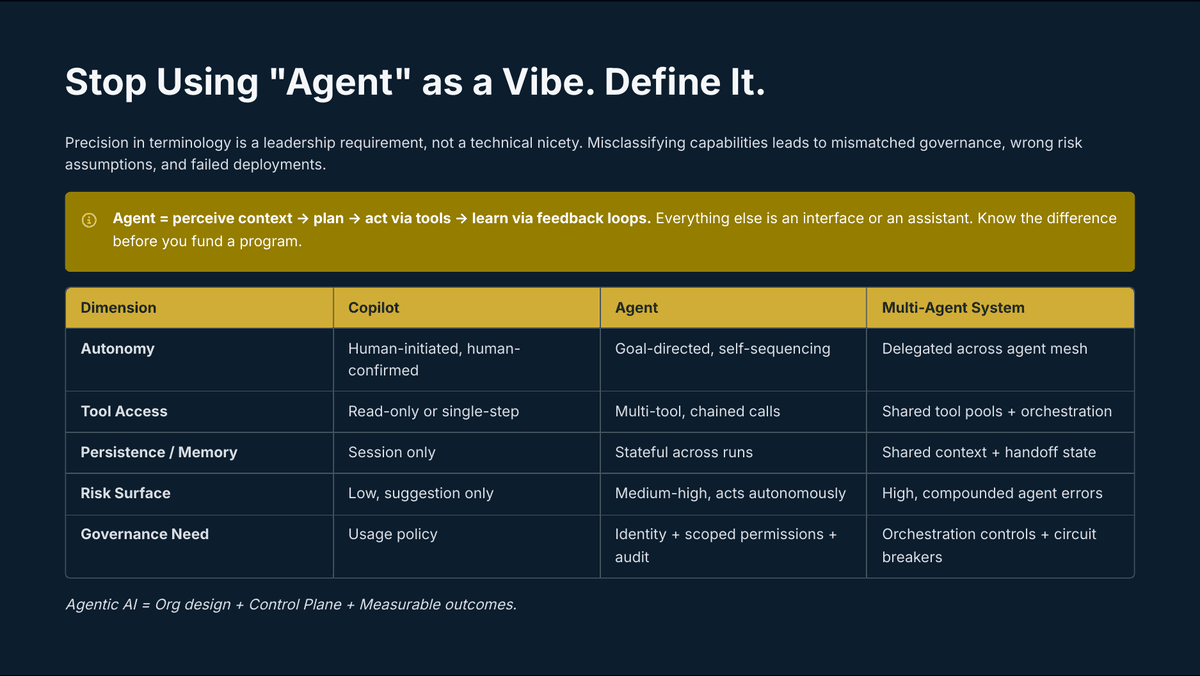
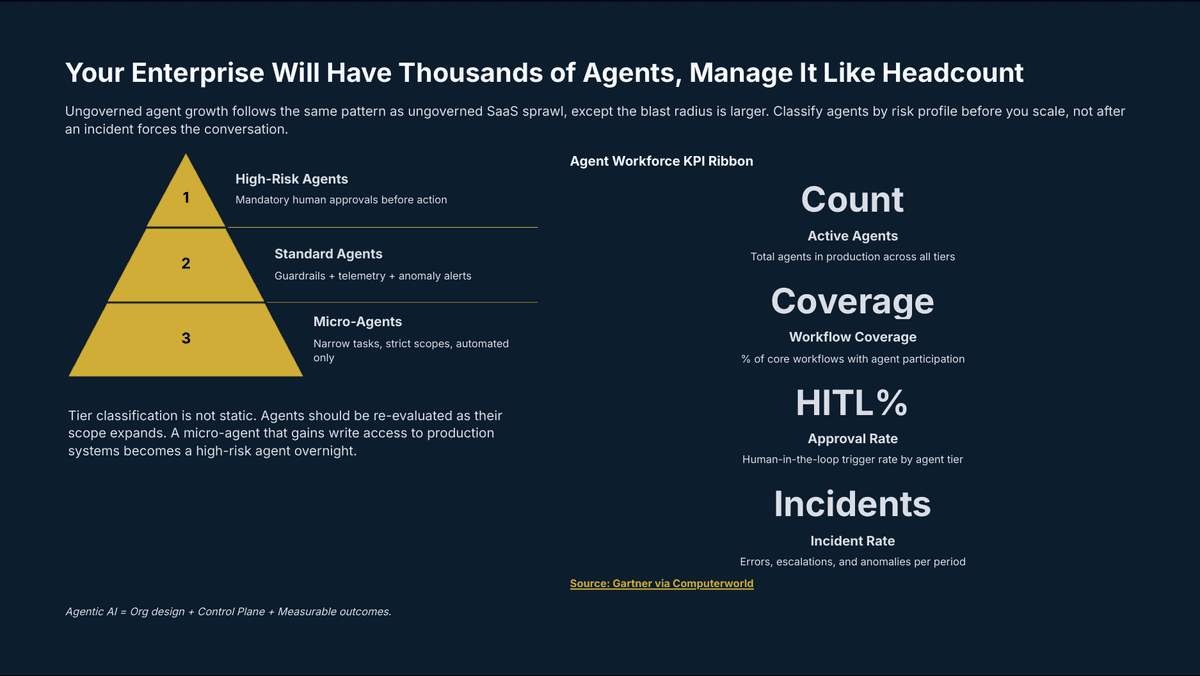
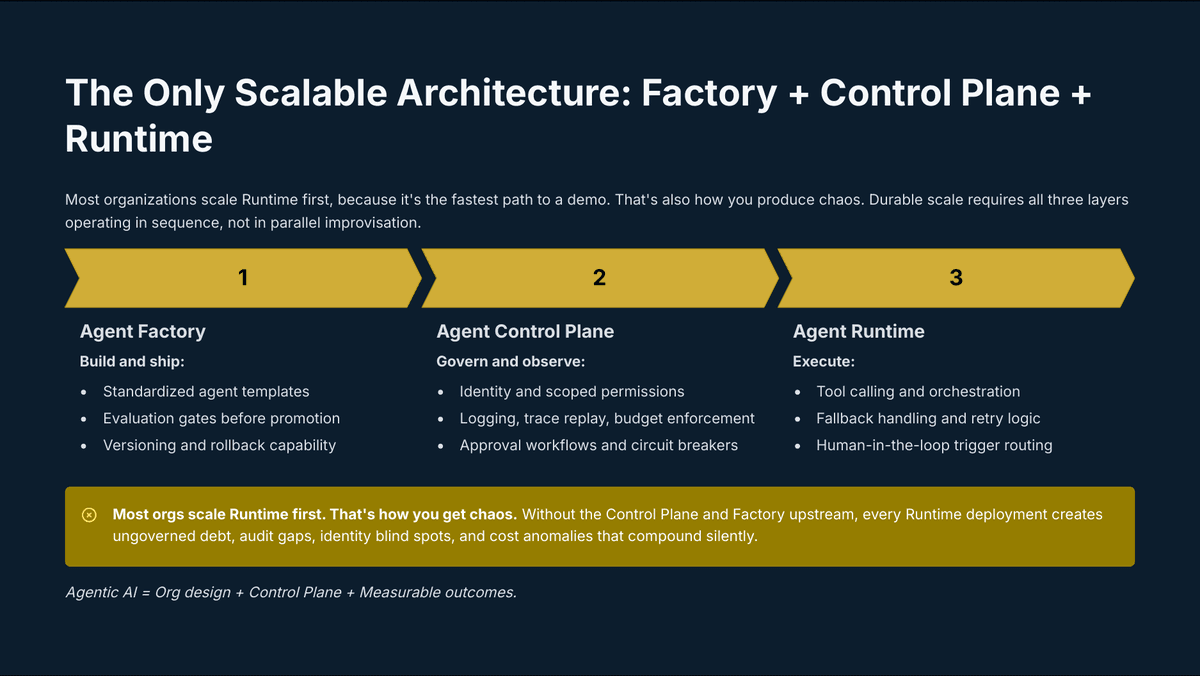
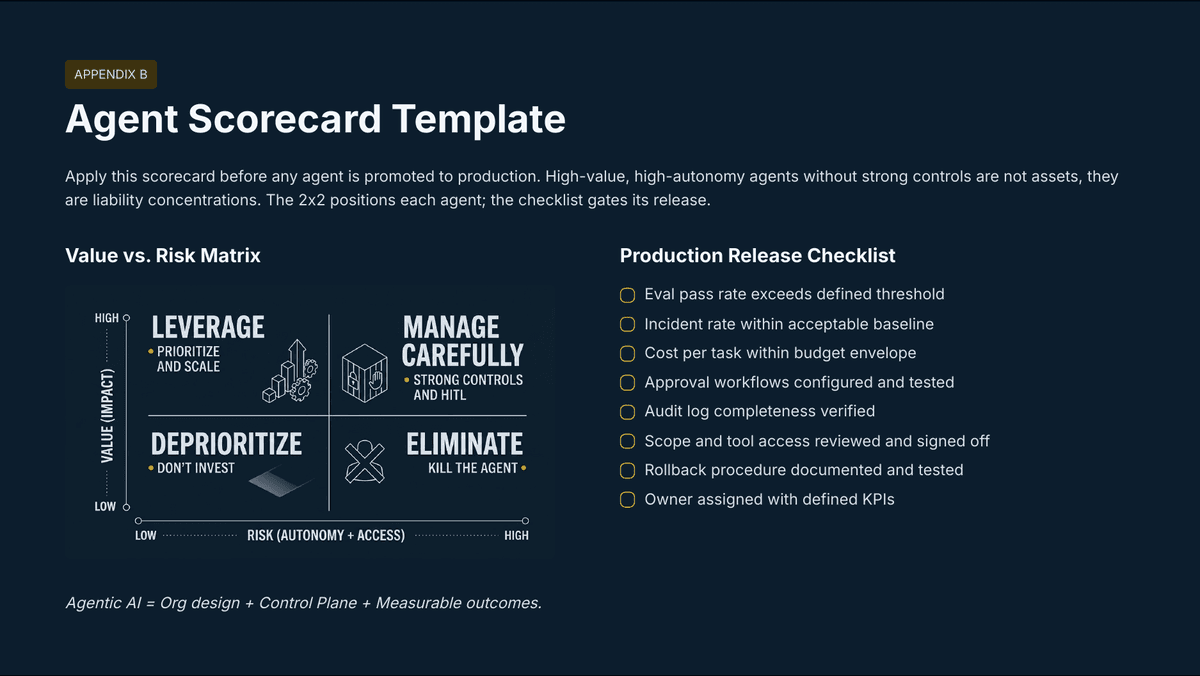
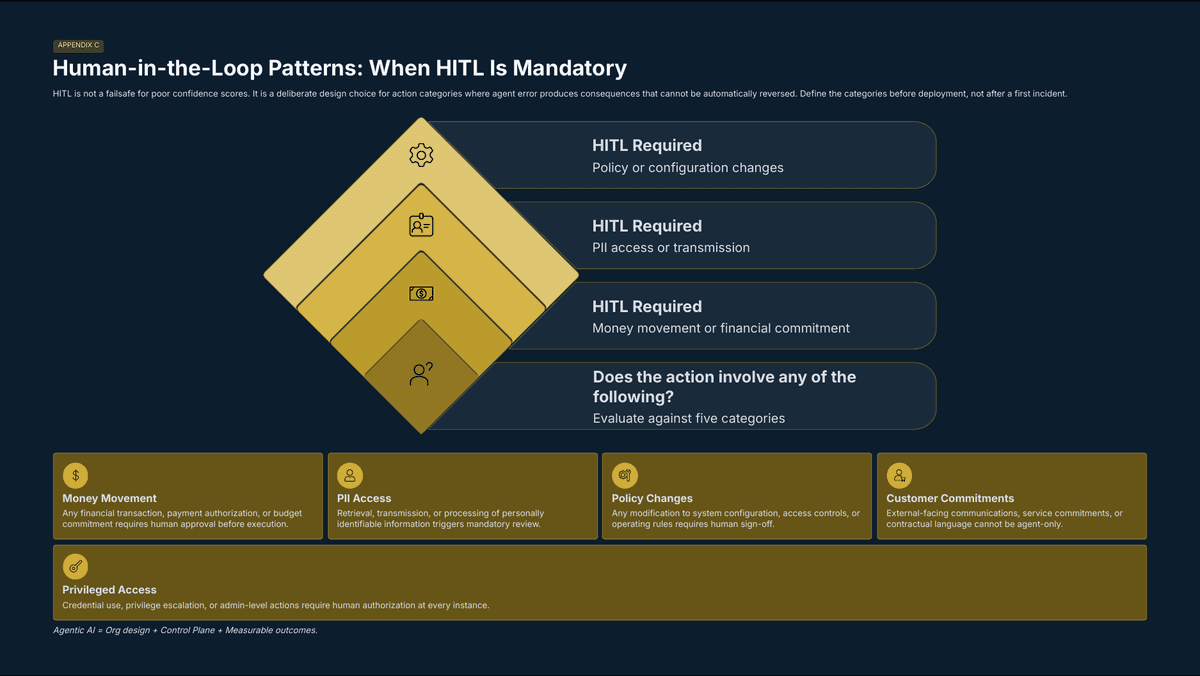
Structured the briefing around three operational layers every enterprise needs before scaling agent workforces: the Agent Factory (standardized templates, evaluation gates before promotion, versioning and rollback), the Agent Control Plane (identity and scoped permissions, logging and trace replay, approval workflows and circuit breakers), and Agent Runtime (tool calling, fallback handling, human-in-the-loop routing). Introduced a three-tier agent classification system based on risk profile - High-Risk agents requiring mandatory human approvals, Standard agents with guardrails and telemetry, and Micro-Agents with narrow scopes and full automation. Designed the Agent Workforce KPI Ribbon as the management framework: active agent count, workflow coverage percentage, HITL approval rate by tier, and incident rate per period.
Key Results
3-layer framework: Agent Factory, Control Plane, Runtime - in sequence, not parallel
Architecture
High-Risk (human approval), Standard (guardrails), Micro-Agent (automated narrow tasks)
Tier Classification
4-metric Agent Workforce KPI Ribbon: count, coverage, HITL rate, incident rate
KPI Framework
Gartner: 40%+ of agentic AI projects canceled by 2027 for lack of governance, not capability
Governance Risk
Key Takeaways
18
Pages
3
Architecture Layers
3
Agent Tier Classes
40%+
Agentic Projects at Risk Without Governance (Gartner)
View Document
Download or Open in New Tab to access the links to download or access the tools / templates or research materials within the document.
Responsibilities
- Authored the full executive briefing on agentic AI as an organizational design challenge
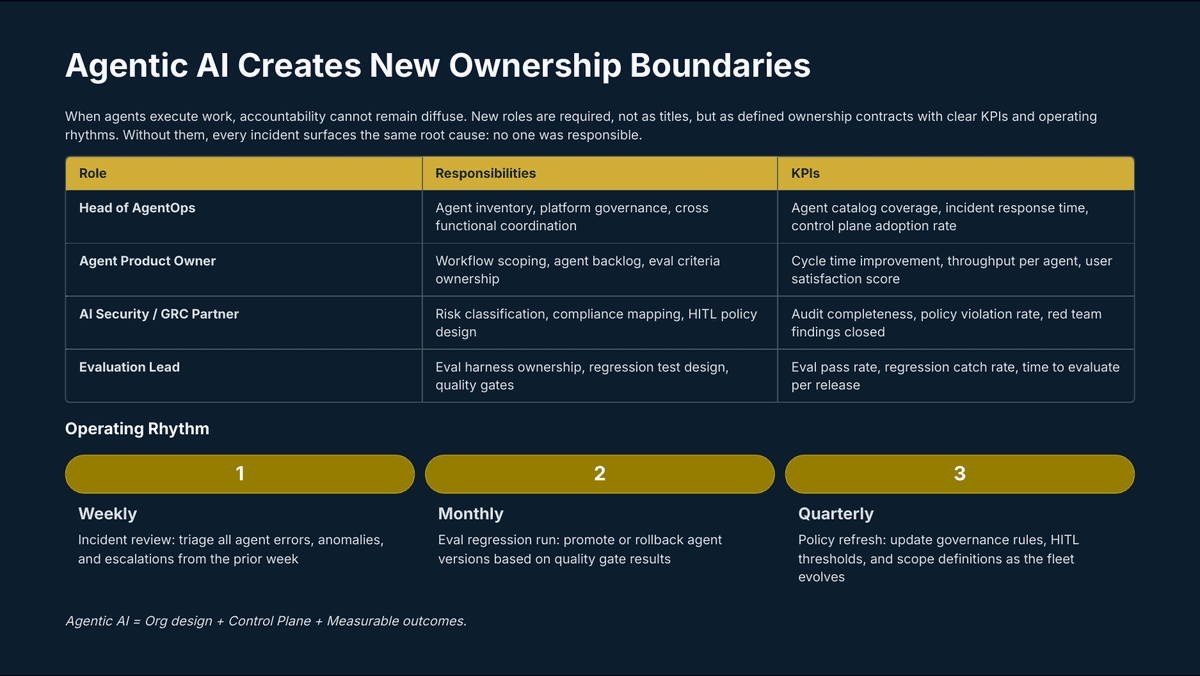
- Defined the three-truth framework leaders must internalize: deployment is scaling, workflow redesign is the multiplier, the control plane is the limiting factor
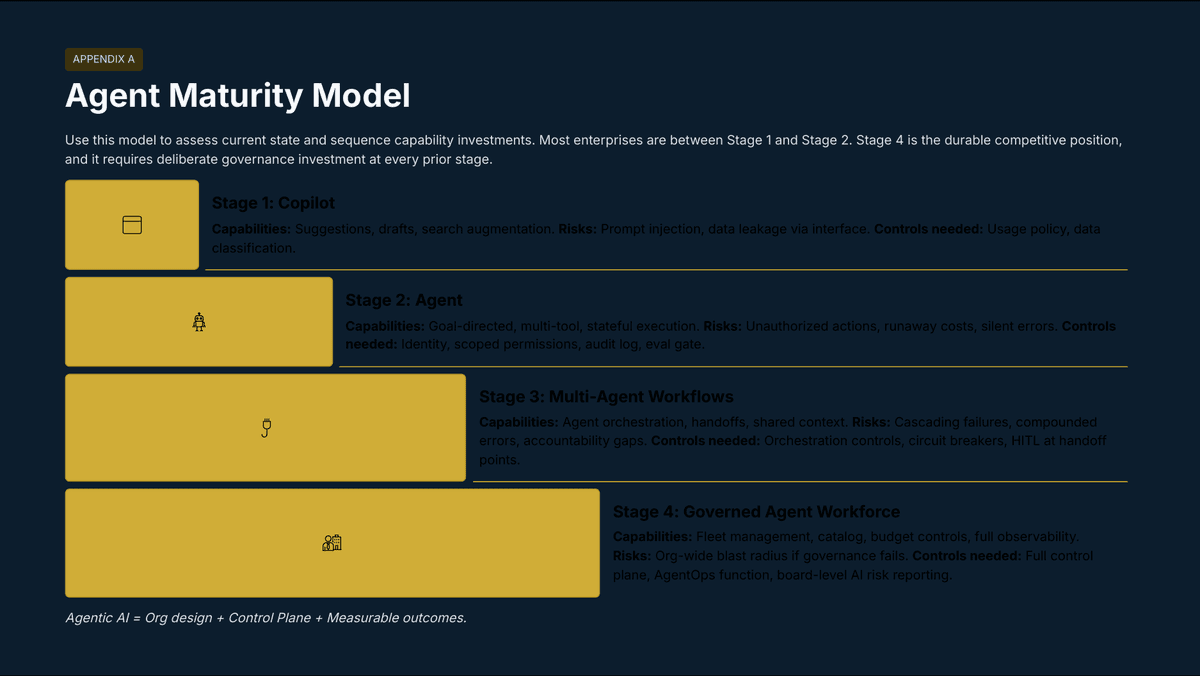
- Built the Agent Tier Classification System across three tiers: High-Risk (mandatory human approval), Standard (guardrails and telemetry), and Micro-Agents (narrow tasks, automated only)
- Designed the Agent Workforce KPI Ribbon covering active agent count, workflow coverage, HITL approval rate, and incident rate
- Mapped the three-layer architecture: Agent Factory (build and ship), Agent Control Plane (govern and observe), and Agent Runtime (execute)
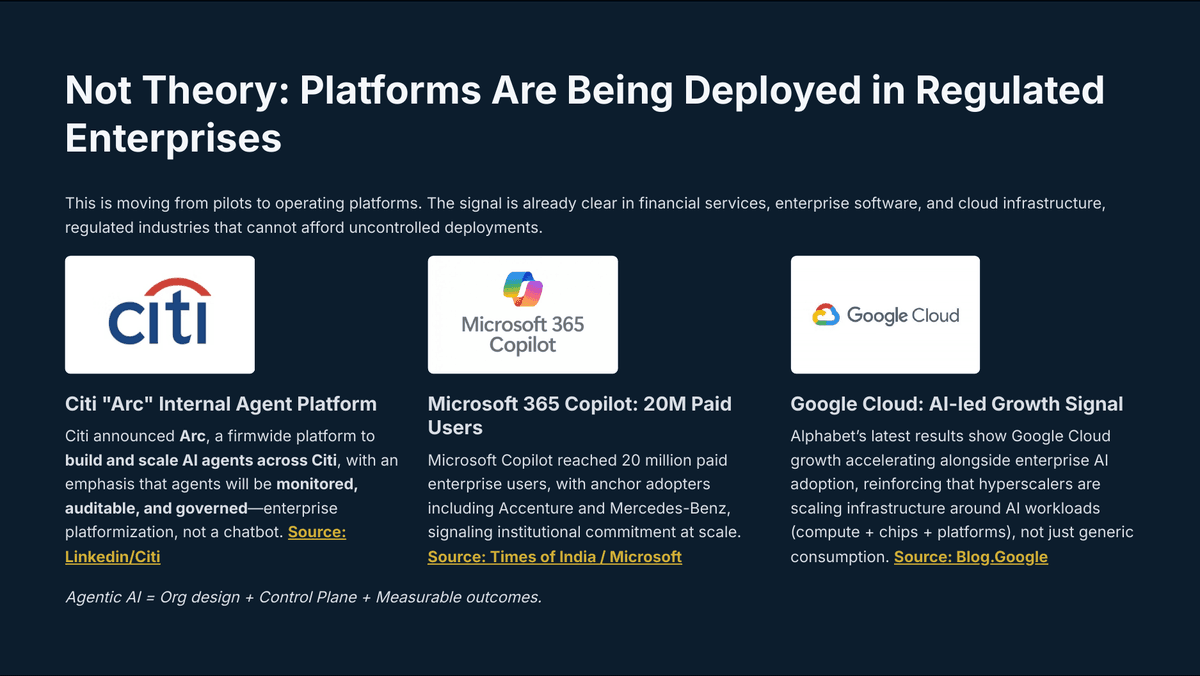
- Analyzed enterprise deployments at Citi (Arc platform), Microsoft (20M Copilot users), and Google Cloud as proof-of-scale signals
Outcomes
18
Pages
3
Architecture Layers
3
Agent Tier Classes
40%+
Agentic Projects at Risk Without Governance (Gartner)
Related white papers
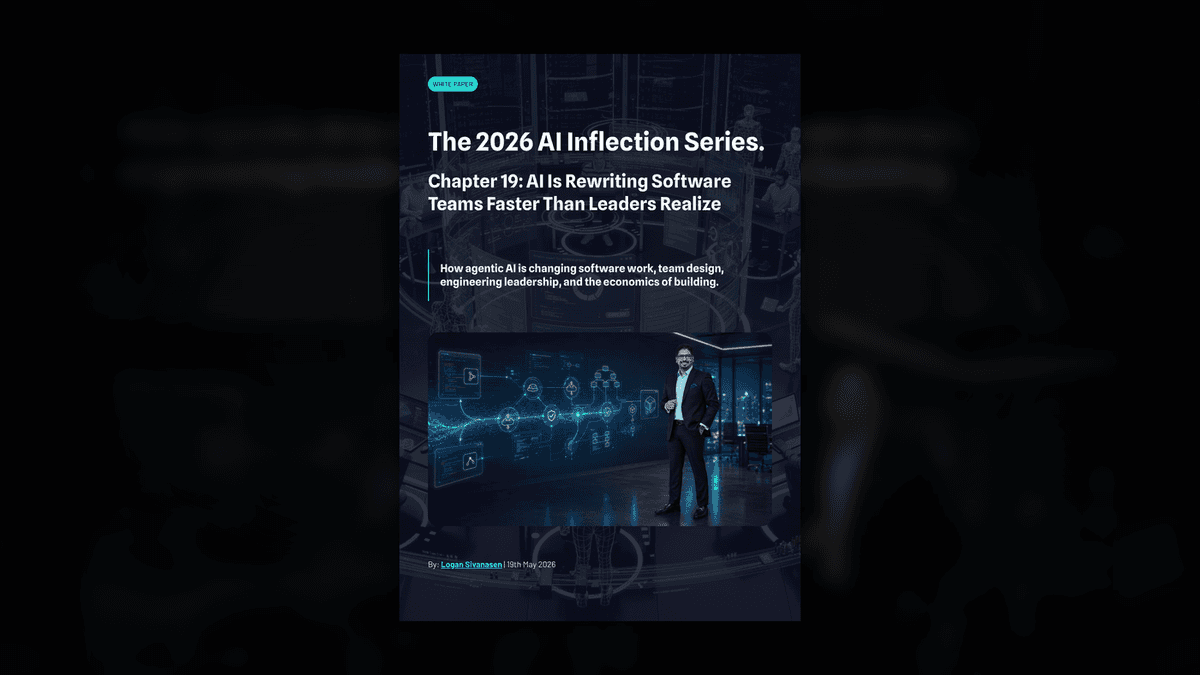
The 2026 AI Inflection Series - Chapter 19: AI Is Rewriting Software Teams Faster Than Leaders Realize
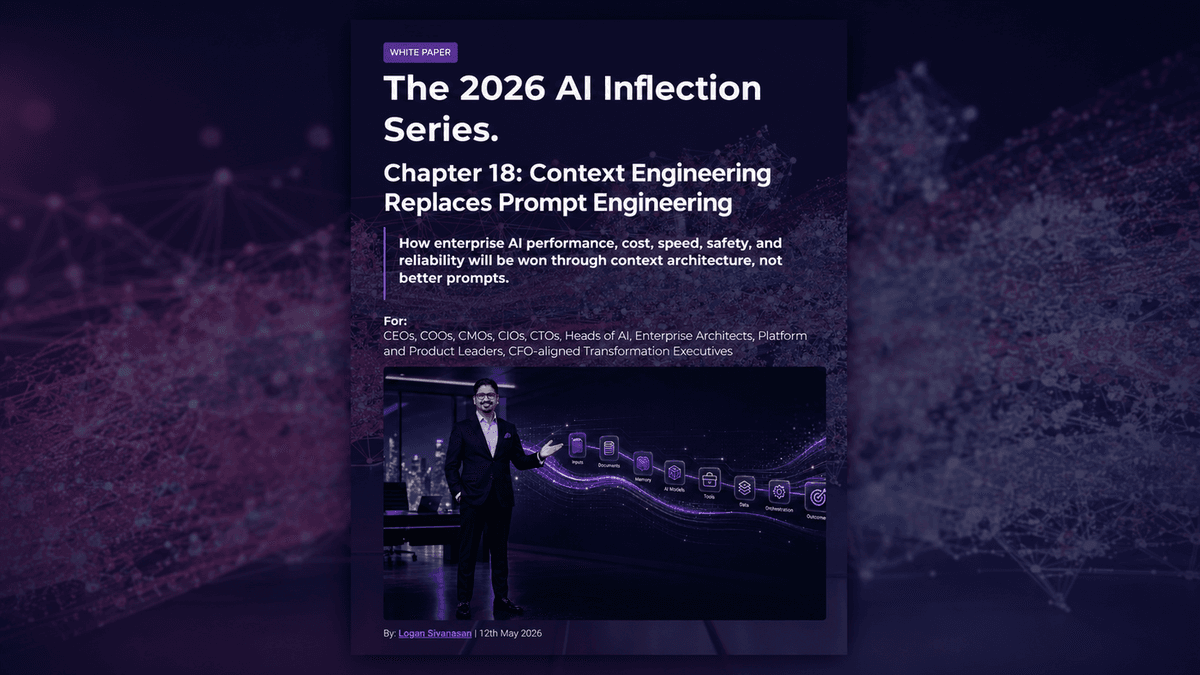
The 2026 AI Inflection Series - Chapter 18: Context Engineering Replaces Prompt Engineering