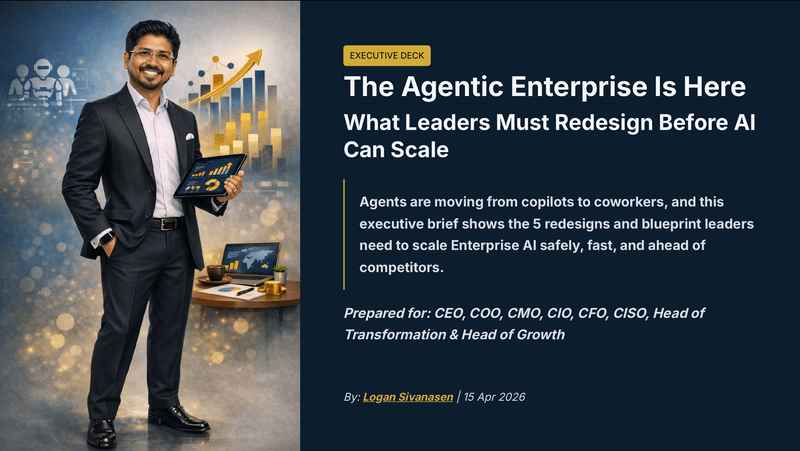
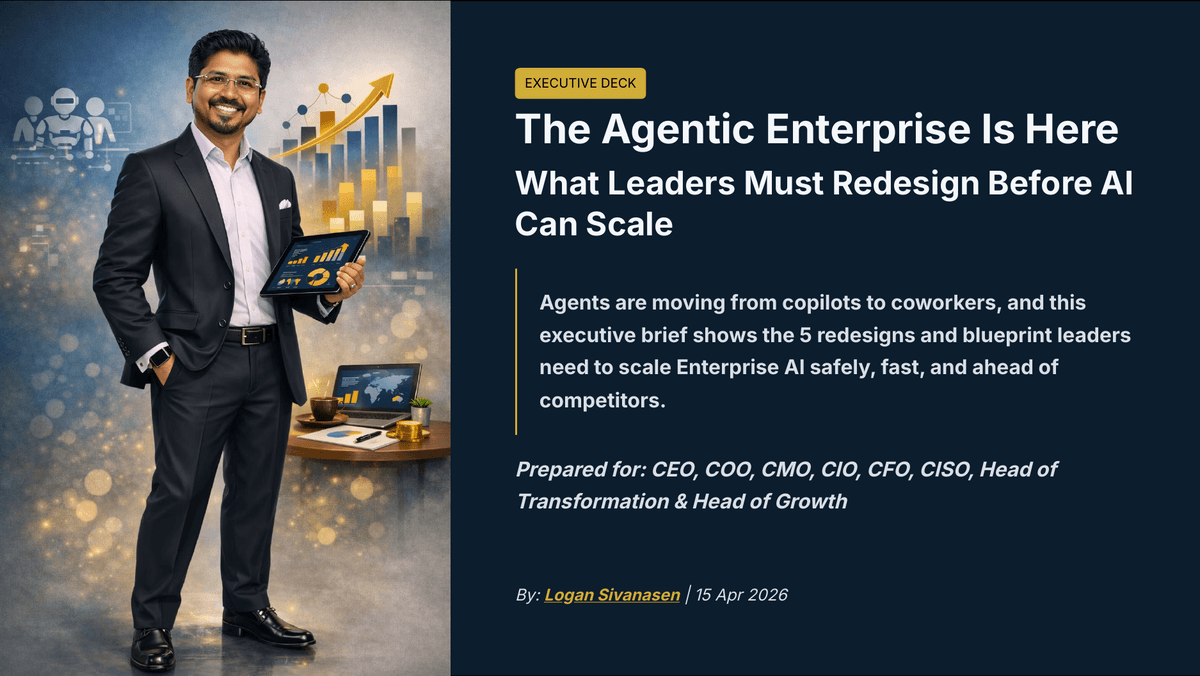
The Agentic Enterprise Is Here: What Leaders Must Redesign Before AI Can Scale
An 18-page executive brief on the 5 redesigns leaders must drive before agentic AI can scale across the enterprise. Covers operating model ownership, workflow architecture, integration and data contracts, governance and risk controls, and measurement frameworks. Prepared for C-suite audiences including CEO, COO, CMO, CIO, CFO, CISO, and transformation leaders.
Author / Lead
2026-04-15
Overview
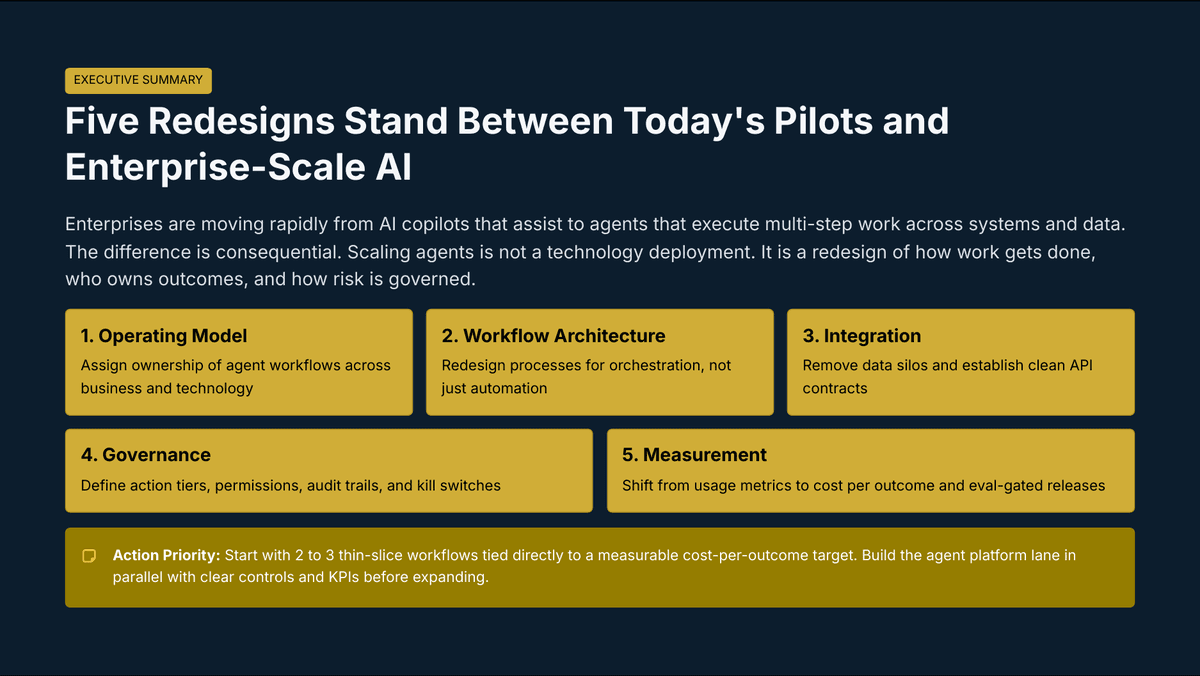
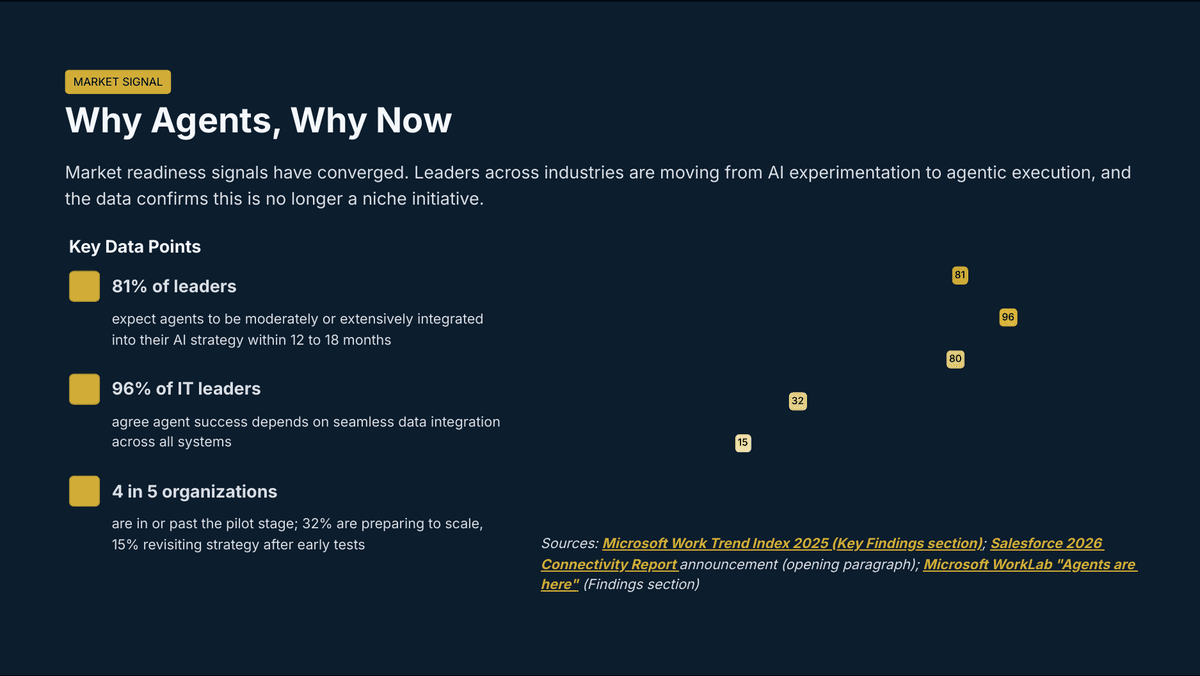
Agents are moving from copilots to coworkers. 81% of leaders↗ expect agents to be integrated into their AI strategy within 12 to 18 months, yet most enterprises are not structurally ready. This executive brief identifies the 5 redesigns standing between today's pilots and enterprise-scale AI: operating model ownership, workflow architecture and orchestration, integration and data contracts, governance and risk controls, and measurement with eval-gated releases. Grounded in data from Microsoft Work Trend Index 2025↗, Salesforce 2026 Connectivity Report↗, and enterprise deployment patterns.
Case Study
The Challenge
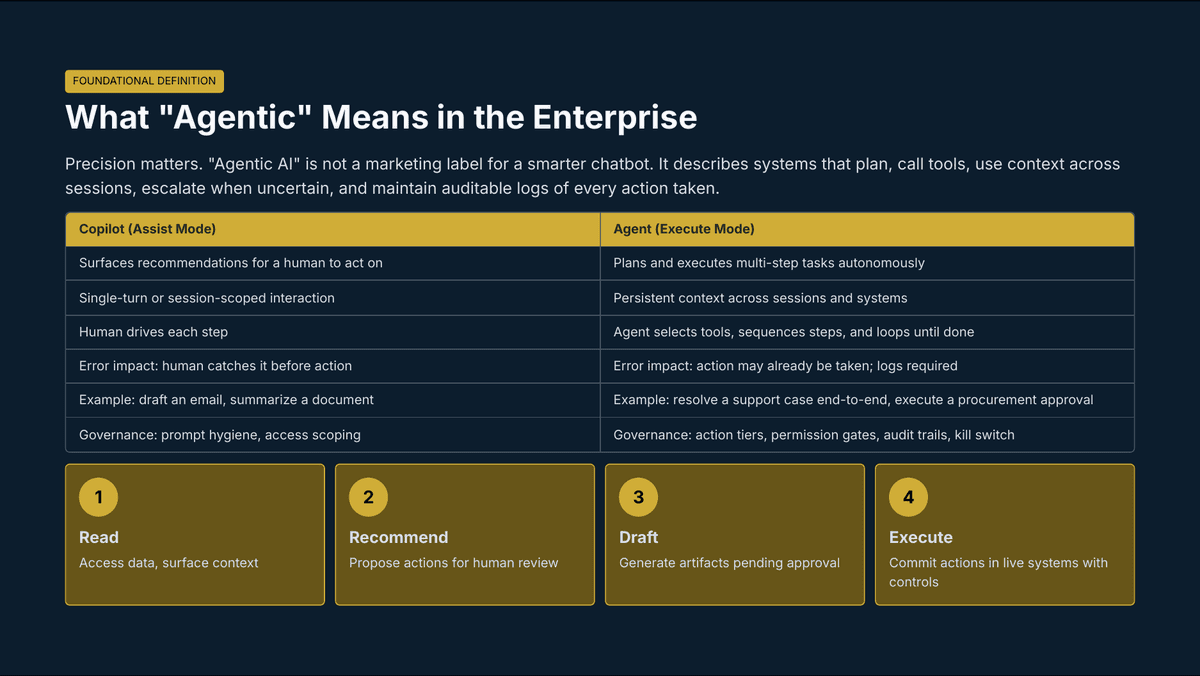
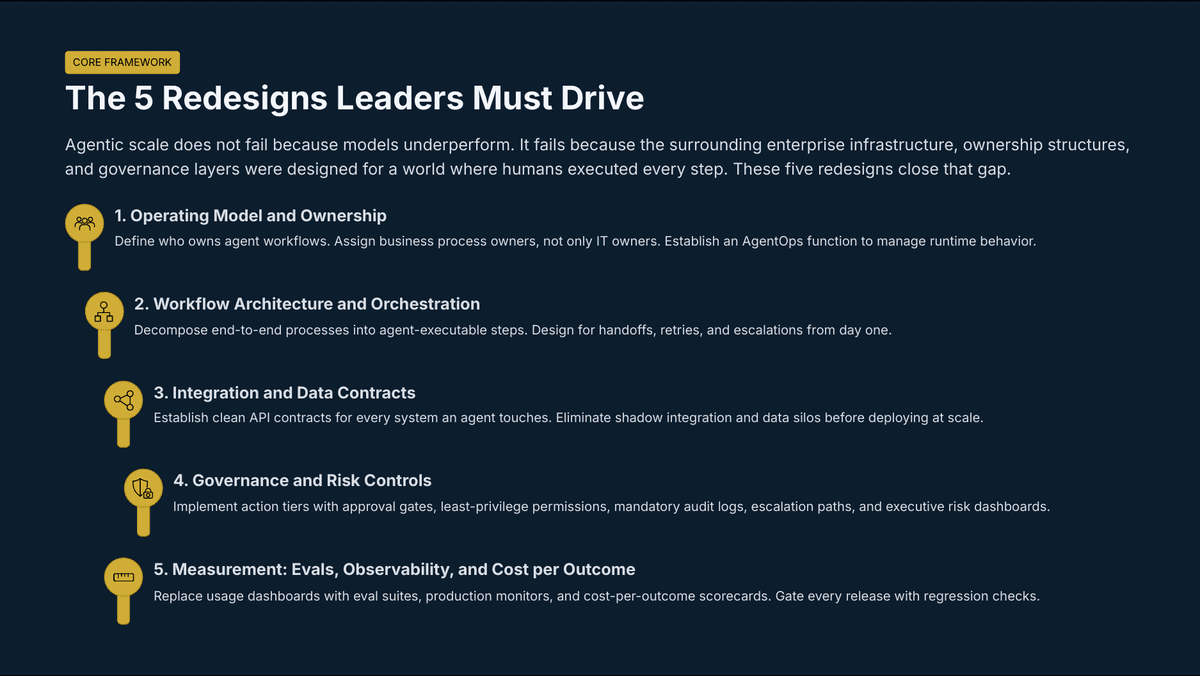
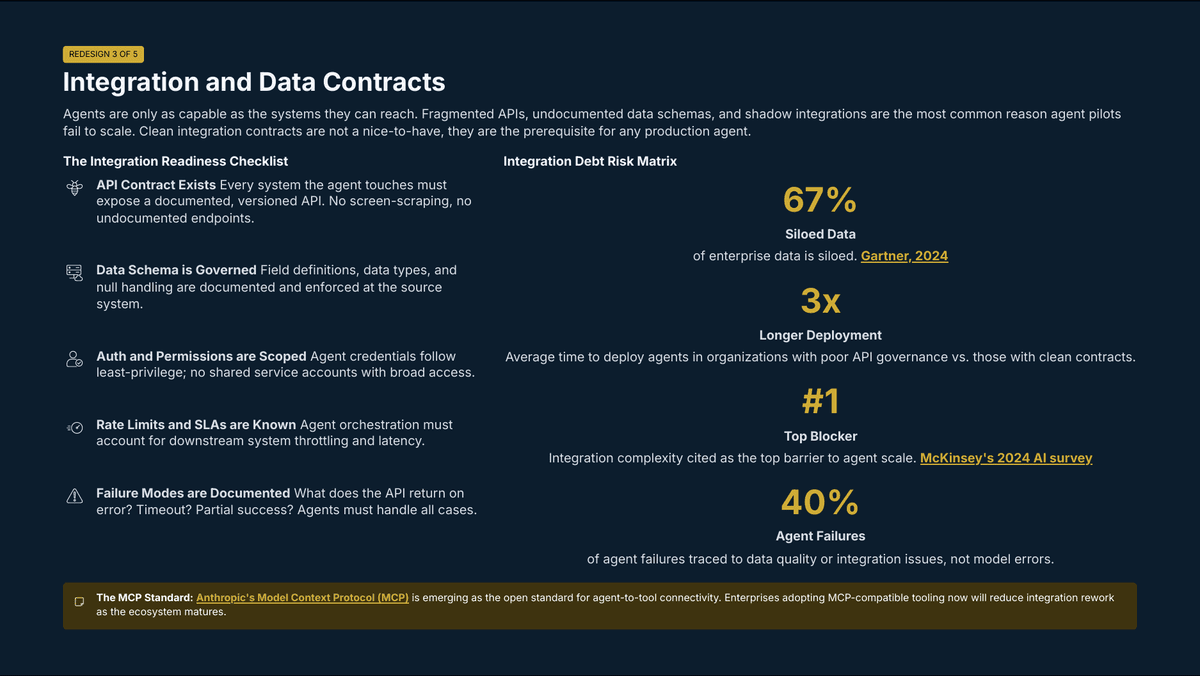
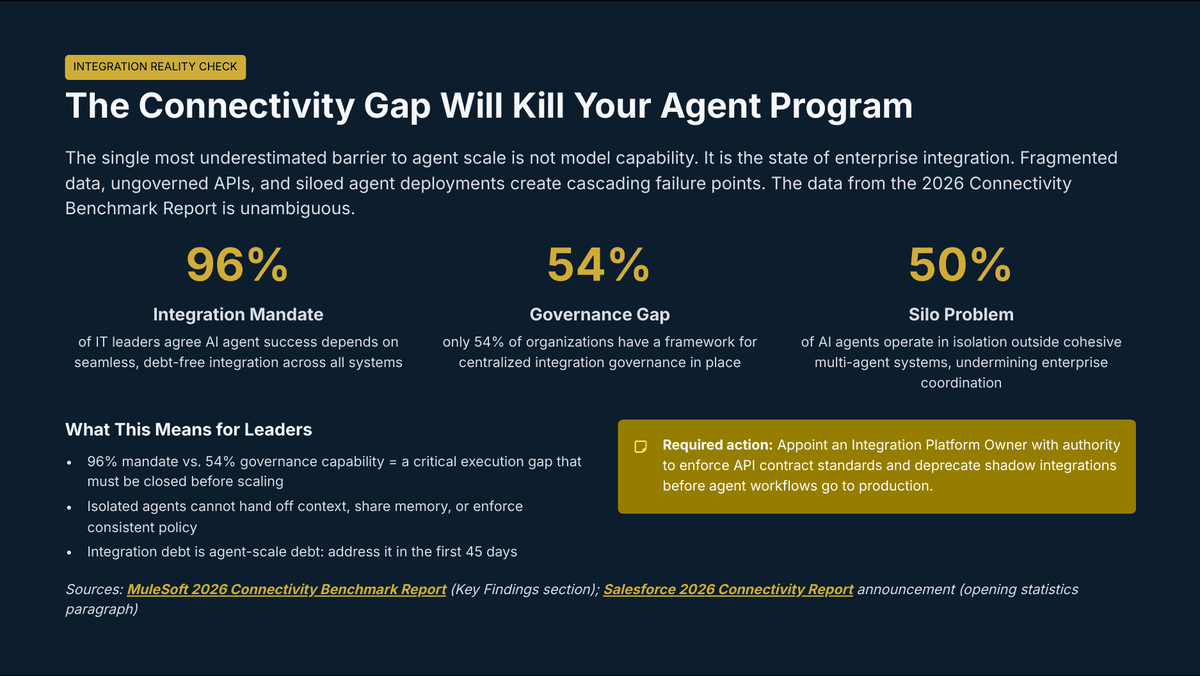
Agentic AI does not fail because models underperform. It fails because the surrounding enterprise infrastructure, ownership structures, and governance layers were designed for a world where humans executed every step. 96% of IT leaders↗ agree agent success depends on seamless data integration across all systems, yet most enterprises have fragmented data contracts, unclear ownership, and no governance framework for autonomous execution. The distinction between a copilot (assists) and an agent (executes) is consequential - an agent's error may already be acted upon before a human can catch it.
The Solution
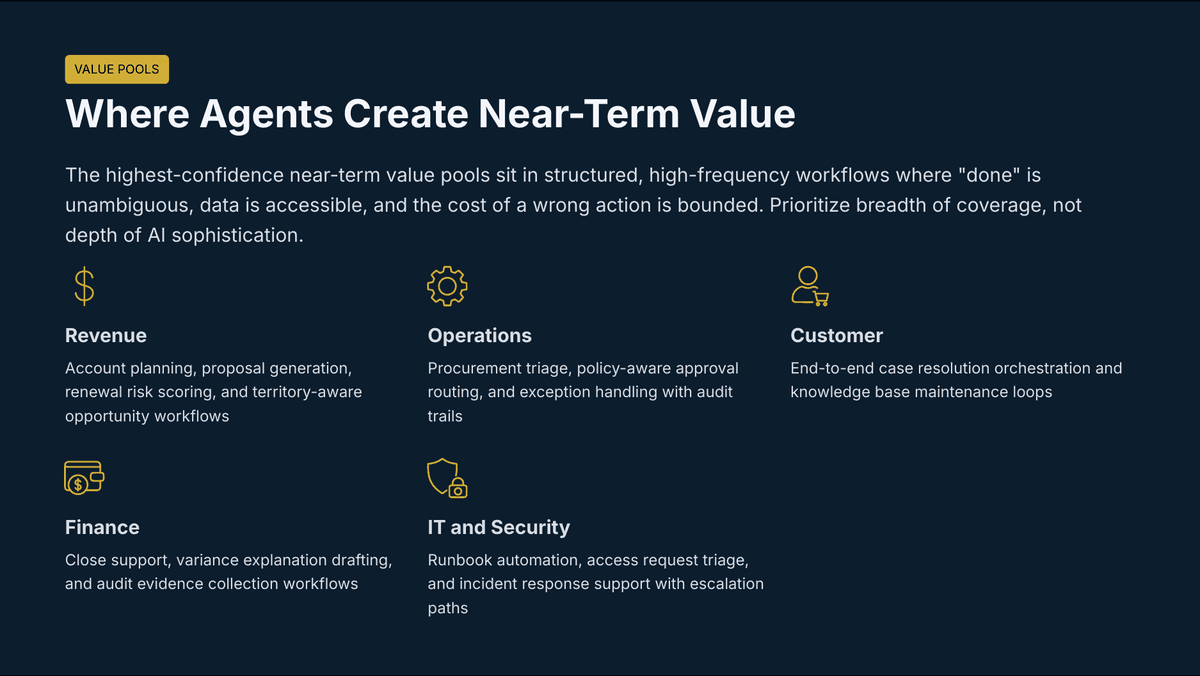
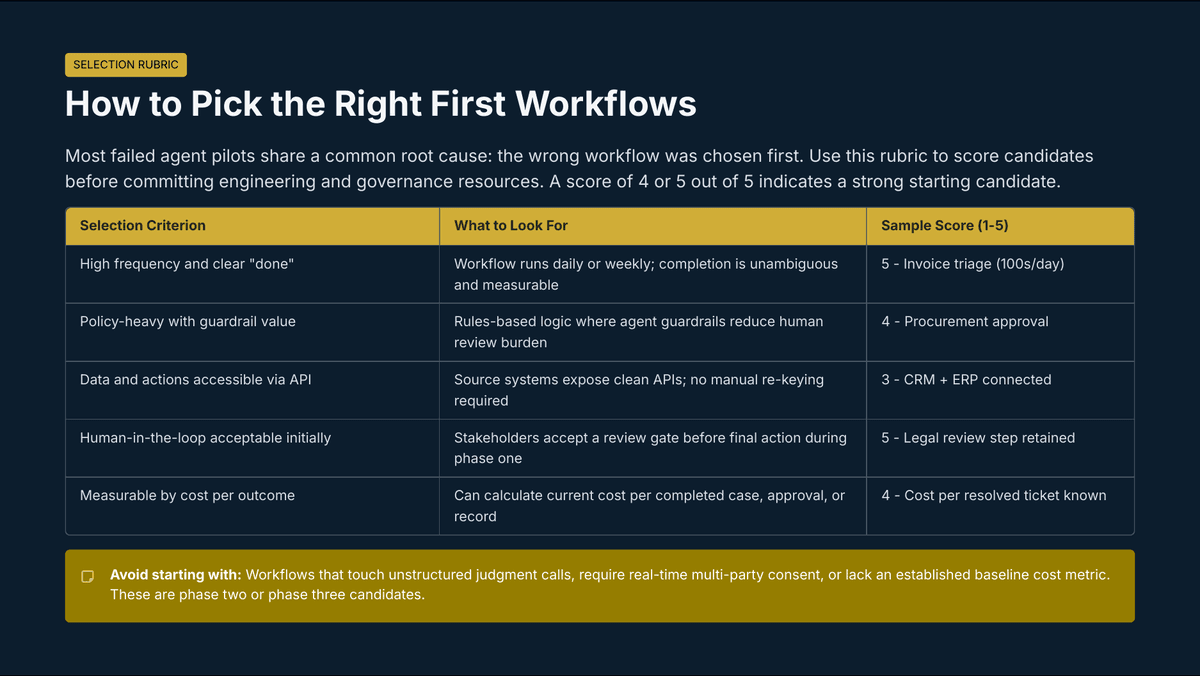
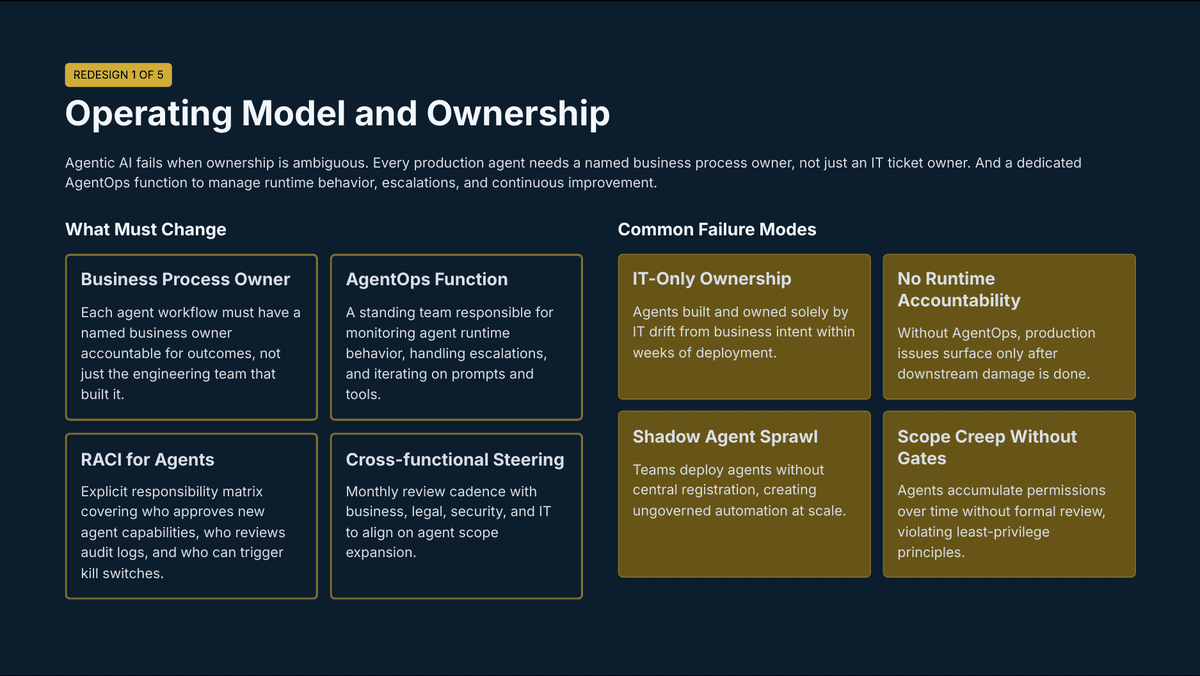
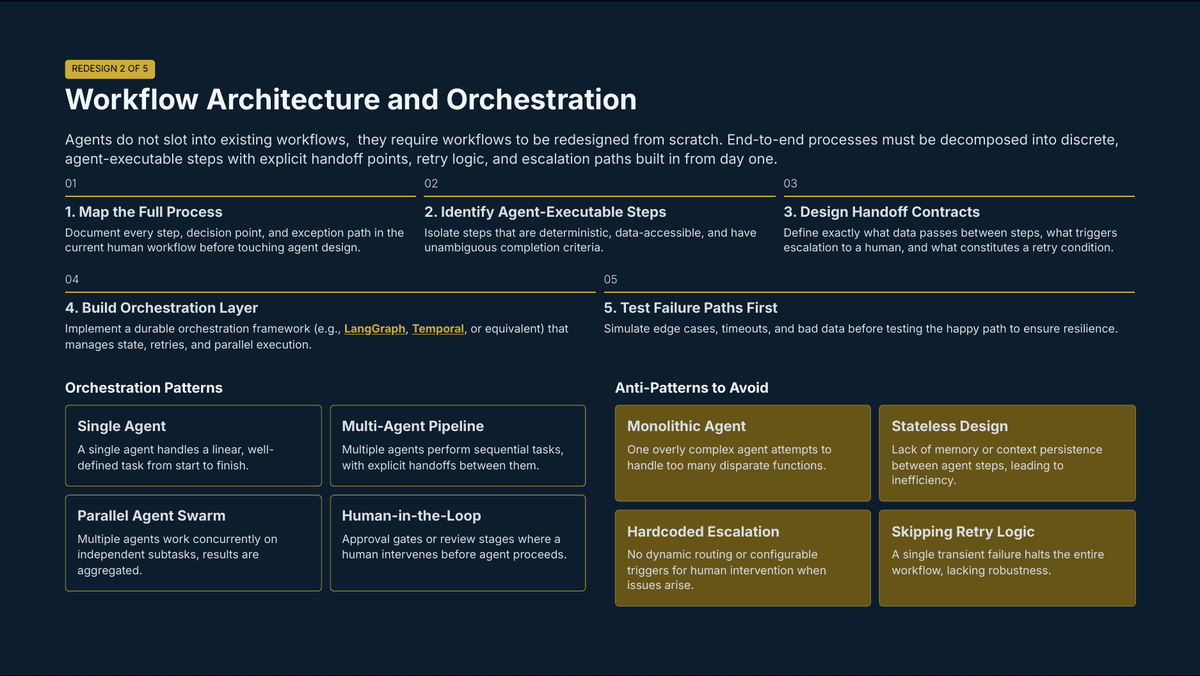
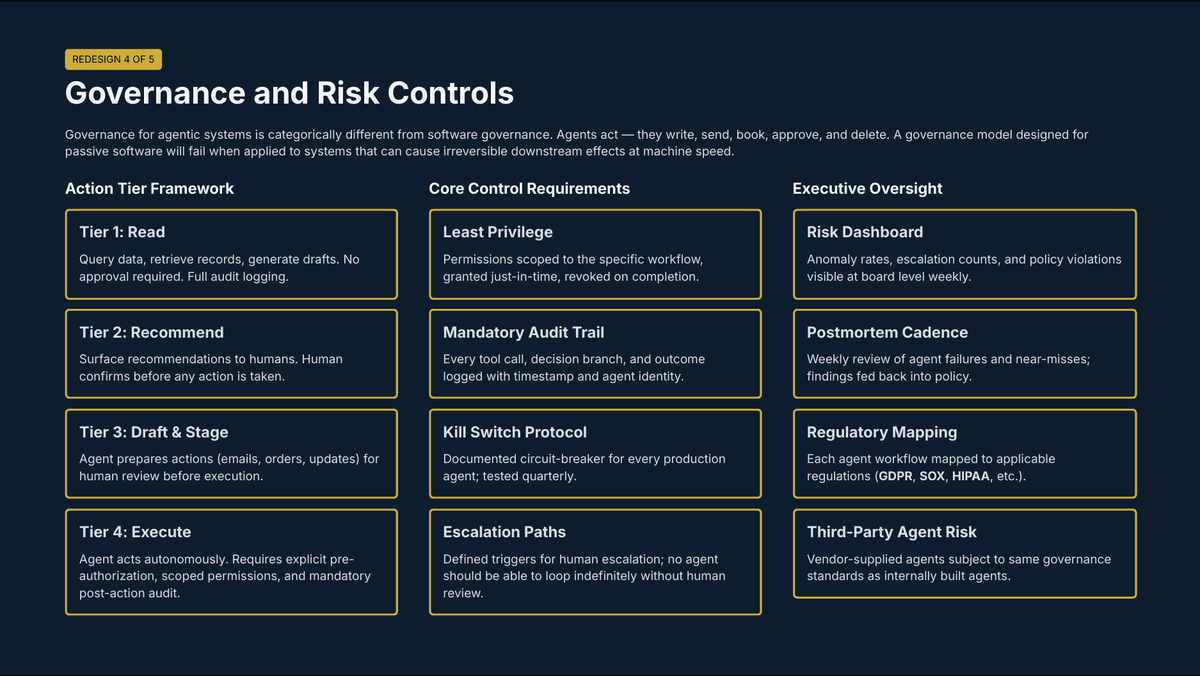
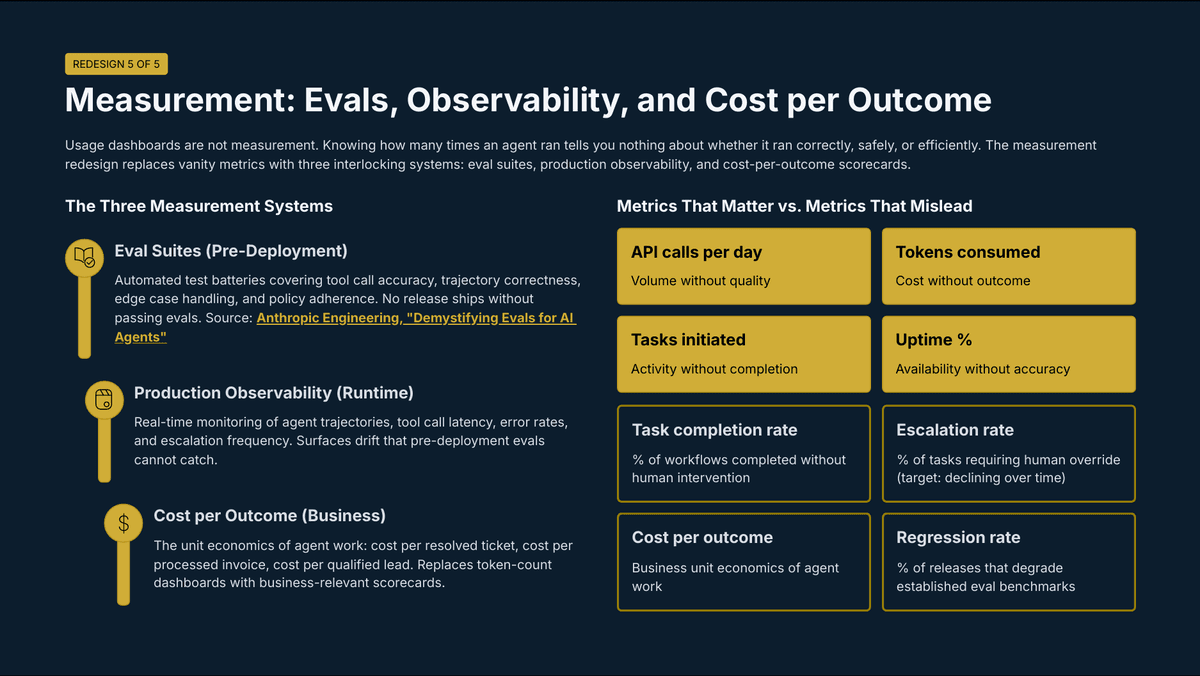
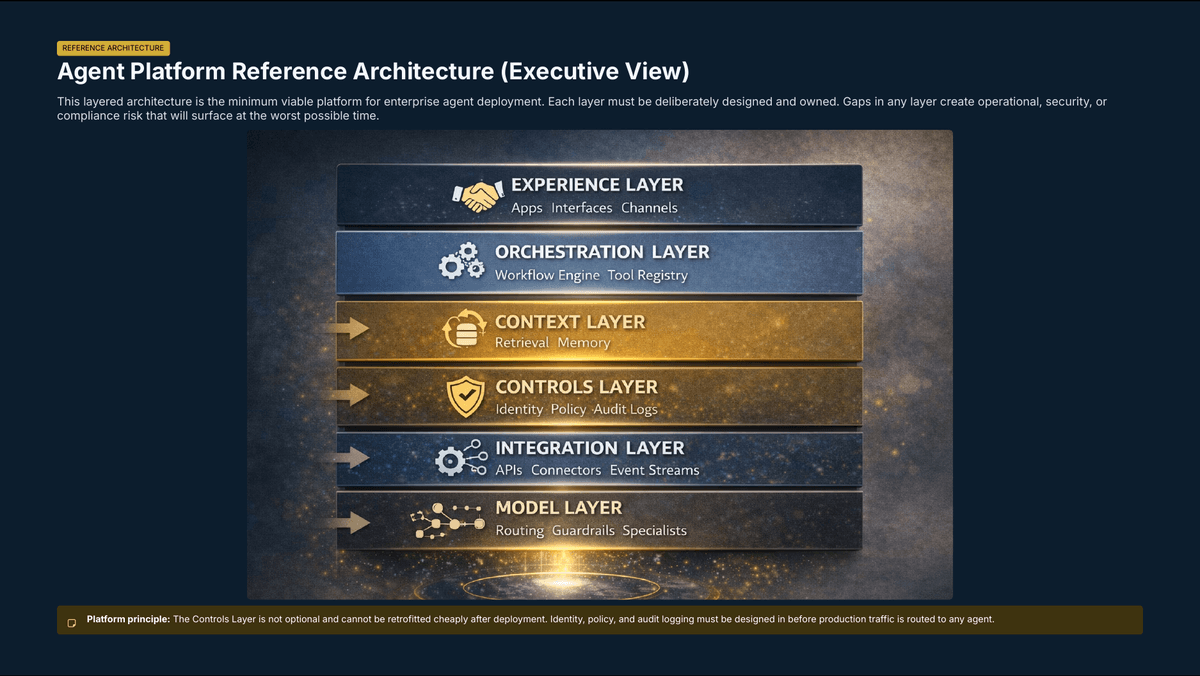
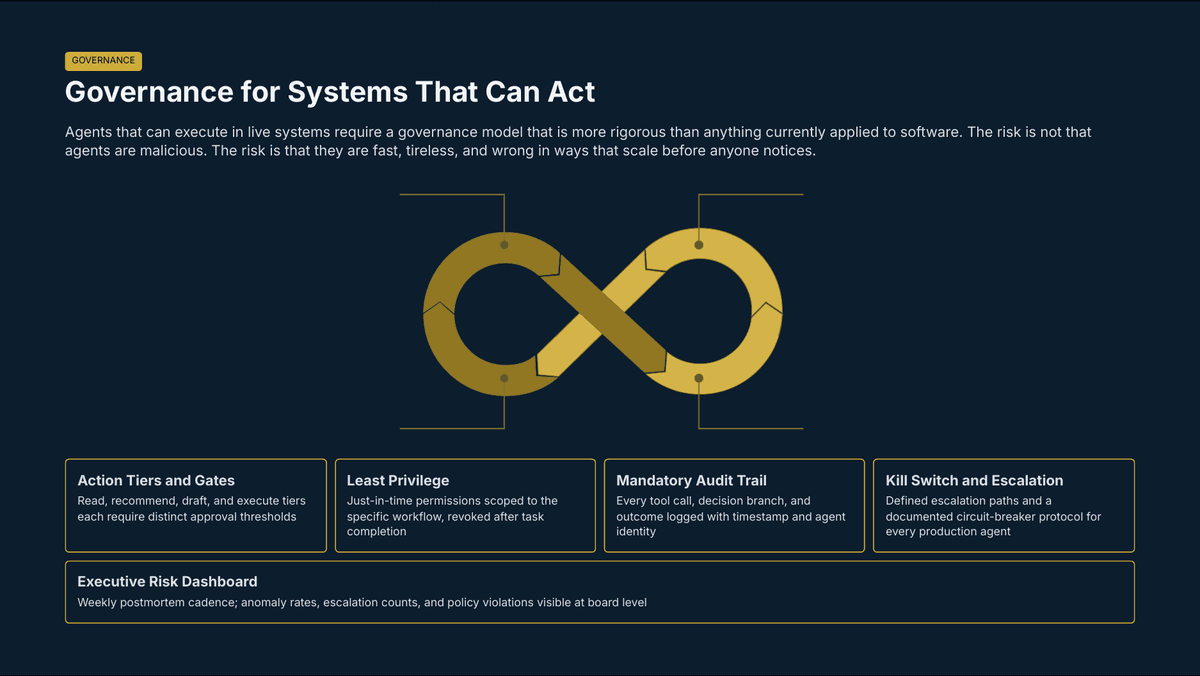
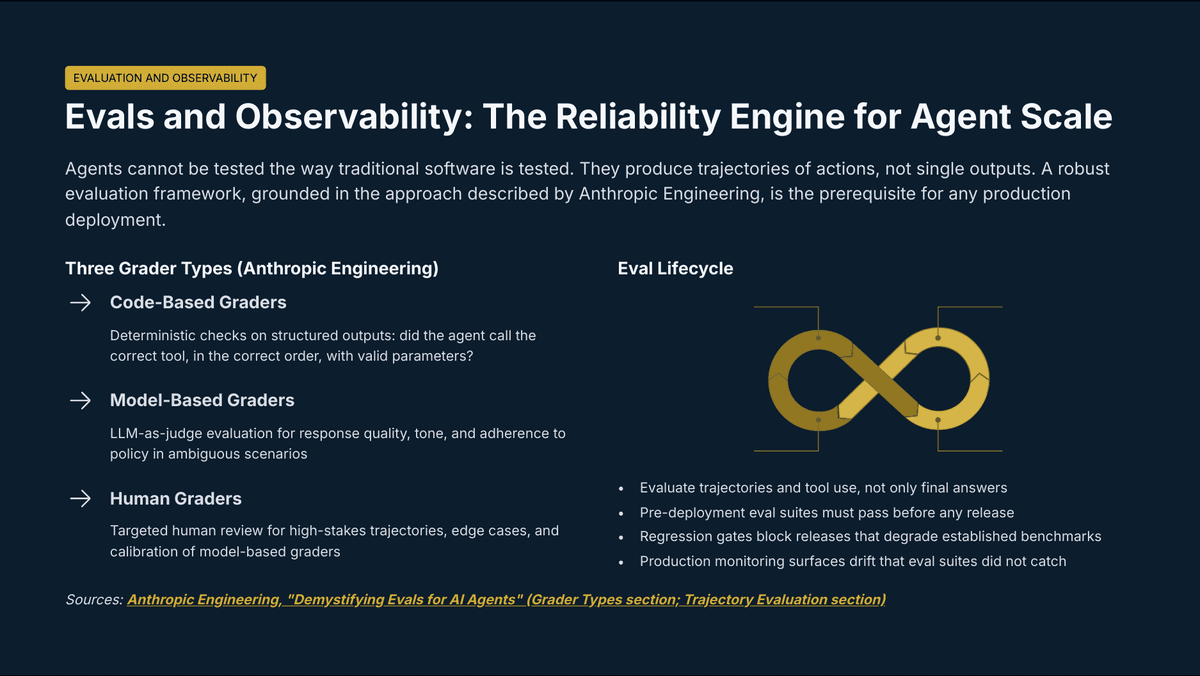
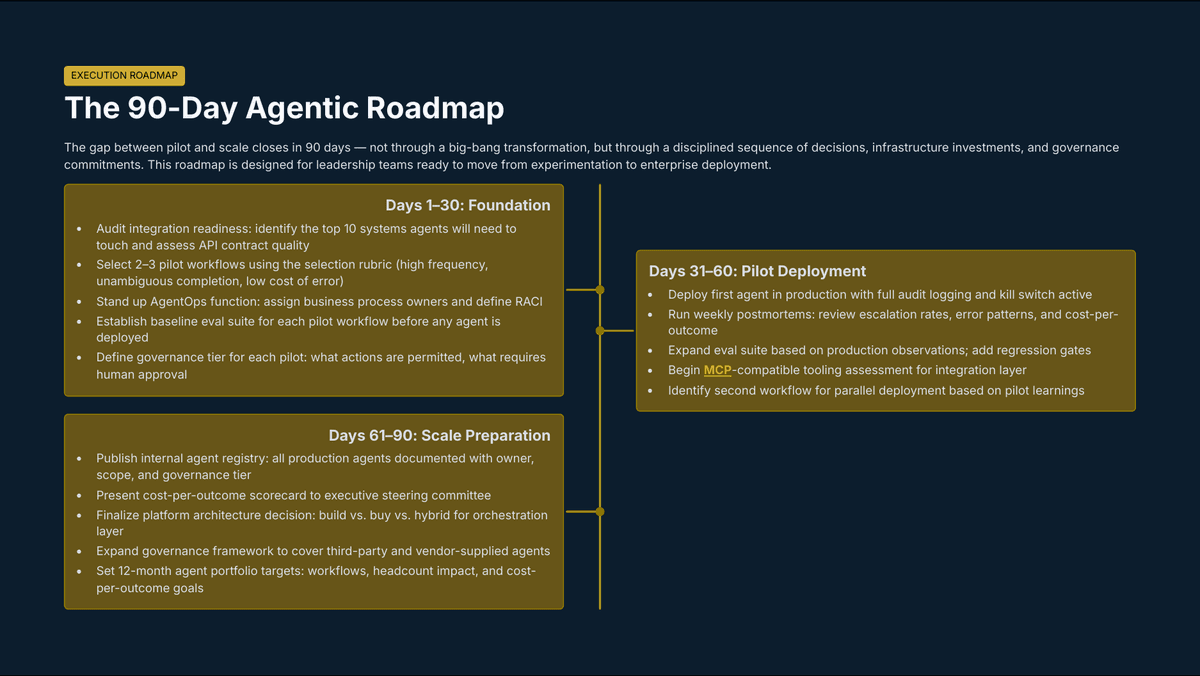
Developed the 5 Redesigns framework as a structured transformation roadmap: (1) Operating Model - assign business process owners and establish an AgentOps function for runtime monitoring; (2) Workflow Architecture - decompose end-to-end processes into agent-executable steps with handoff contracts and retry logic; (3) Integration - establish clean API contracts and eliminate shadow integration before scaling; (4) Governance - implement action tiers, approval gates, least-privilege permissions, mandatory audit logs, and kill switches; (5) Measurement - replace usage dashboards with eval suites, production monitors, and cost-per-outcome scorecards. Included a workflow selection rubric scoring candidates across 5 criteria and a near-term value pool map across Revenue, Operations, Customer, Finance, and IT.
Key Results
5 redesigns: operating model, workflow, integration, governance, measurement
Framework
4 tiers: read, recommend, draft, execute - with distinct governance requirements
Action Taxonomy
Revenue, Operations, Customer, Finance, IT - highest-confidence near-term targets
Value Pools
5-criterion scoring model for identifying the right first agent workflow
Selection Rubric
Key Takeaways
18
Pages
5
Redesign Frameworks
5
Enterprise Value Pools
81%
of Leaders Expect Agent Integration Within 18 Months
View Document
Download or Open in New Tab to access the links to download or access the tools / templates or research materials within the document.
Responsibilities
- Authored the full executive deck on enterprise agentic AI transformation
- Developed the 5 redesigns framework covering operating model, workflow architecture, integration, governance, and measurement
- Created the agent permission taxonomy distinguishing 4 action levels: read, recommend, draft, and execute
- Defined near-term value pools across Revenue, Operations, Customer, Finance, and IT functions
- Built the workflow selection rubric with 5 criteria for scoring agent candidates before committing engineering resources
Outcomes
18
Pages
5
Redesign Frameworks
5
Enterprise Value Pools
81%
of Leaders Expect Agent Integration Within 18 Months