Logan Sivanasen
AboutExperiencePublications
White Papers
CertificationsHonorsSkillsRecommendationsContact
Back to white papers
white-paper

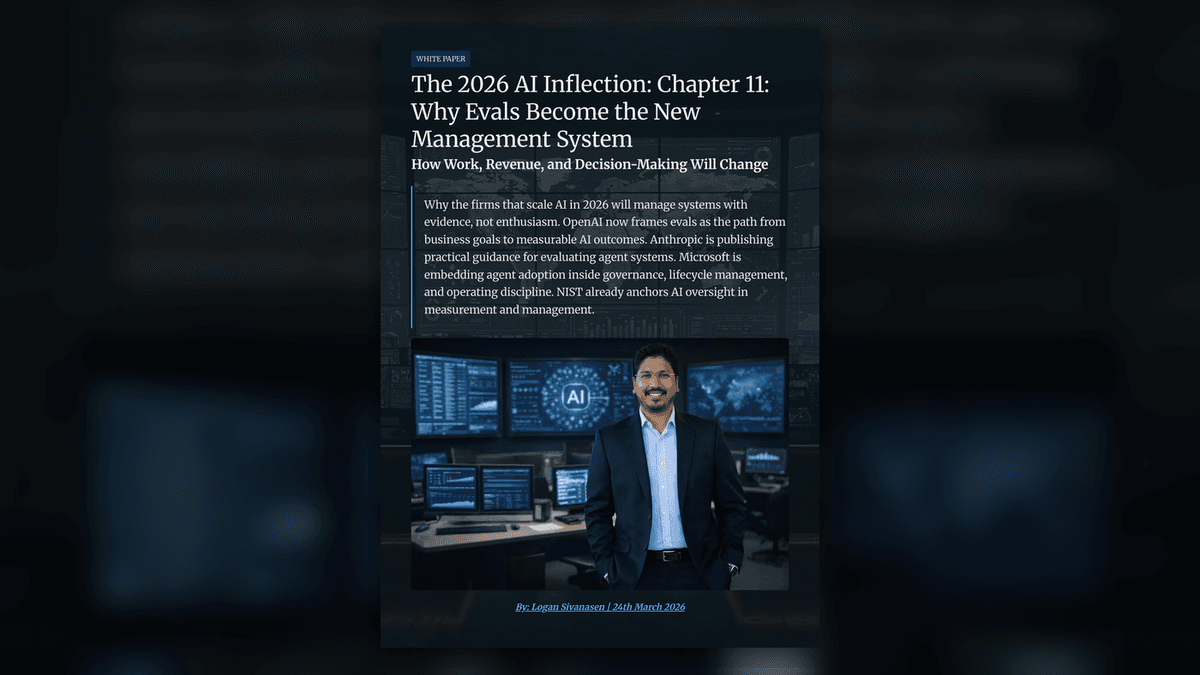
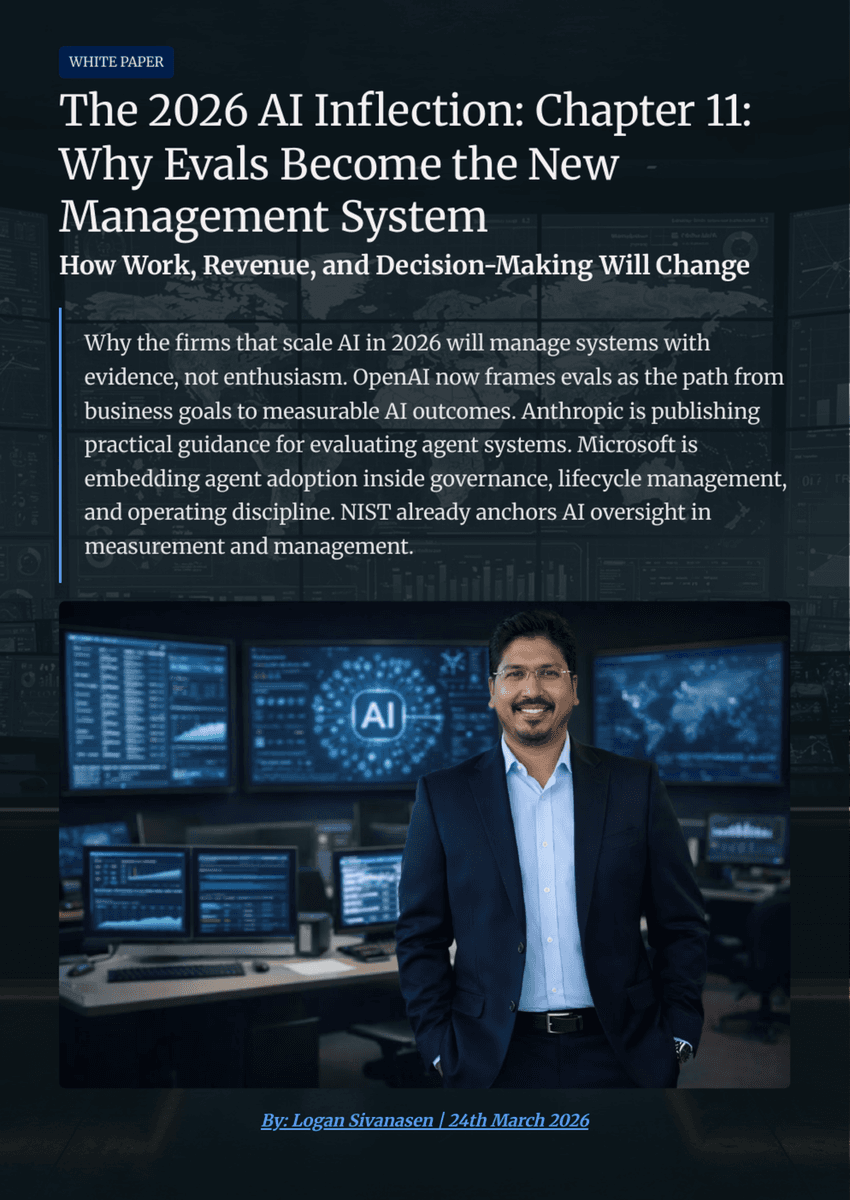
White Paper: The 2026 AI Inflection — Chapter 11: Why Evals Become the New Management System

A 16-page white paper examining why evaluations (evals) are becoming the primary management system for enterprise AI. Synthesizes frameworks from OpenAI, Anthropic, Microsoft, and NIST to show how evals replace dashboards as the operating discipline for AI at scale.

Author / Lead

2026-03-24

Overview

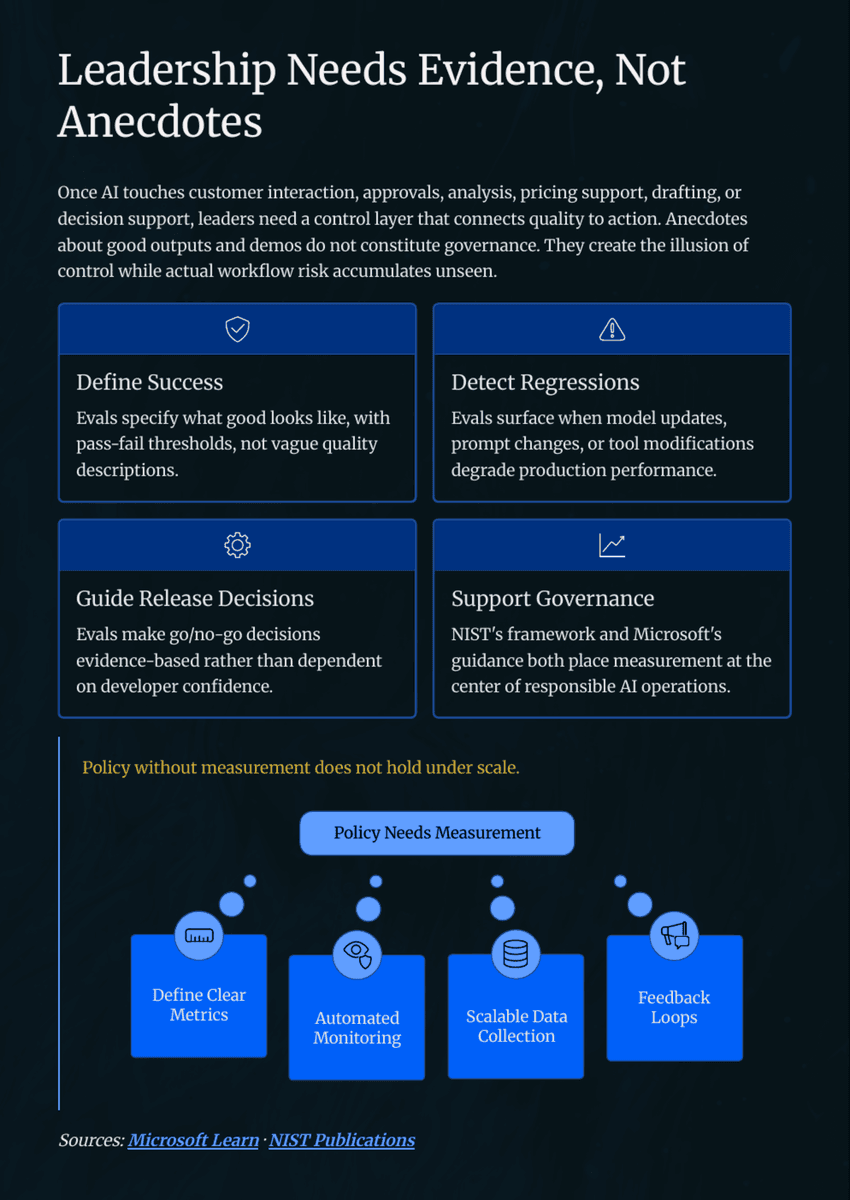
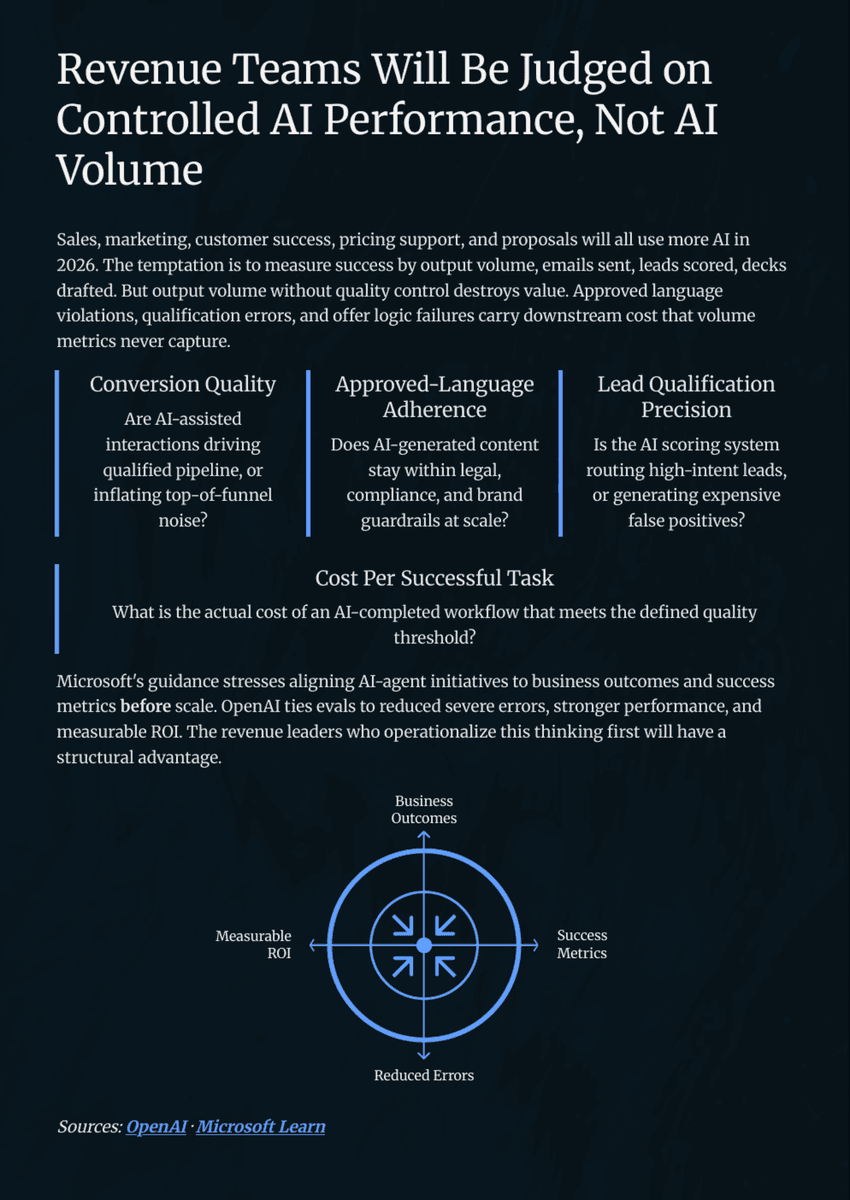
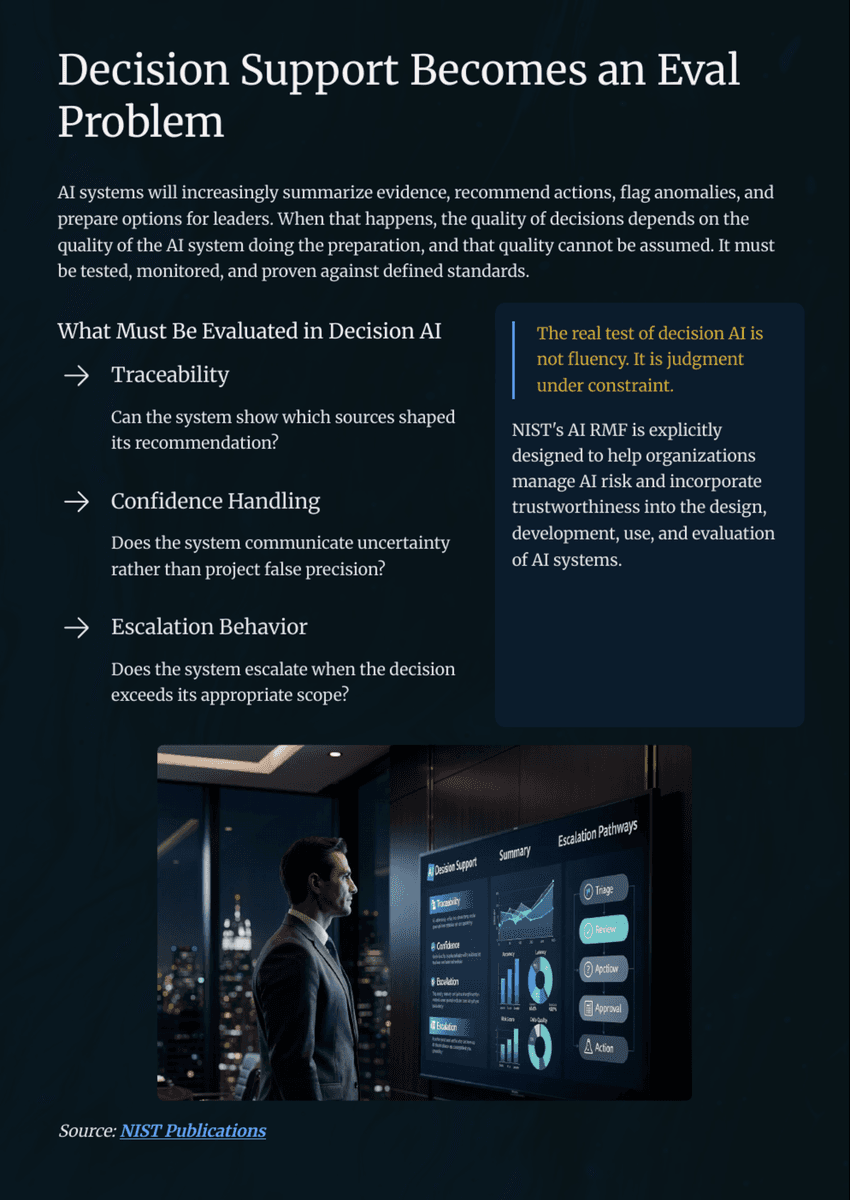
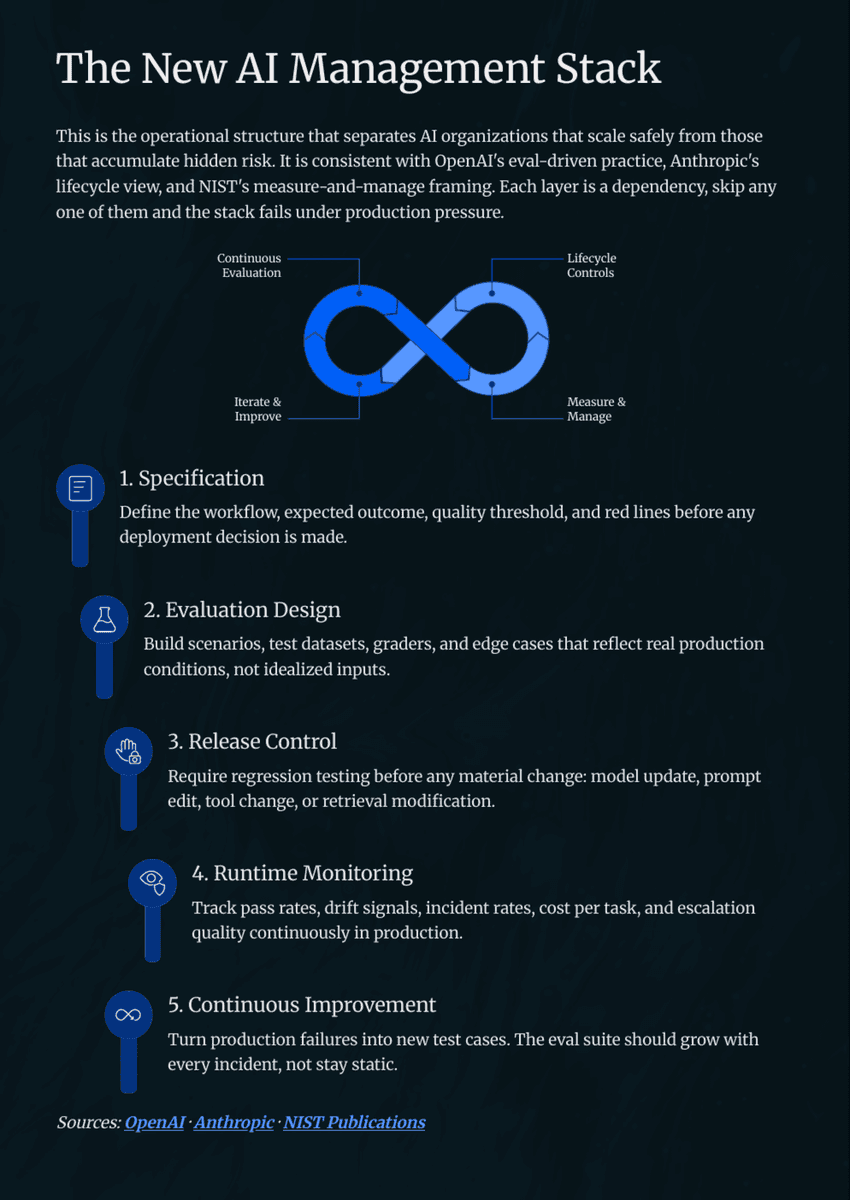
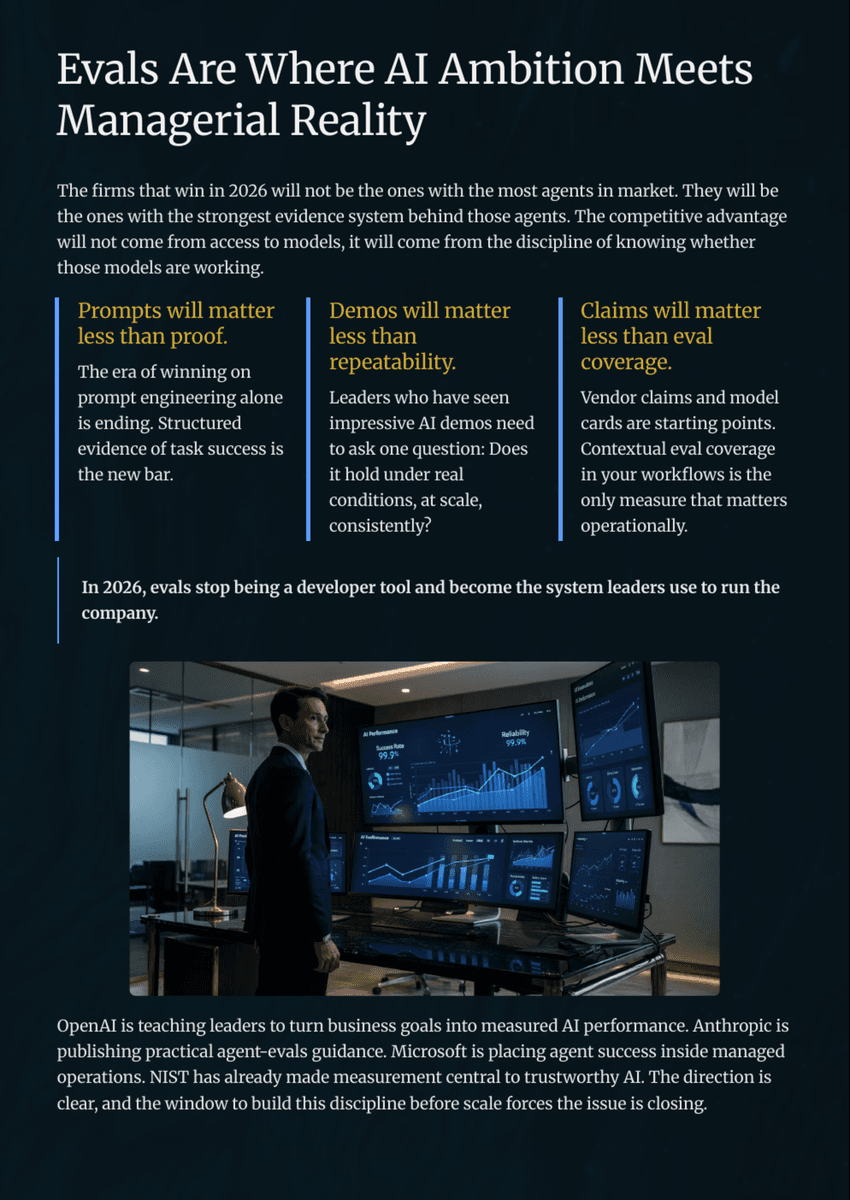
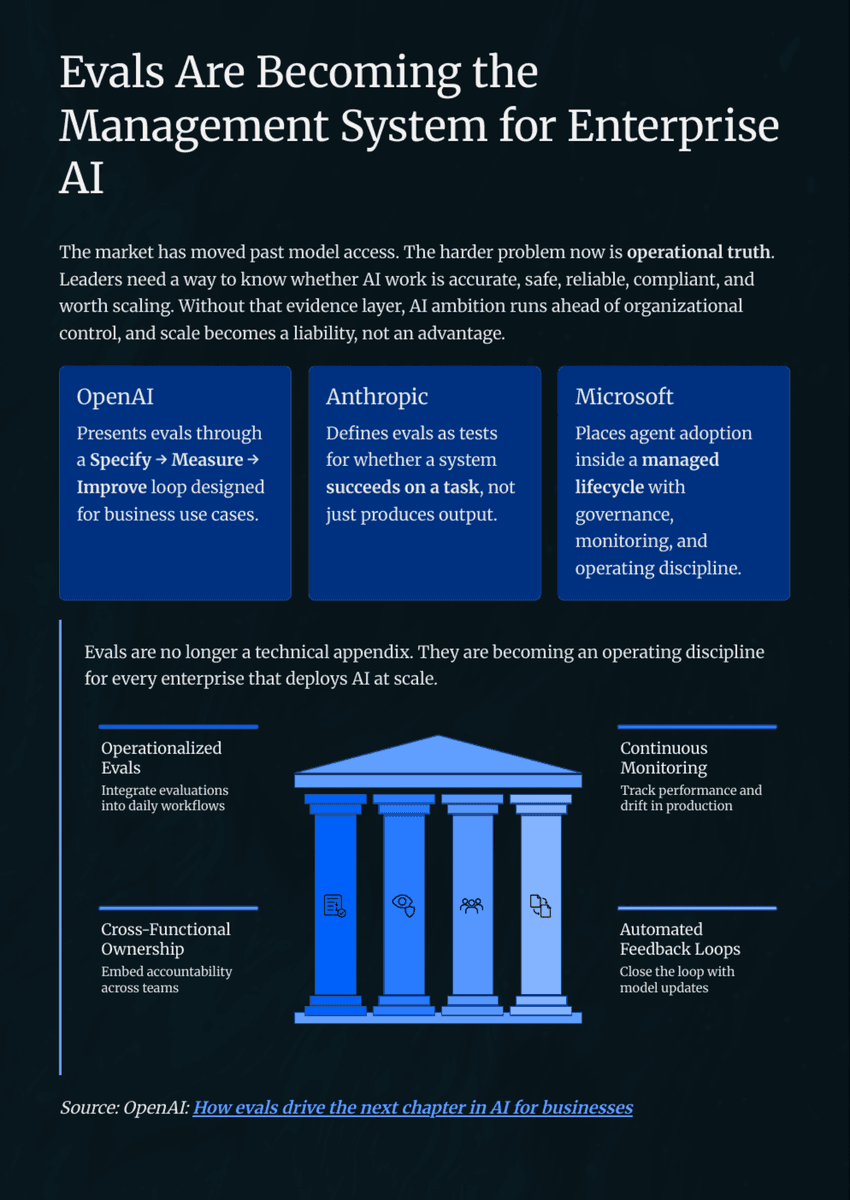
The firms that scale AI in 2026 will manage systems with evidence, not enthusiasm. OpenAI↗ now frames evals as the path from business goals to measurable AI outcomes through a Specify → Measure → Improve loop. Anthropic↗ is publishing practical guidance for evaluating agent systems with code-based, model-based, and human graders. Microsoft↗ is embedding agent adoption inside governance, lifecycle management, and operating discipline. NIST↗ already anchors AI oversight in measurement and management.

Case Study

The Challenge

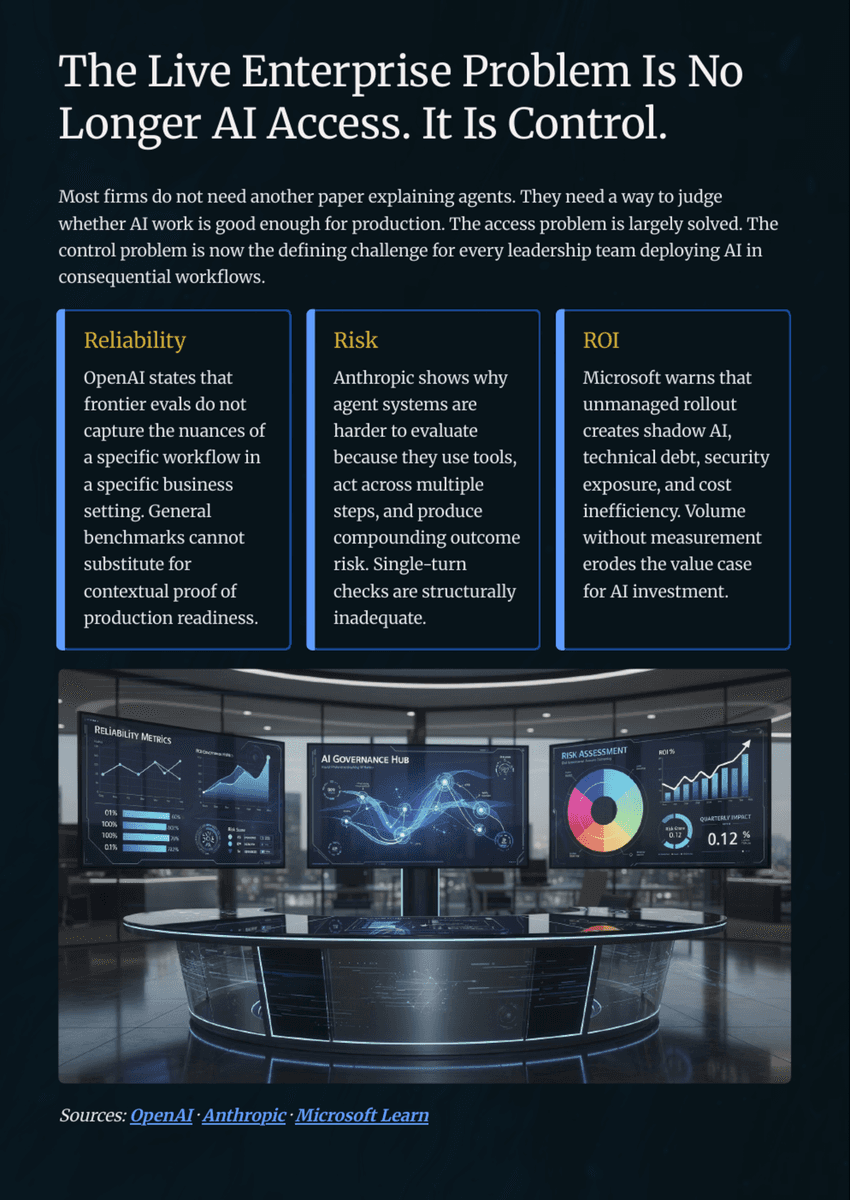
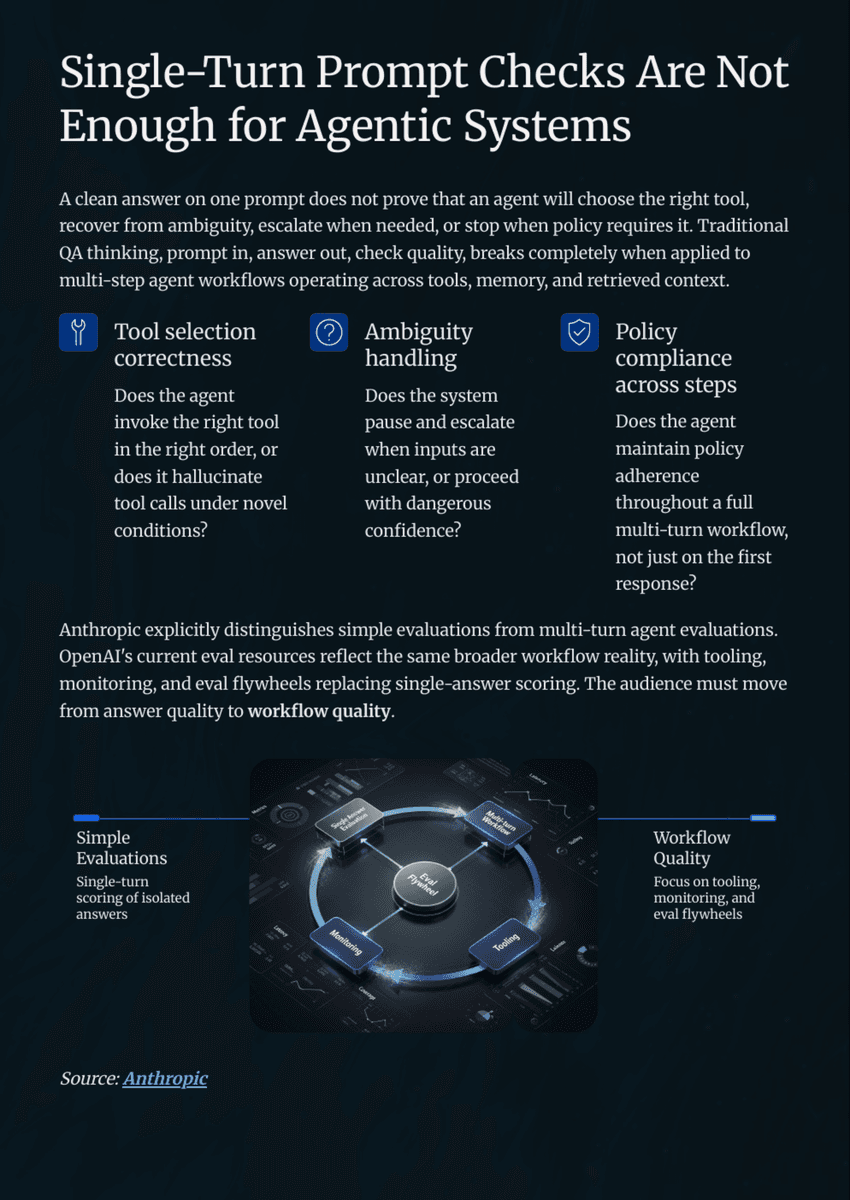
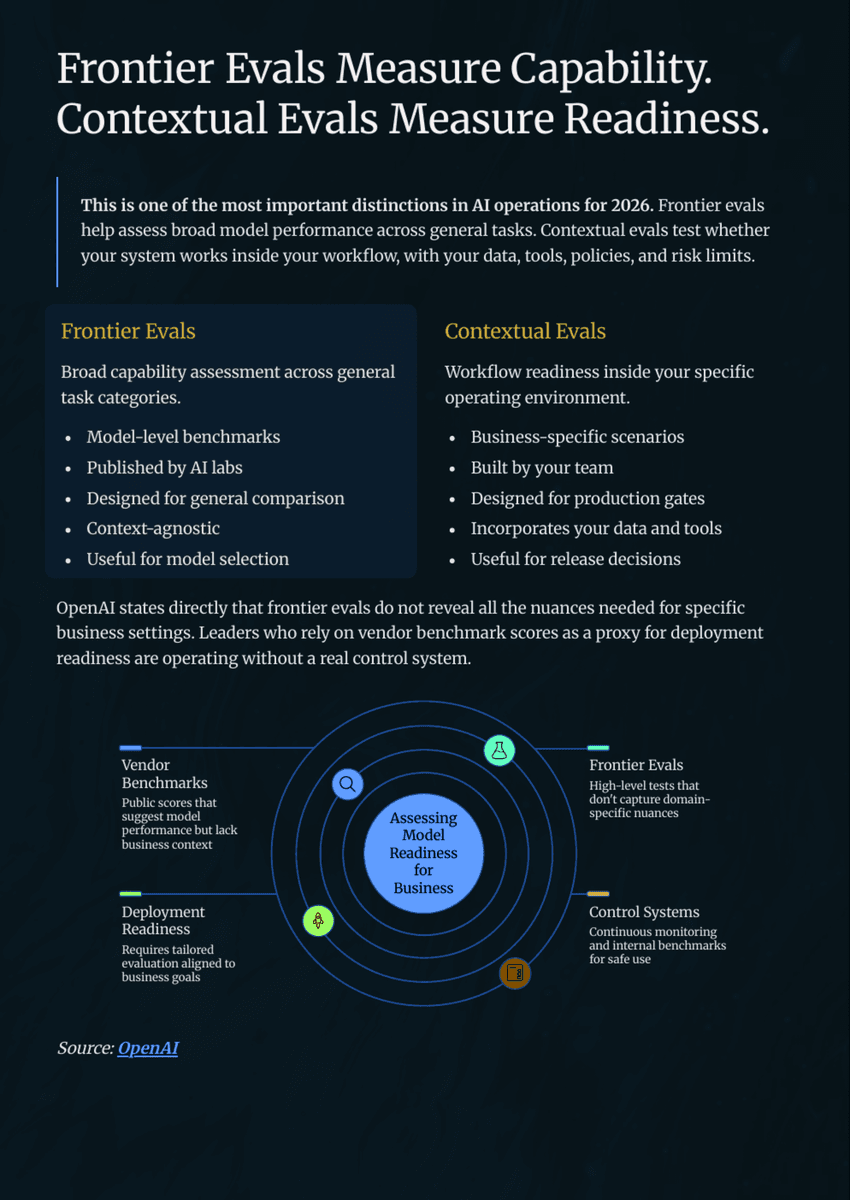
Most firms do not need another paper explaining agents. They need a way to judge whether AI work is good enough for production. The access problem is largely solved. The control problem is now the defining challenge for every leadership team deploying AI in consequential workflows. Vendor benchmarks show capability at scale but cannot substitute for contextual proof of production readiness. OpenAI↗ states that frontier evals do not capture the nuances of a specific workflow in a specific business setting. Single-turn prompt checks break completely when applied to multi-step agent workflows operating across tools, memory, and retrieved context.

The Solution

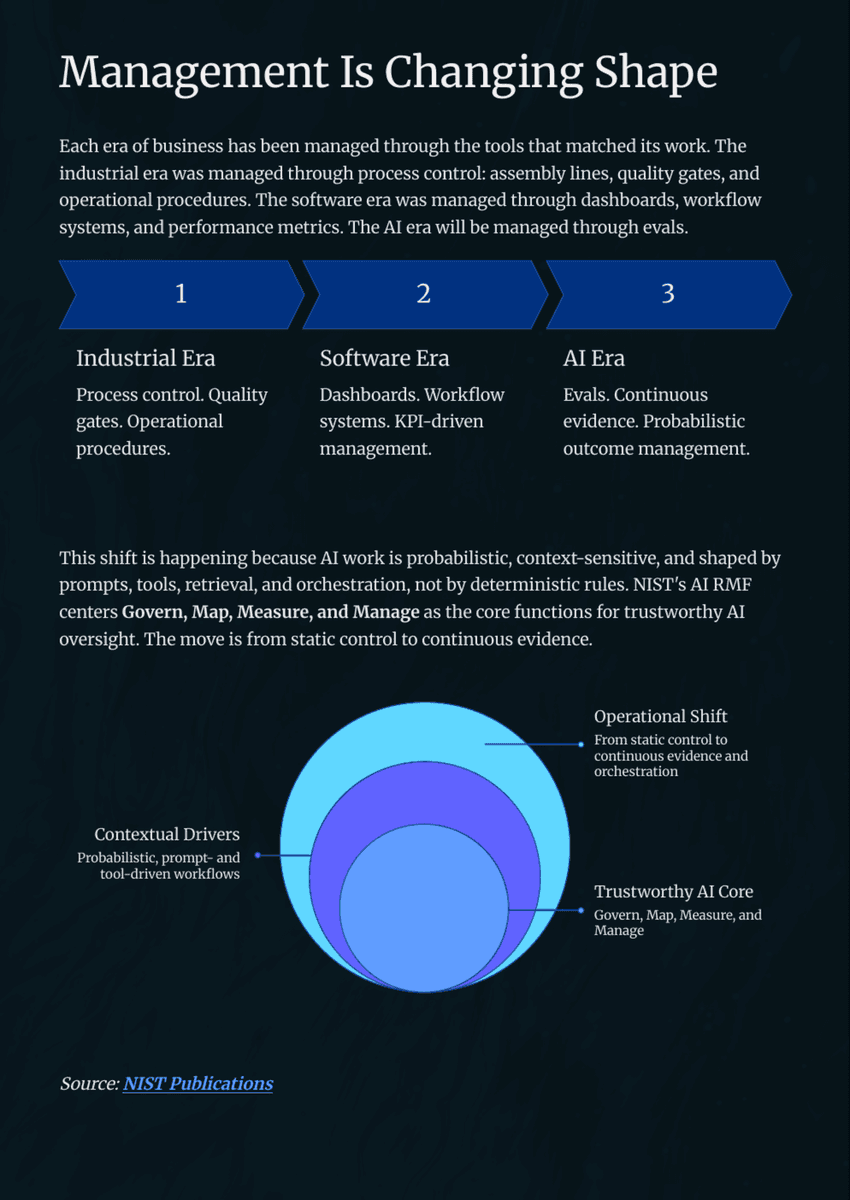
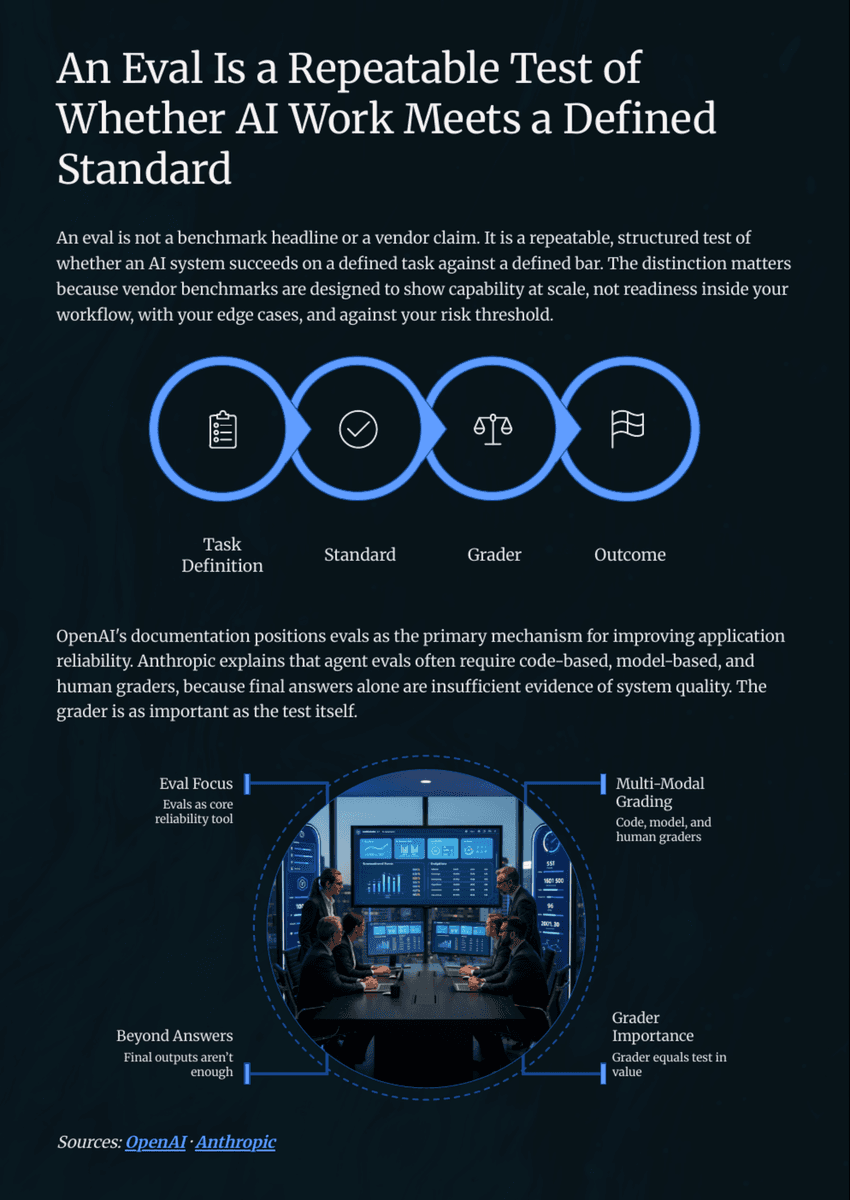
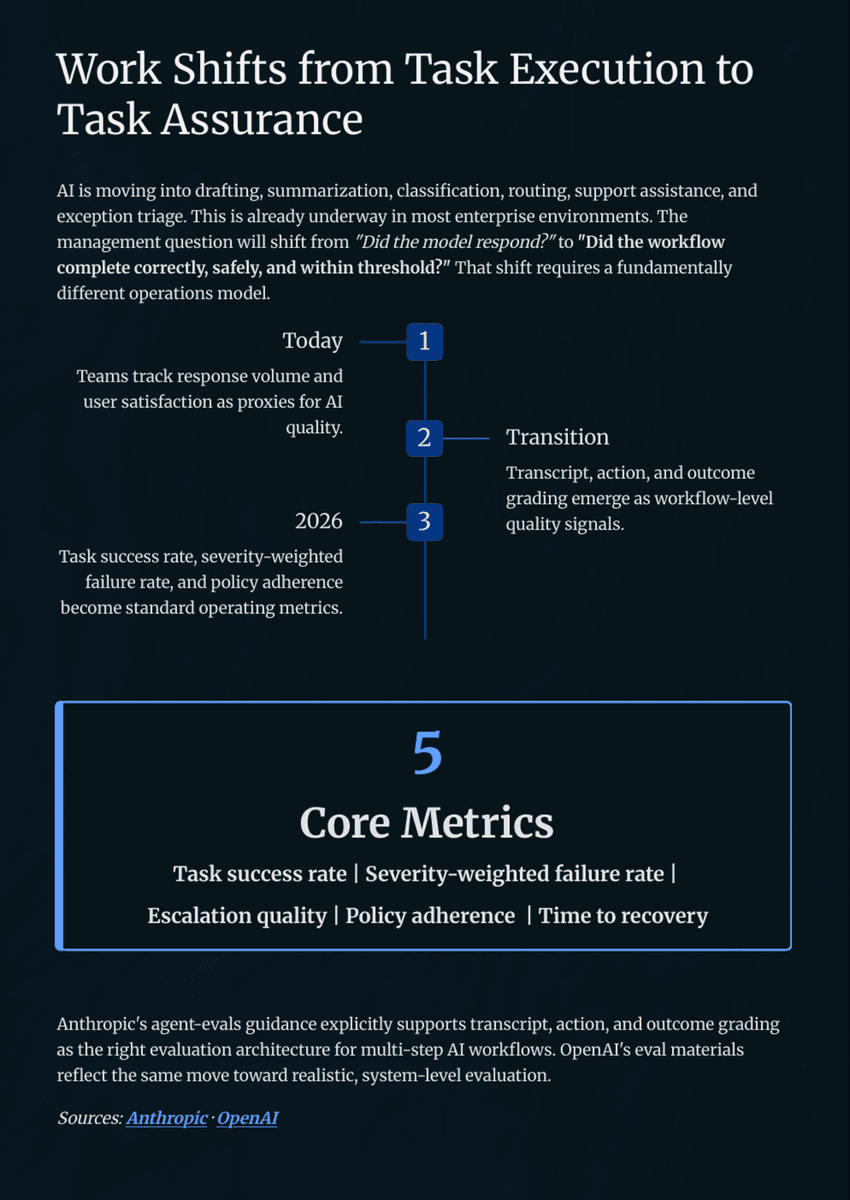
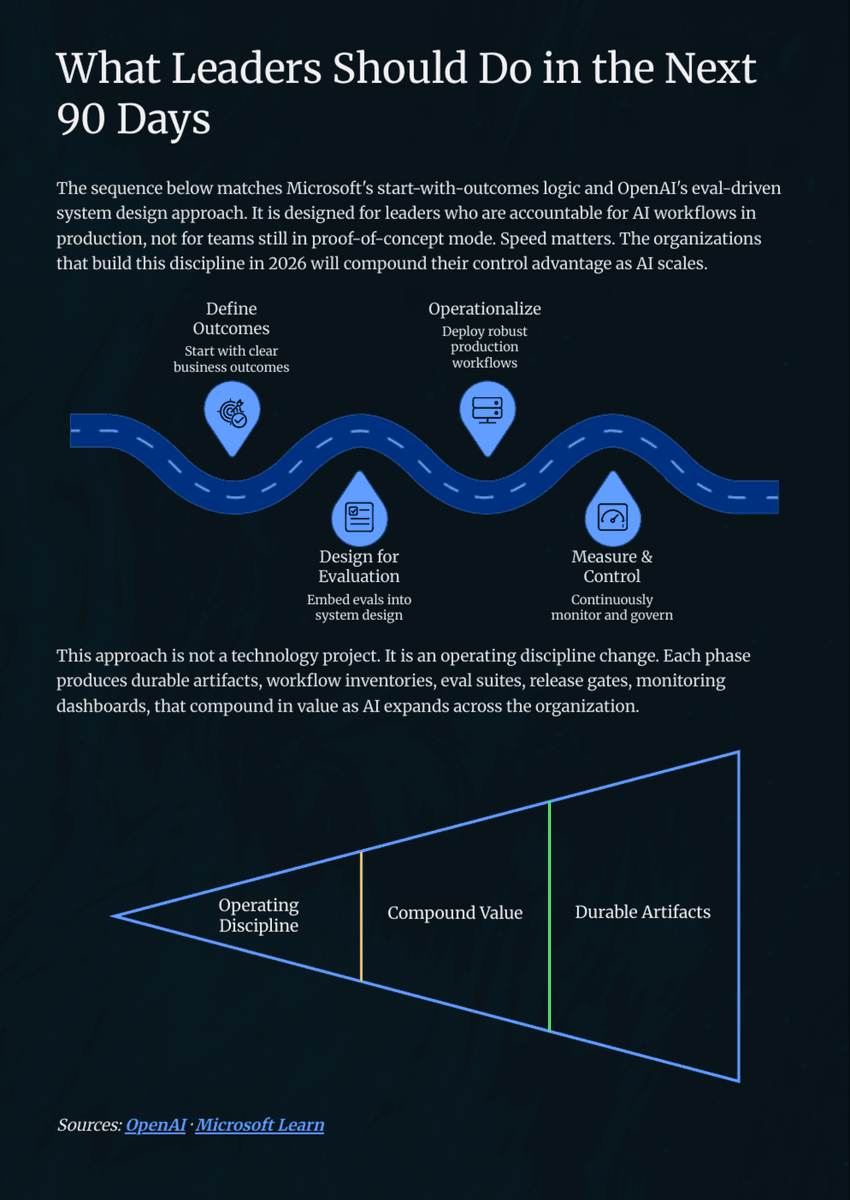
Mapped the evolution of management systems from industrial-era process control through software-era dashboards to AI-era evals. Synthesized OpenAI's↗ Specify → Measure → Improve loop, Anthropic's↗ multi-modal grading approach (code-based, model-based, human graders), and Microsoft's↗ managed lifecycle framework into a practical eval architecture. Distinguished frontier evals (broad capability assessment) from contextual evals (workflow readiness in your specific environment). Built a 5-dimension agent eval covering tool selection, ambiguity handling, policy compliance, escalation logic, and multi-turn consistency, grounded in NIST AI RMF↗ Govern-Map-Measure-Manage principles.

Key Results

OpenAI, Anthropic, Microsoft, and NIST frameworks synthesized into unified eval architecture

Framework Integration

Frontier evals (capability) vs contextual evals (production readiness) clearly separated

Eval Distinction

Code-based, model-based, and human graders mapped to appropriate eval scenarios

Grading Modalities

5 dimensions: tool selection, ambiguity handling, policy compliance, escalation, multi-turn consistency

Agent Eval Dimensions

View Document

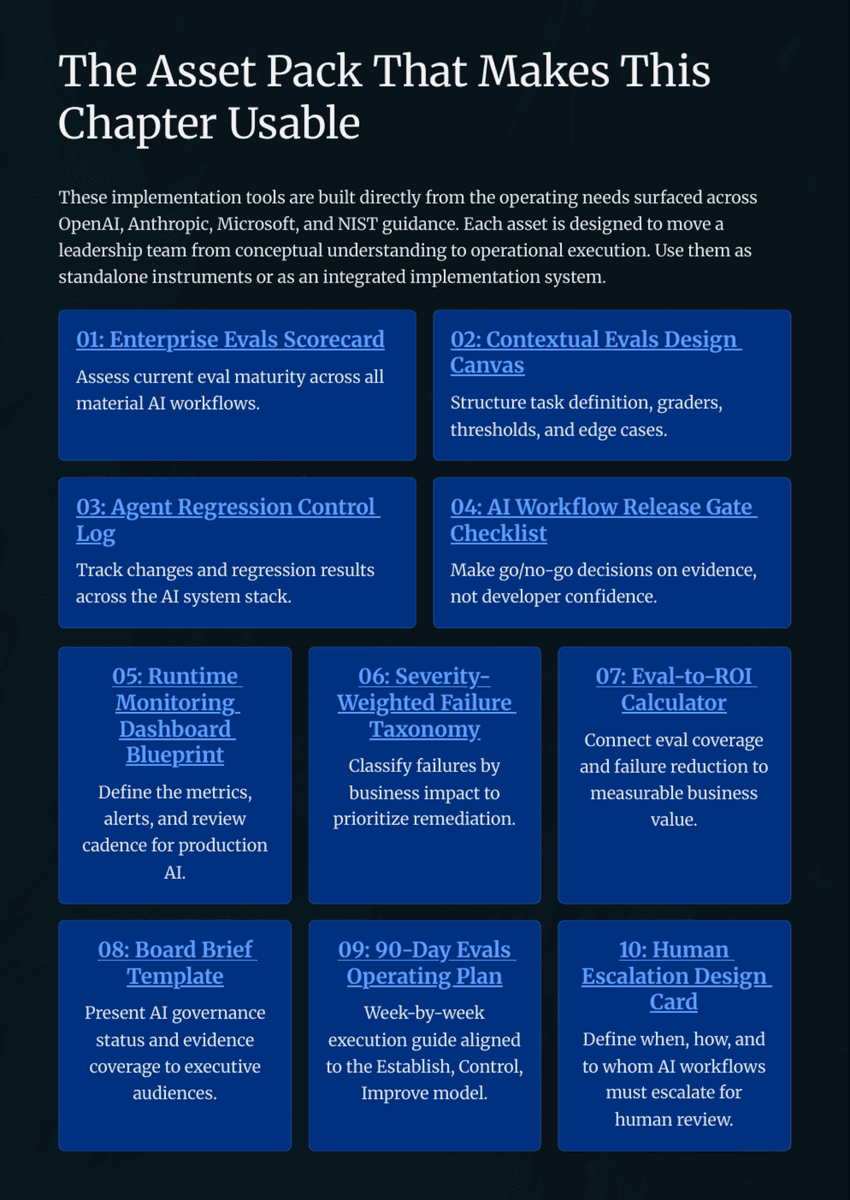
Download or Open in New Tab to access the links to download or access the tools / templates or research materials within the document.
Open in New TabDownload PDF
White Paper: The 2026 AI Inflection — Chapter 11: Why Evals Become the New Management System - Page 1
White Paper: The 2026 AI Inflection — Chapter 11: Why Evals Become the New Management System - Page 2
White Paper: The 2026 AI Inflection — Chapter 11: Why Evals Become the New Management System - Page 3
White Paper: The 2026 AI Inflection — Chapter 11: Why Evals Become the New Management System - Page 4
White Paper: The 2026 AI Inflection — Chapter 11: Why Evals Become the New Management System - Page 5
White Paper: The 2026 AI Inflection — Chapter 11: Why Evals Become the New Management System - Page 6
White Paper: The 2026 AI Inflection — Chapter 11: Why Evals Become the New Management System - Page 7
White Paper: The 2026 AI Inflection — Chapter 11: Why Evals Become the New Management System - Page 8
White Paper: The 2026 AI Inflection — Chapter 11: Why Evals Become the New Management System - Page 9
White Paper: The 2026 AI Inflection — Chapter 11: Why Evals Become the New Management System - Page 10
White Paper: The 2026 AI Inflection — Chapter 11: Why Evals Become the New Management System - Page 11
White Paper: The 2026 AI Inflection — Chapter 11: Why Evals Become the New Management System - Page 12
White Paper: The 2026 AI Inflection — Chapter 11: Why Evals Become the New Management System - Page 13
White Paper: The 2026 AI Inflection — Chapter 11: Why Evals Become the New Management System - Page 14
White Paper: The 2026 AI Inflection — Chapter 11: Why Evals Become the New Management System - Page 15
White Paper: The 2026 AI Inflection — Chapter 11: Why Evals Become the New Management System - Page 16

Responsibilities

  • Authored the full white paper on evals as enterprise AI management systems
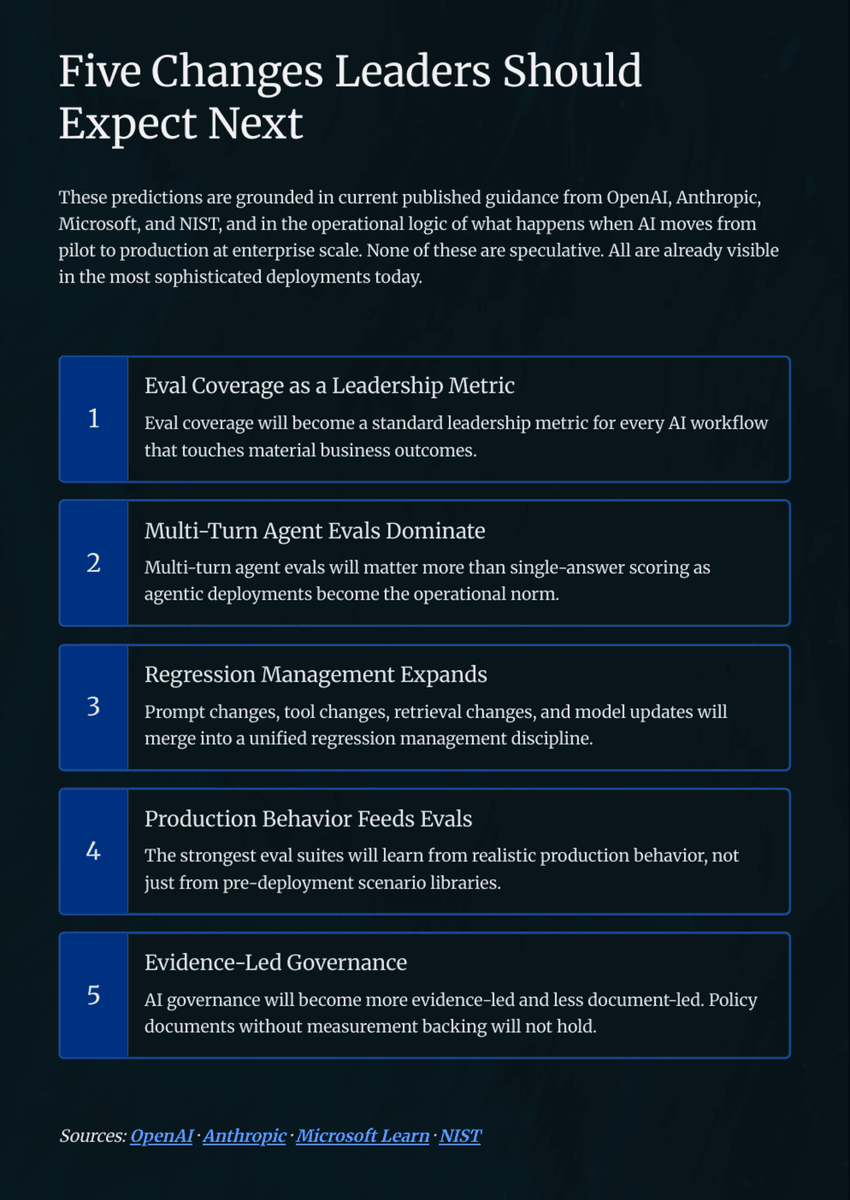
  • Synthesized eval frameworks from OpenAI (Specify → Measure → Improve), Anthropic (multi-turn agent evaluations), and Microsoft (lifecycle management)
  • Developed the contextual eval architecture distinguishing frontier evals from contextual evals
  • Mapped the shift from process control to continuous evidence-based management
  • Integrated NIST AI RMF Govern-Map-Measure-Manage framework into practical eval design

Outcomes

16

Pages

4

Source Frameworks

3

Grading Modalities

5

Eval Dimensions