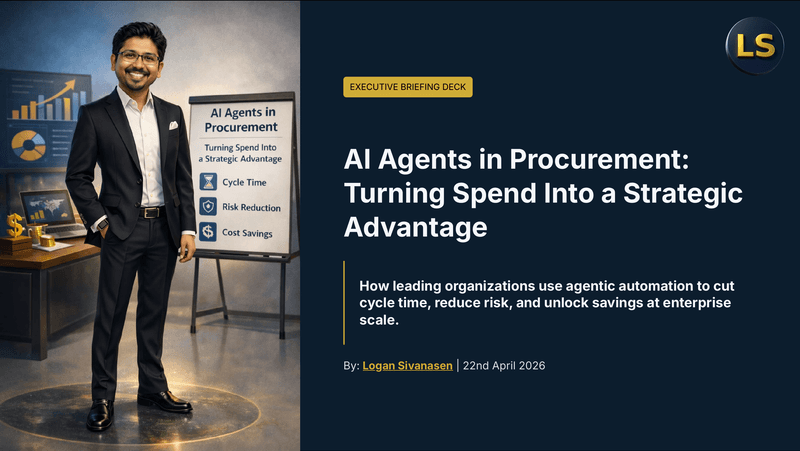
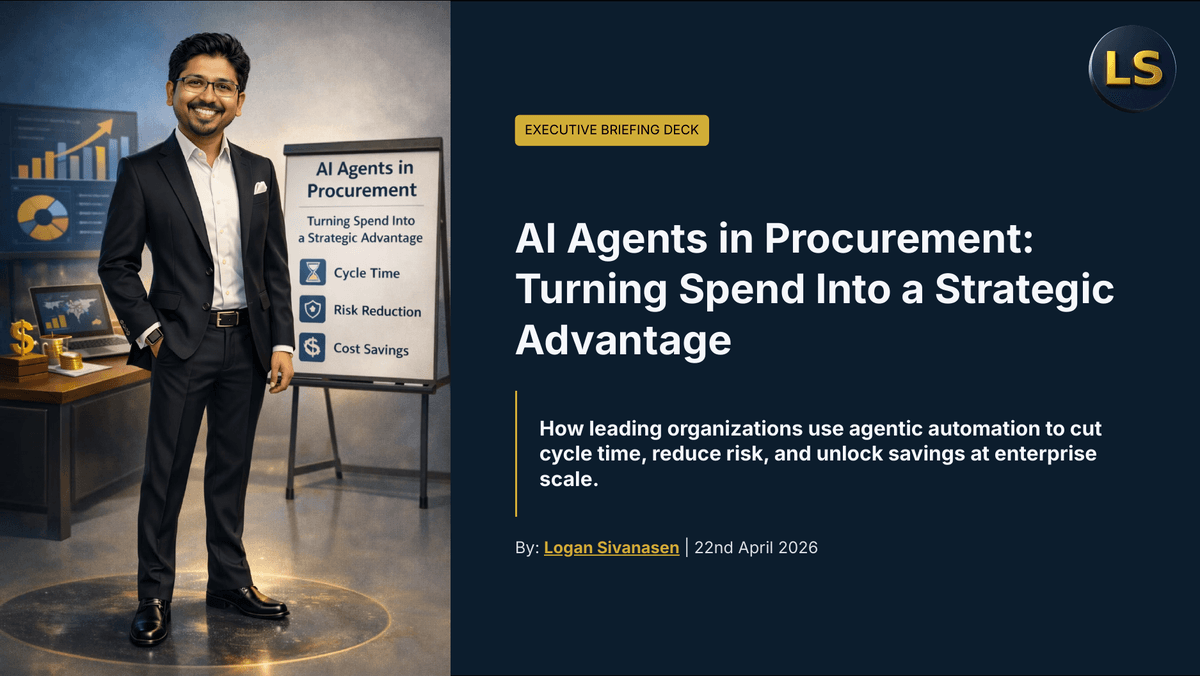
AI Agents in Procurement: Turning Spend Into a Strategic Advantage
A 17-page executive briefing on how leading organizations deploy agentic AI across procurement to cut cycle time, reduce risk, and unlock savings at enterprise scale. Covers spend intelligence, contract risk detection, supplier monitoring, and the operating model required to make agents reliable and auditable.
Author / Lead
2026-04-22
Overview
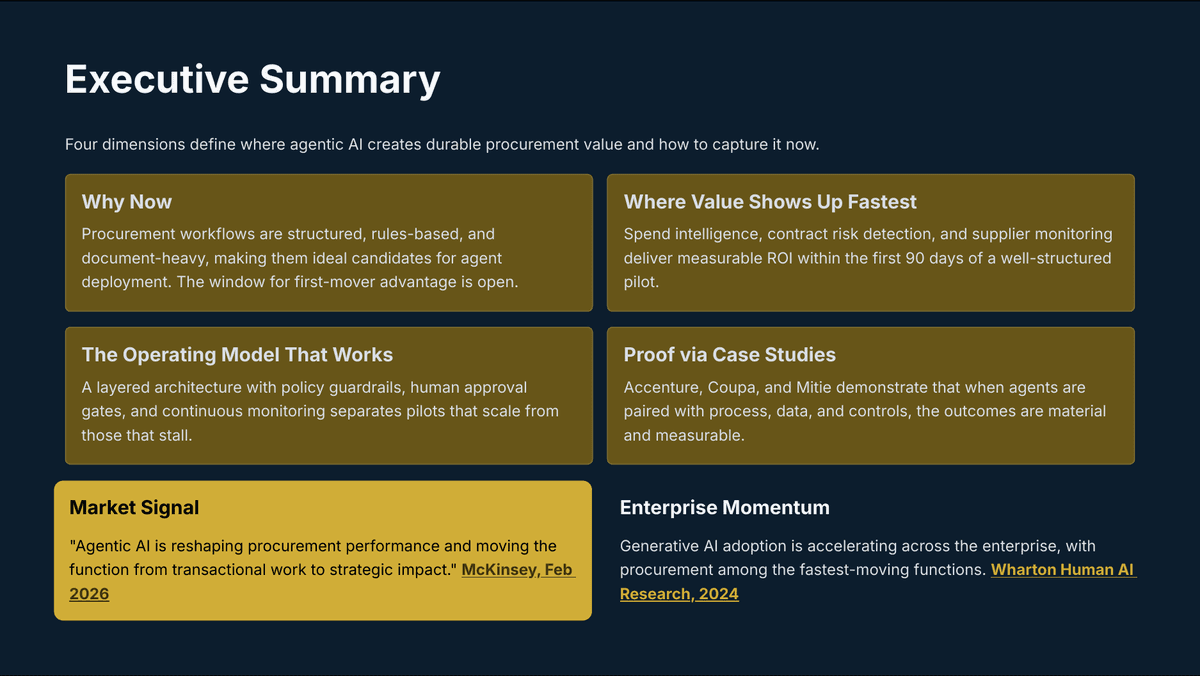
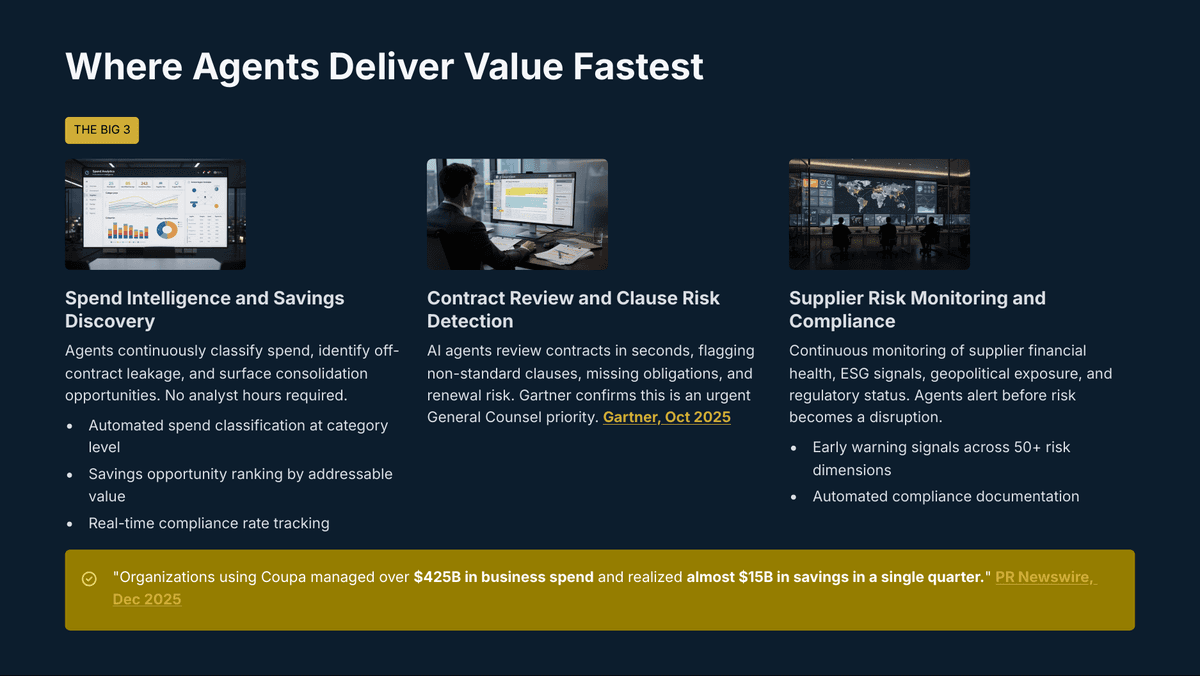
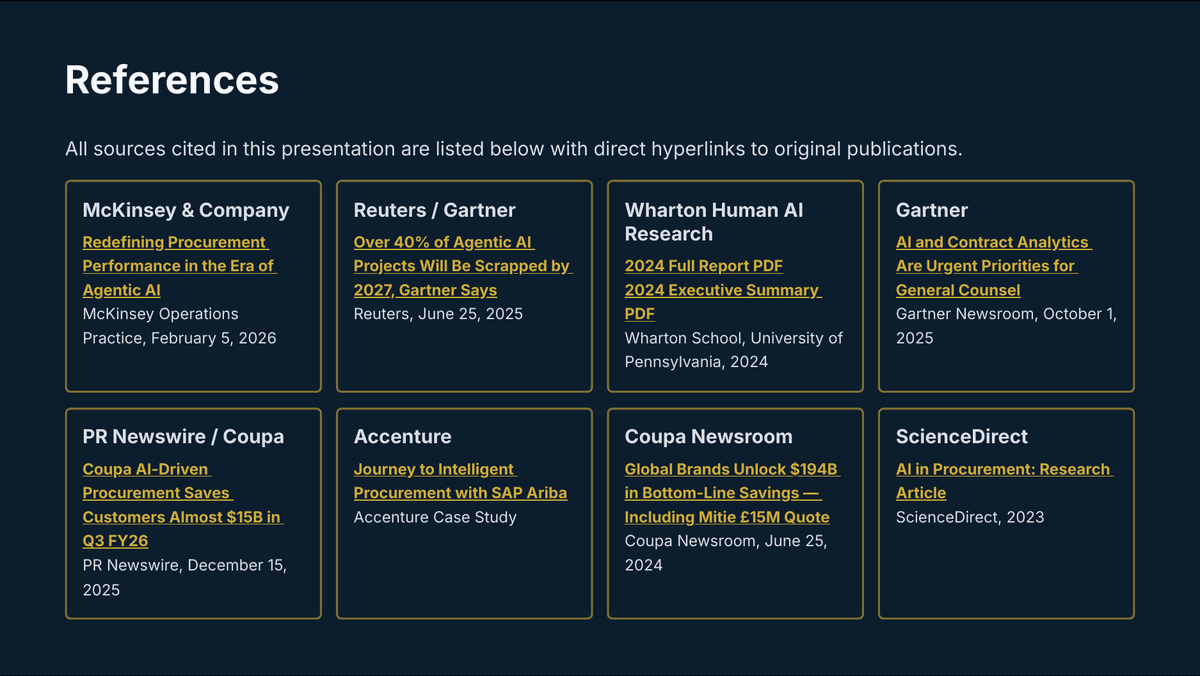
Procurement is ideal for AI agents because workflows are structured, rules-based, and document-heavy. This executive briefing covers where agents deliver value fastest - spend intelligence and savings discovery↗, contract clause risk detection↗, and supplier risk monitoring↗ - and the operating model required to scale safely. Includes the permission ladder for graduated agent autonomy, a KPI dashboard, and three proof-of-concept case studies from Accenture↗, Coupa↗, and Mitie.
Case Study
The Challenge
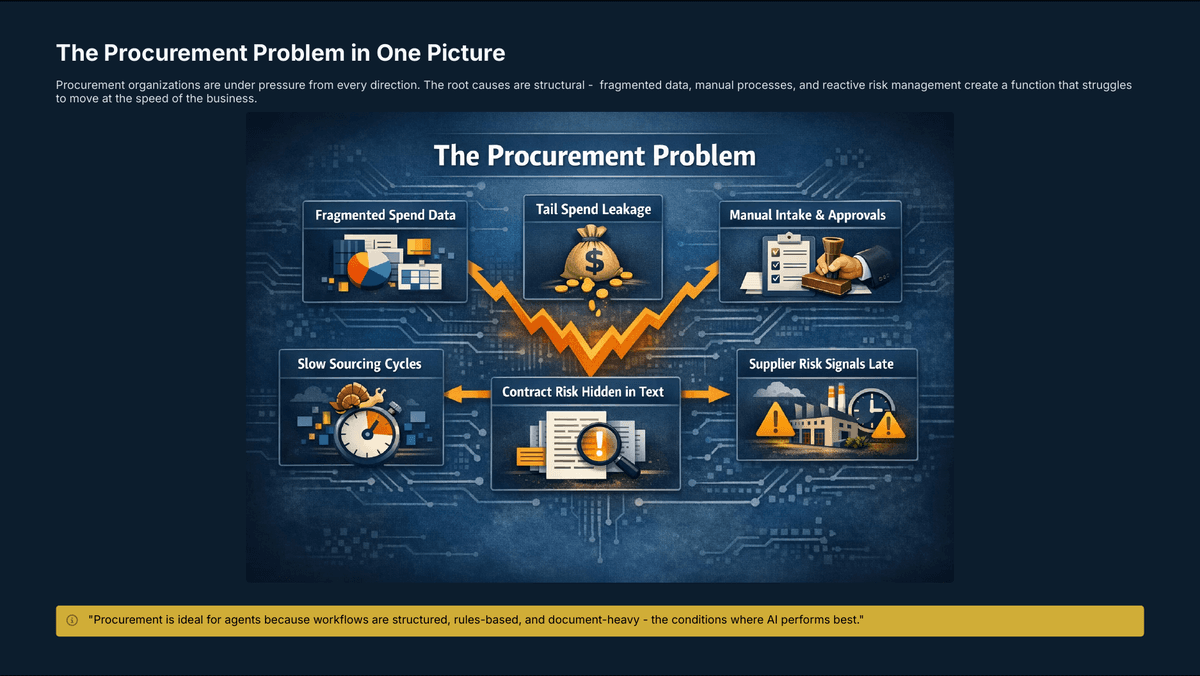
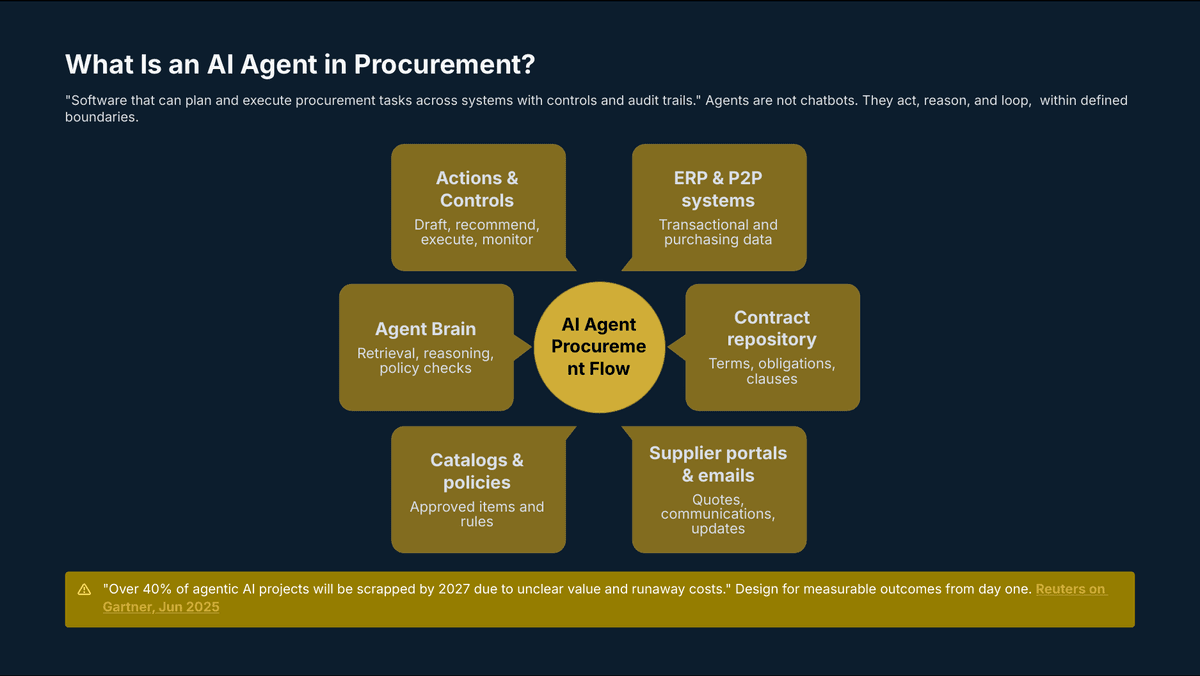
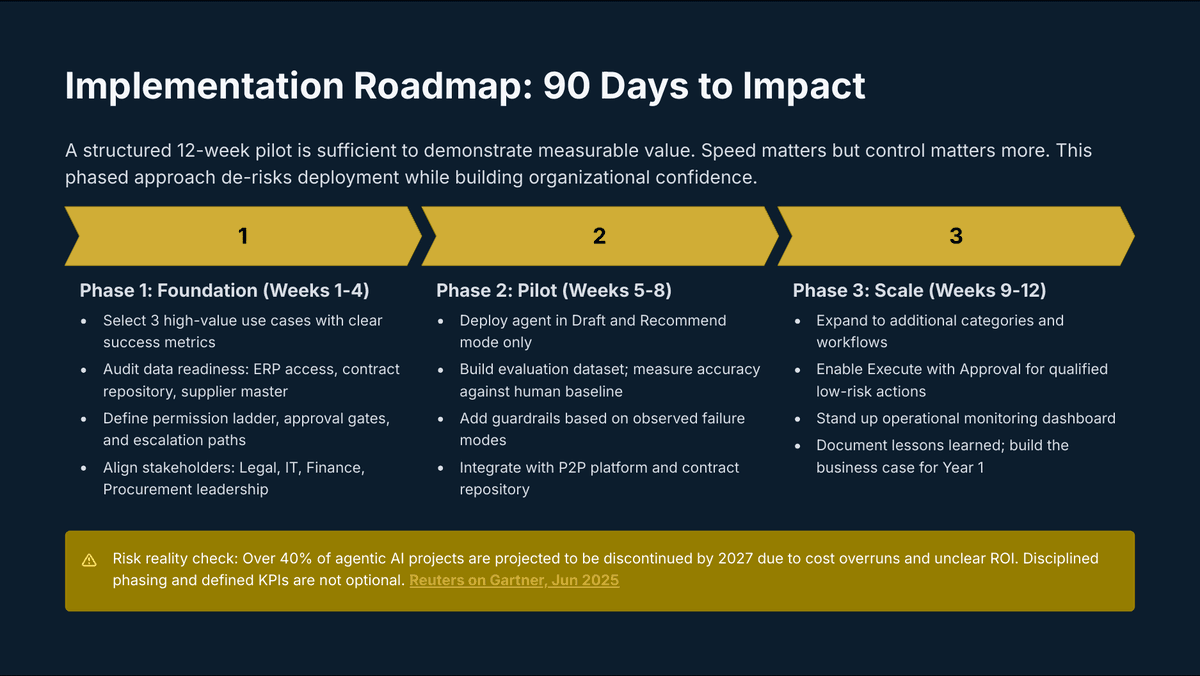
Procurement organizations are under pressure from every direction: fragmented data, manual processes, and reactive risk management create a function that struggles to move at the speed of the business. McKinsey (Feb 2026)↗ confirms that agentic AI is reshaping procurement performance, moving it from transactional work to strategic impact. Yet over 40% of agentic AI projects will be scrapped by 2027↗ due to unclear value and runaway costs, making the choice of first workflow and governance model critical.
The Solution
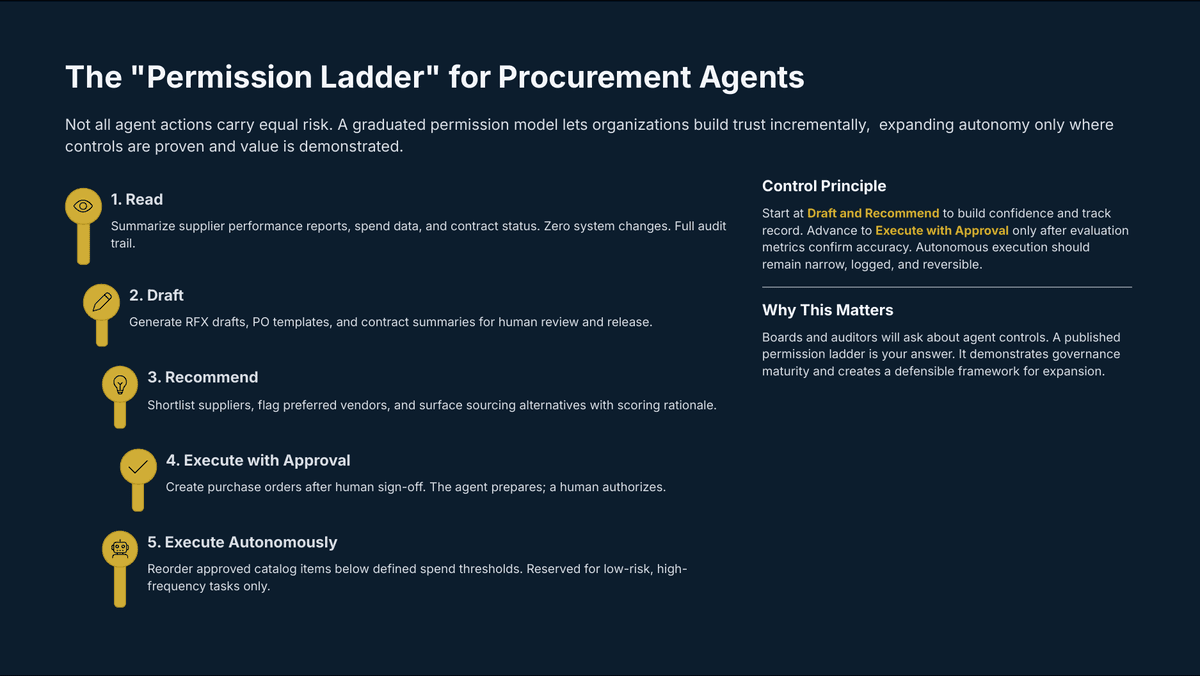
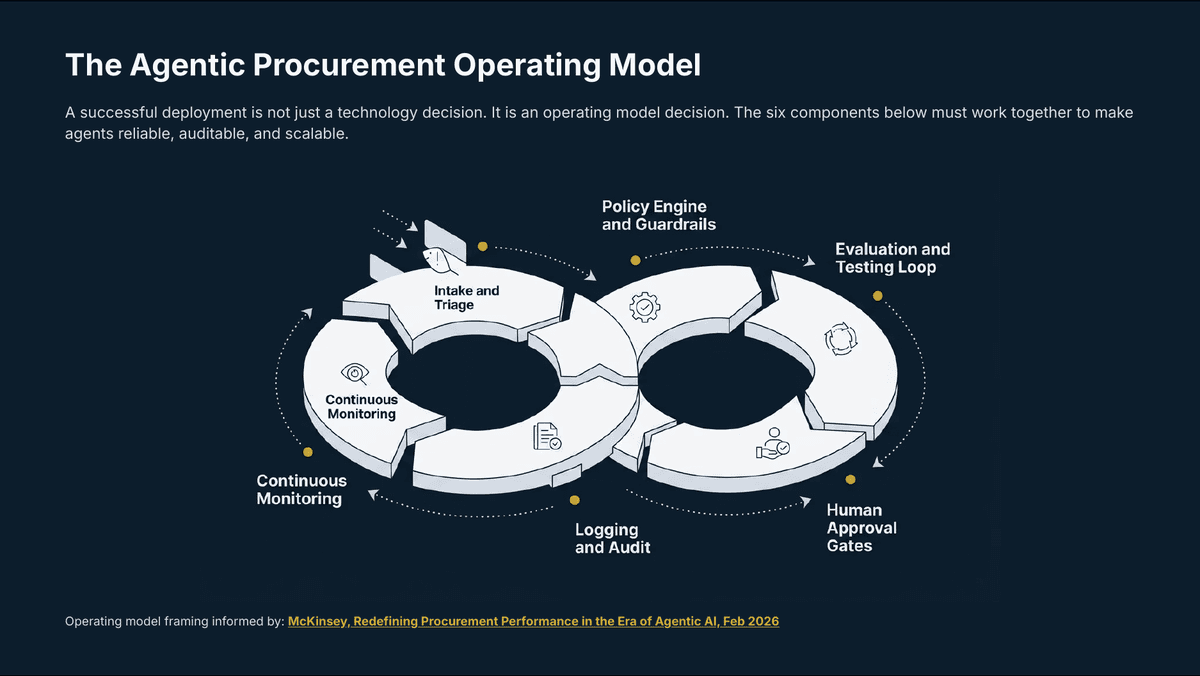
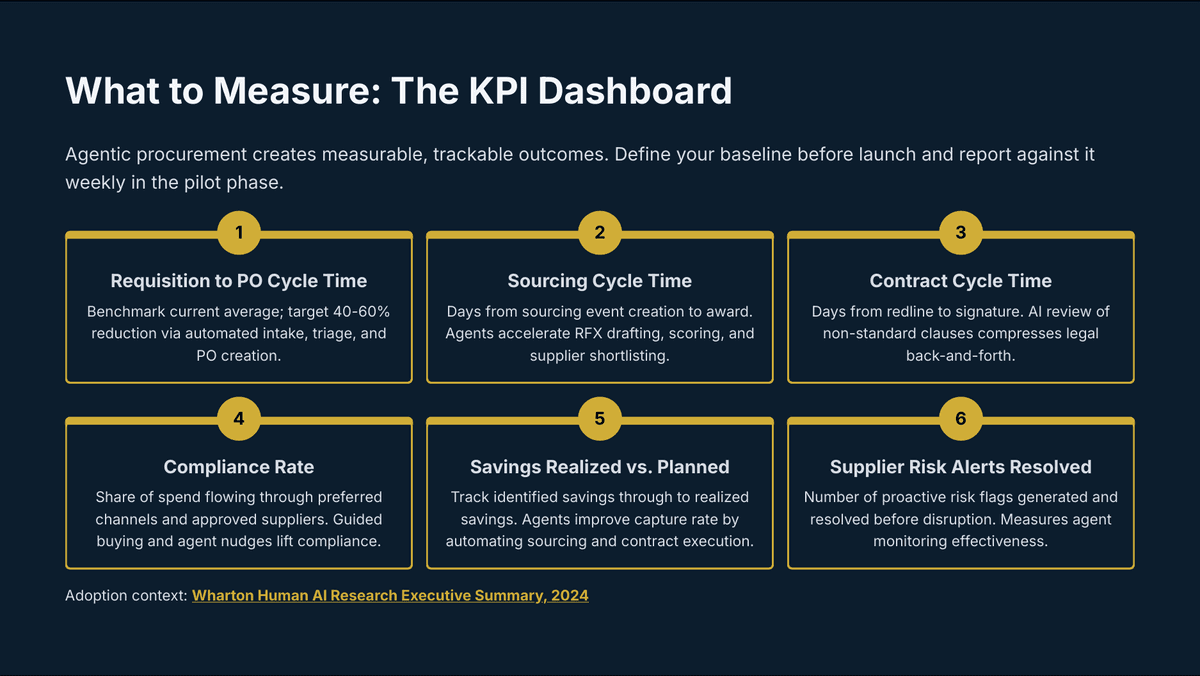
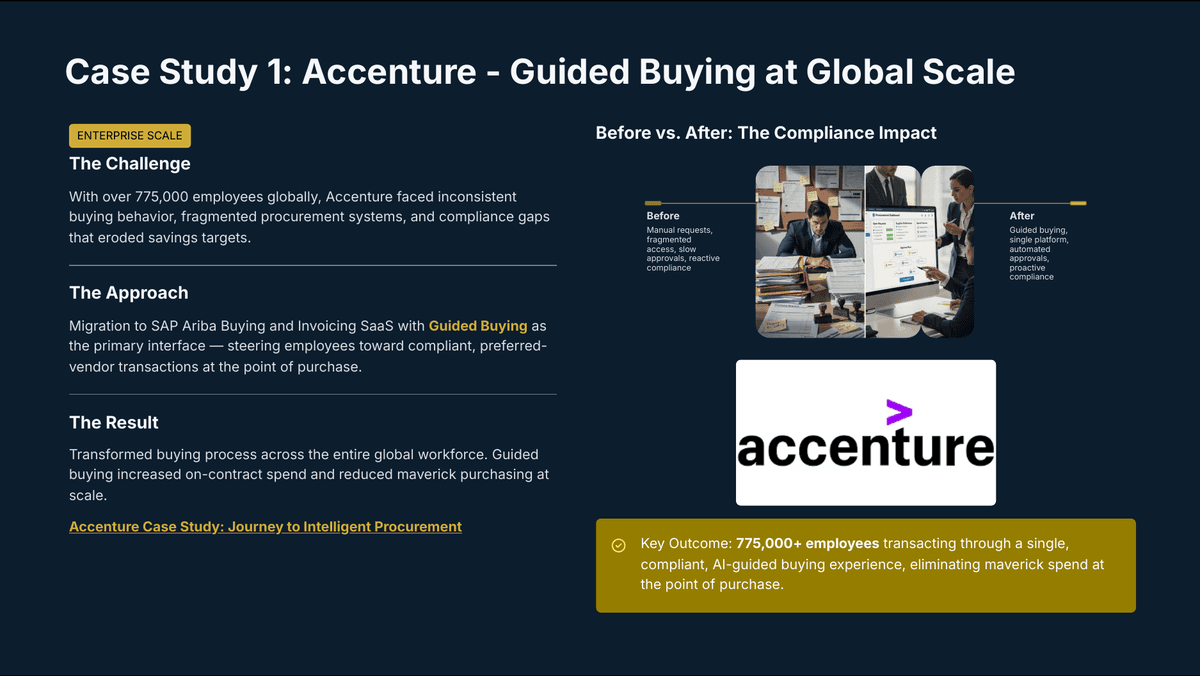
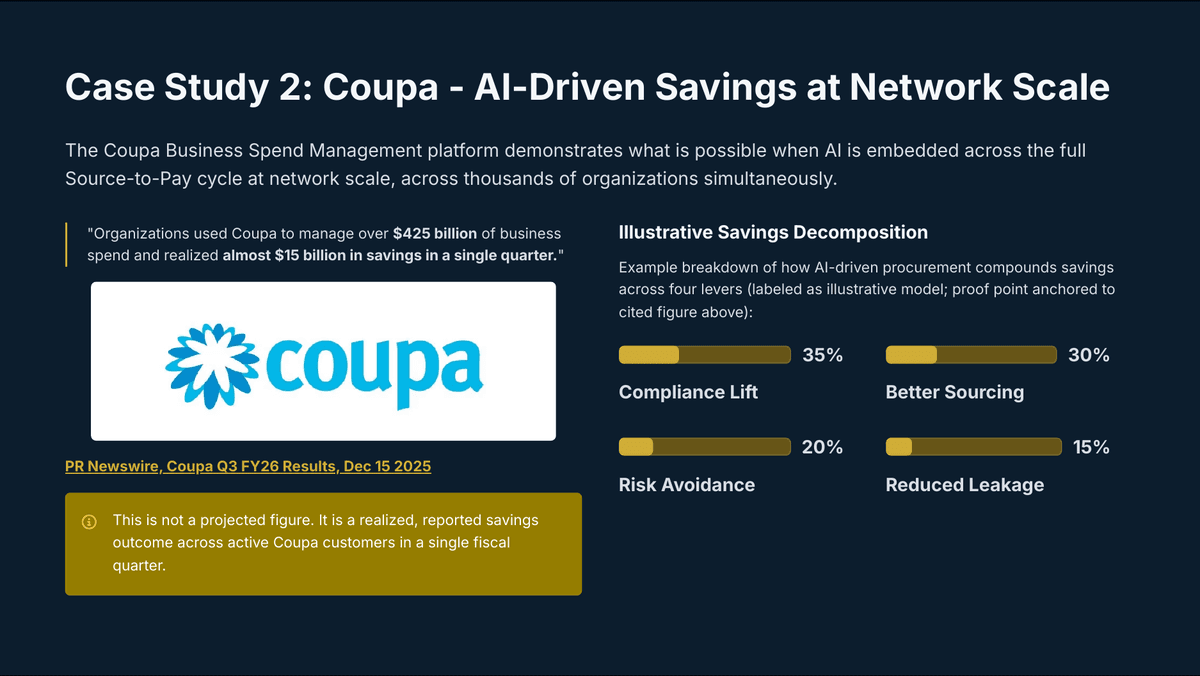
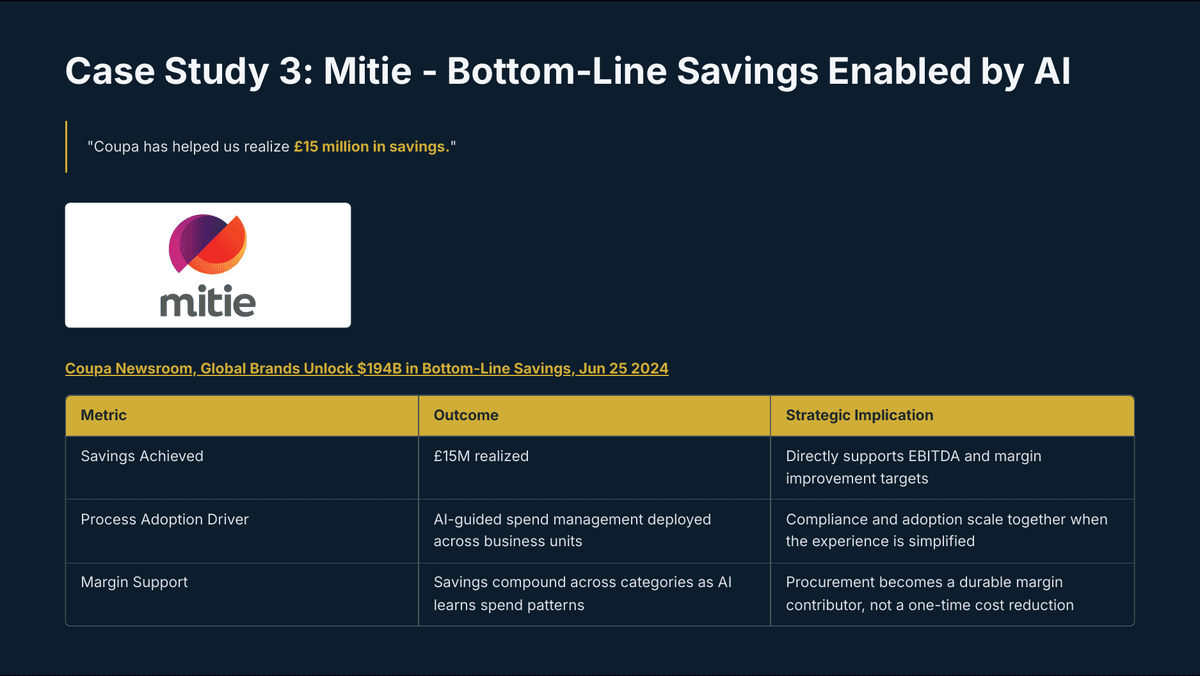
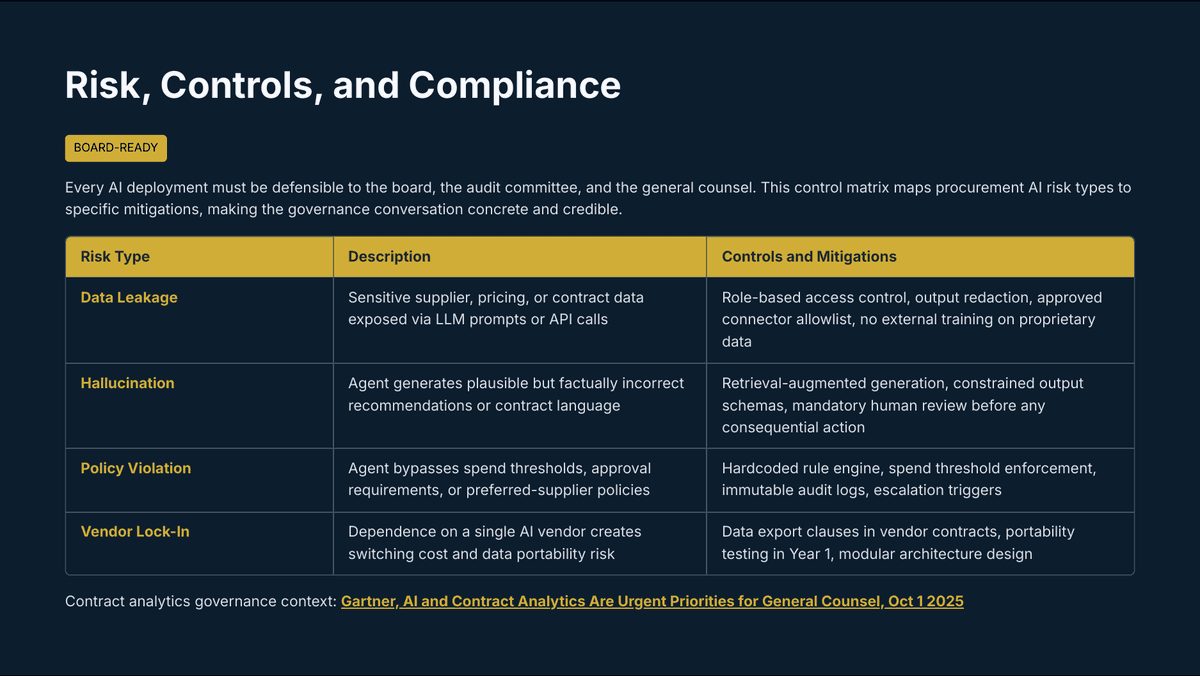
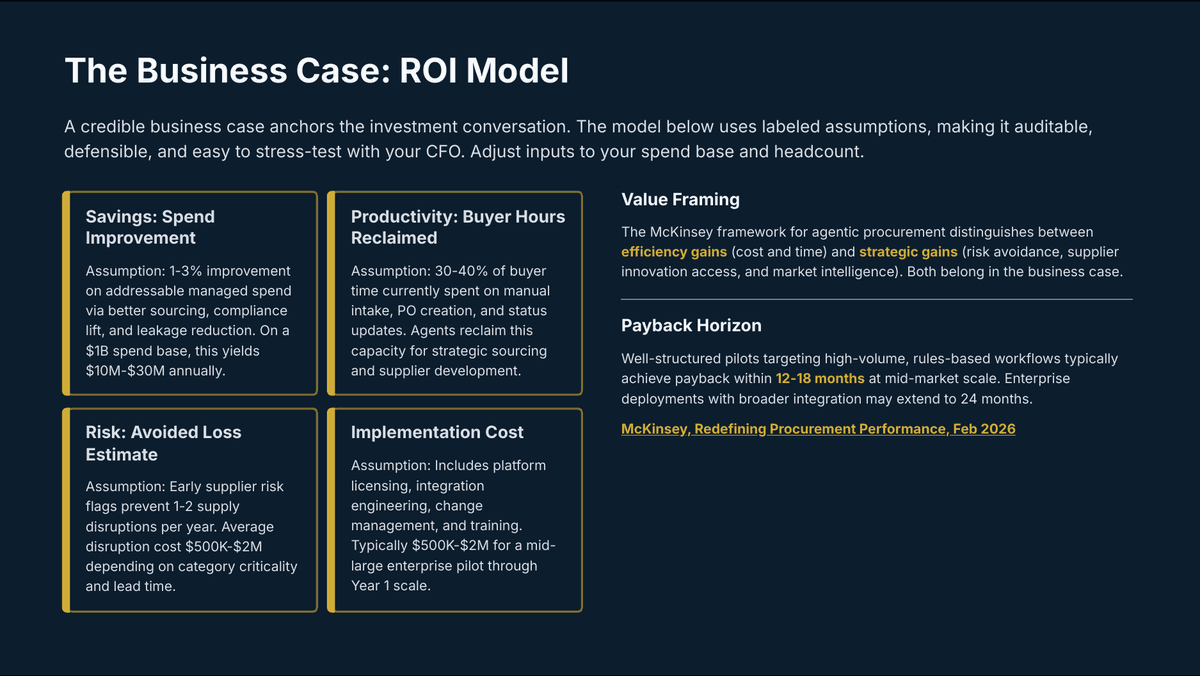
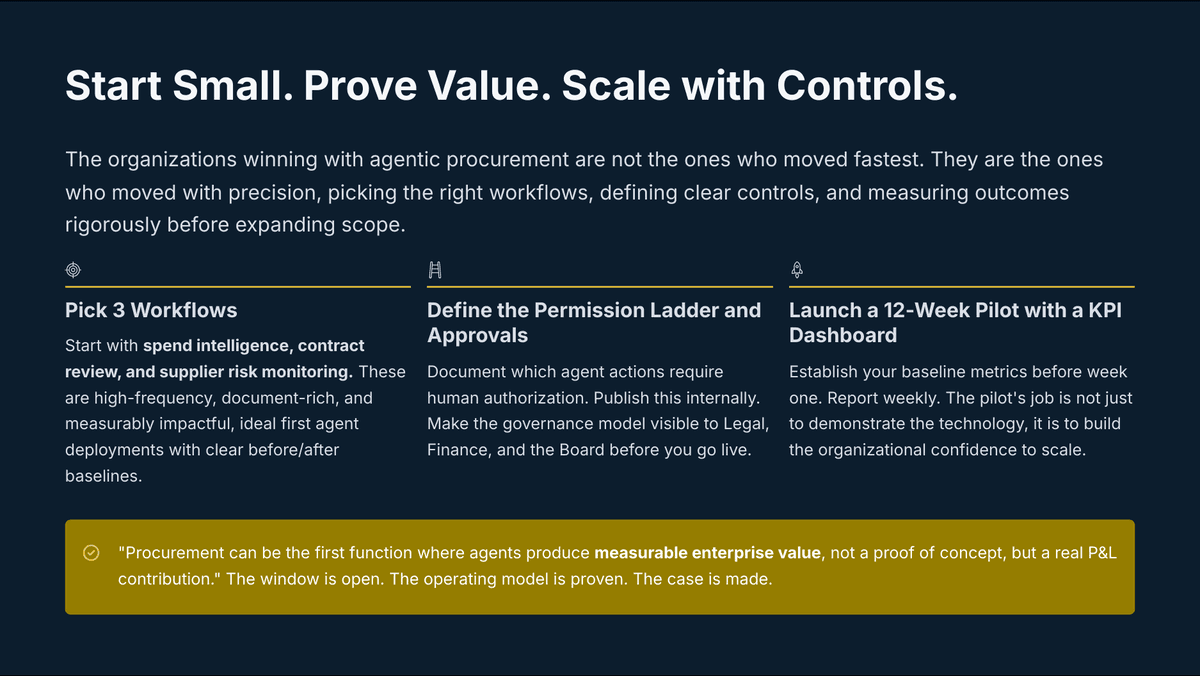
Developed a layered framework covering the entire agentic procurement journey: the permission ladder (5 tiers from read to autonomous execution), the 6-component operating model (strategy, data, technology, process, people, governance), and a 6-metric KPI dashboard with baselines. The framework is anchored in three enterprise case studies: Accenture's guided buying deployment↗ across 775,000+ employees, Coupa's network-scale savings↗ of nearly $15B in a single quarter across $425B managed spend, and Mitie's facilities management transformation. Selection rubric provided for scoring workflow candidates across 5 criteria before committing engineering and governance resources.
Key Results
5-tier permission ladder from read to autonomous execution
Framework
Accenture (775k+ employees), Coupa ($425B spend managed), Mitie
Case Studies
6 metrics: cycle time, sourcing, contract, compliance, savings, risk
KPI Dashboard
Spend intelligence, contract risk, supplier monitoring - measurable ROI within 90 days
Value Pools
Key Takeaways
17
Pages
3
Enterprise Case Studies
5
Permission Ladder Tiers
6
Procurement KPIs
View Document
Download or Open in New Tab to access the links to download or access the tools / templates or research materials within the document.
Responsibilities
- Authored the full executive briefing on AI agents in procurement
- Developed the permission ladder framework for graduated agent autonomy across 5 tiers from read to autonomous execution
- Created the agentic procurement operating model covering 6 components: strategy, data, technology, process, people, and governance
- Analyzed 3 case studies: Accenture guided buying at global scale, Coupa AI-driven savings network, and Mitie facilities management
- Built the KPI dashboard framework covering 6 metrics: requisition to PO cycle time, sourcing cycle time, contract cycle time, compliance rate, savings realized, and supplier risk alerts
Outcomes
17
Pages
3
Enterprise Case Studies
5
Permission Ladder Tiers
6
Procurement KPIs