Back to white papers
white-paper
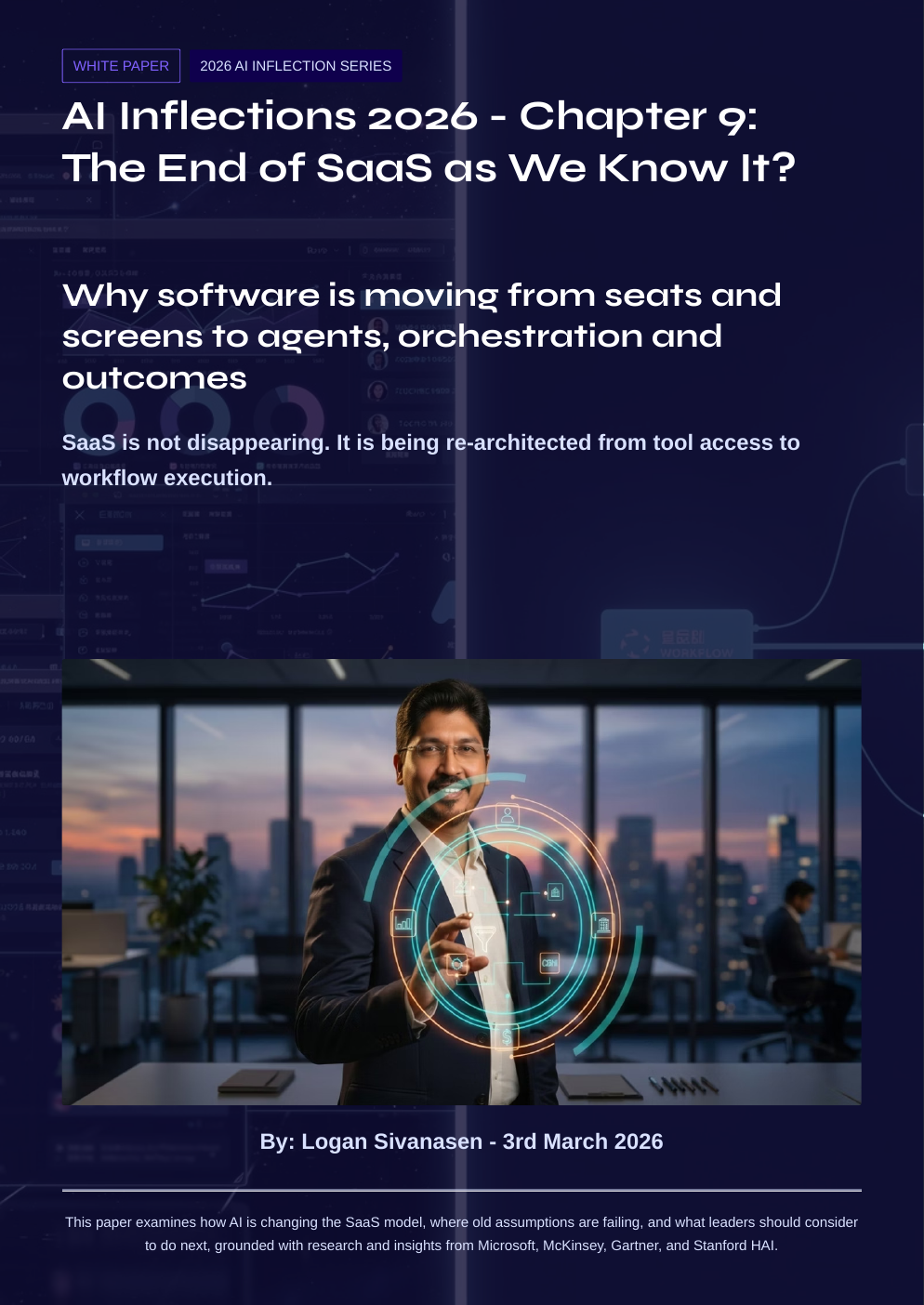
White Paper: The 2026 AI Inflection Series - Chapter 9: The End of SaaS as We Know It?
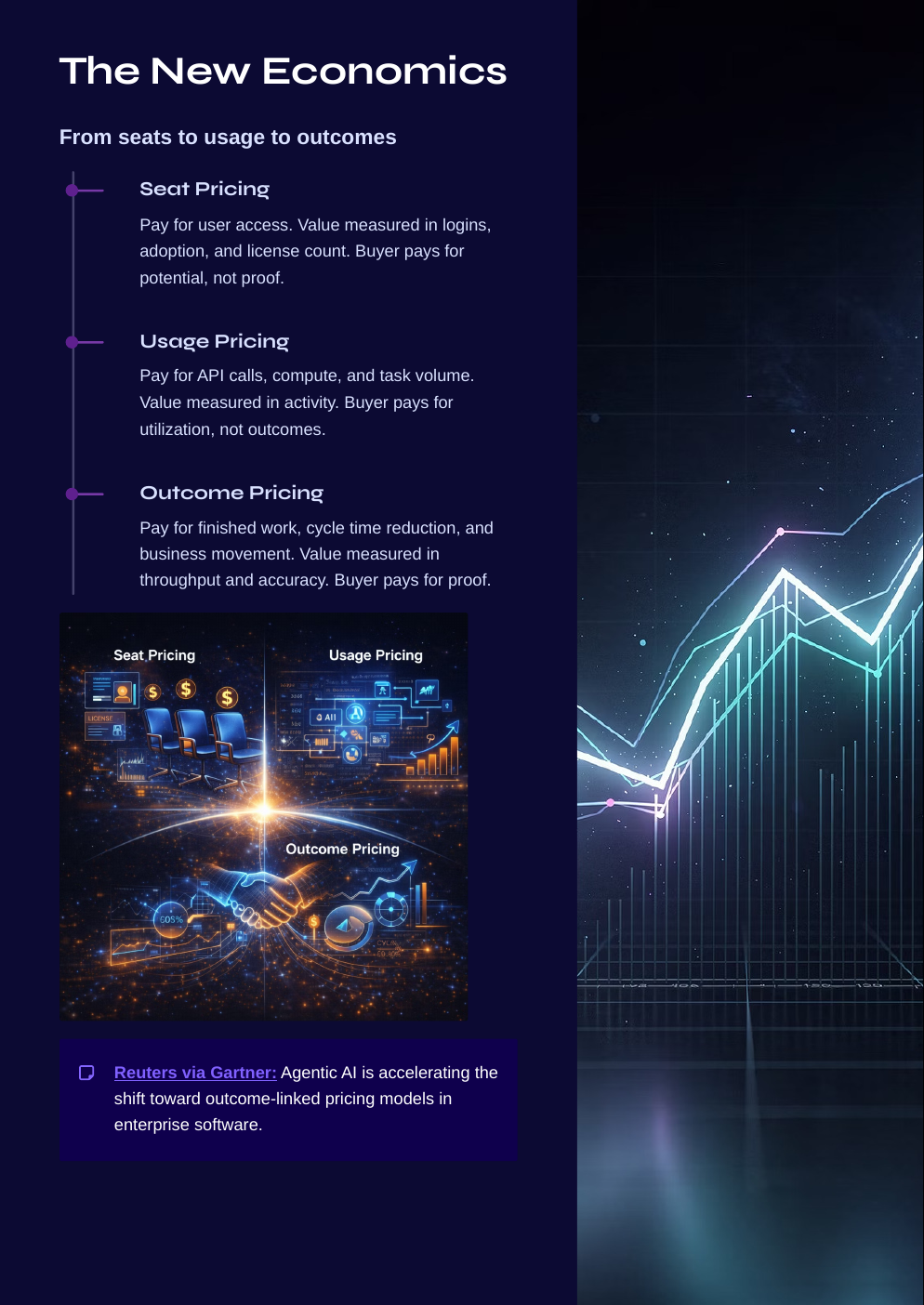
Chapter 9 of The 2026 AI Inflection Series examines how AI is changing the SaaS model from tool access to workflow execution. Covers why old assumptions are failing, what survives, what gets squeezed, the new software stack, outcome-linked pricing, governance as product design, and an operator roadmap for the next 12 months.
Author / Lead
2026-03-03
Overview
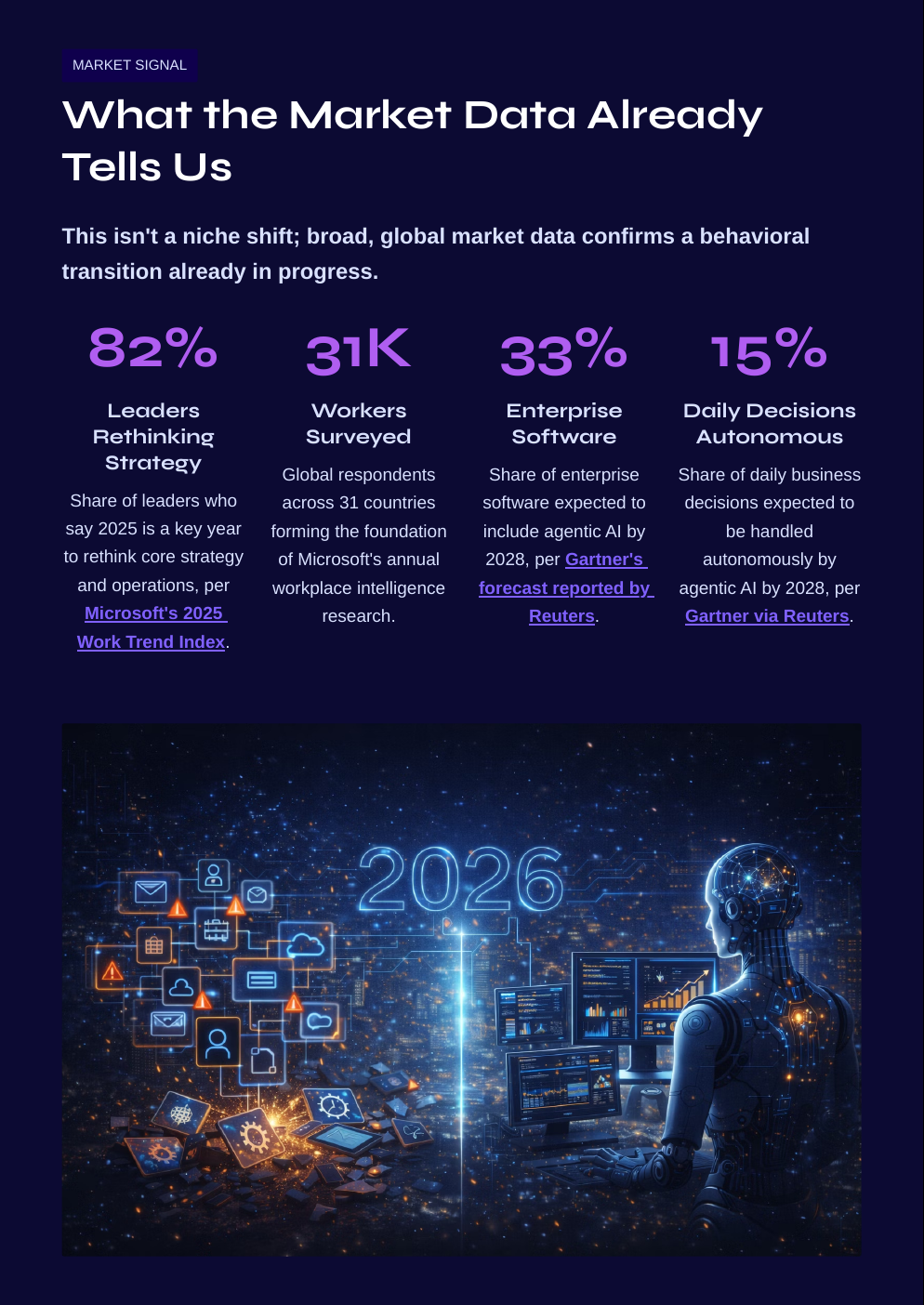
Chapter 9 of The 2026 AI Inflection Series. SaaS is not disappearing. It is being re-architected from tool access to workflow execution. This paper examines how AI is changing the SaaS model, where old assumptions are failing, and what leaders should do next. Grounded with research and insights from Microsoft↗, McKinsey↗, Gartner↗ via Reuters↗, and Stanford HAI↗.
Case Study
The Challenge
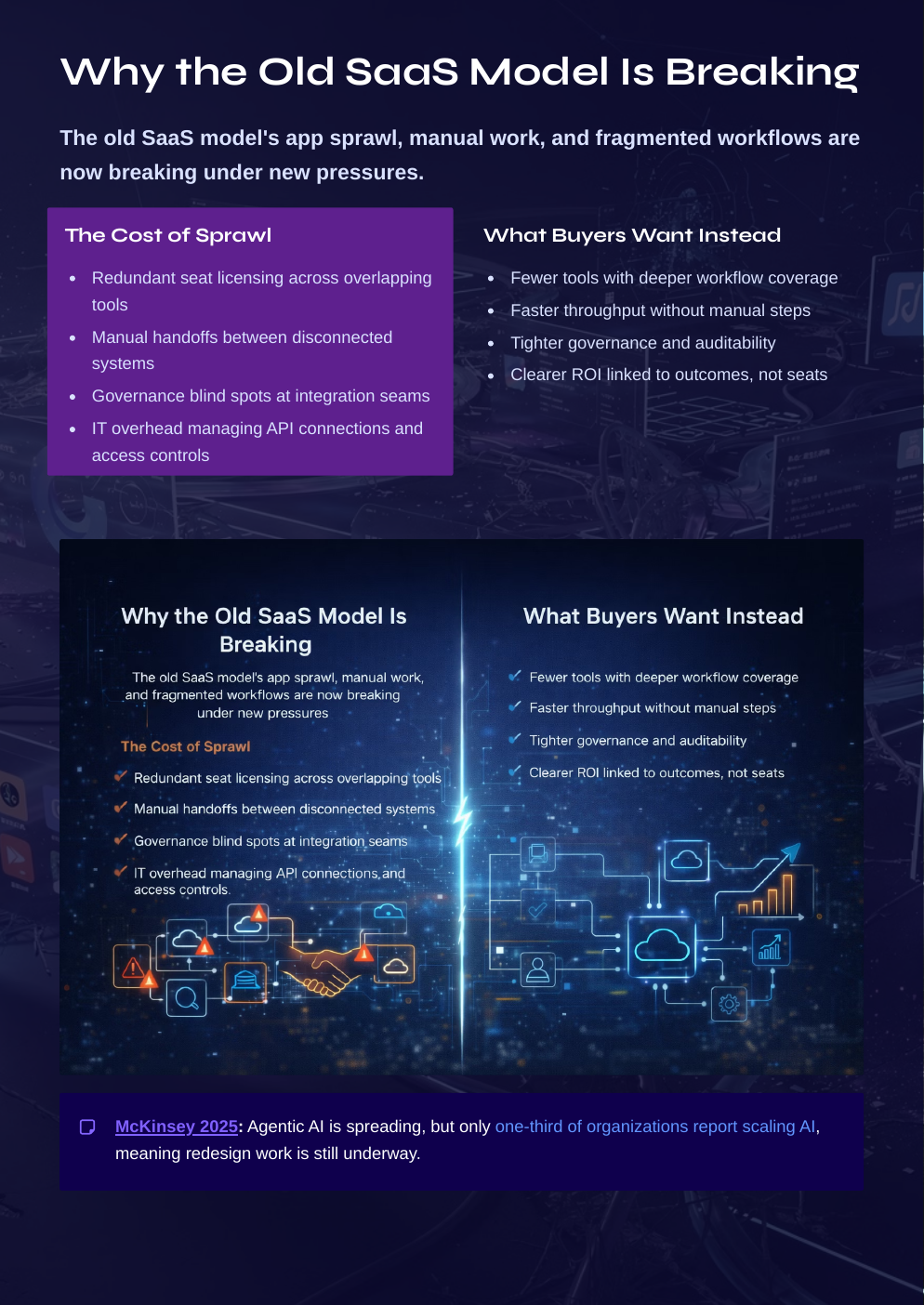
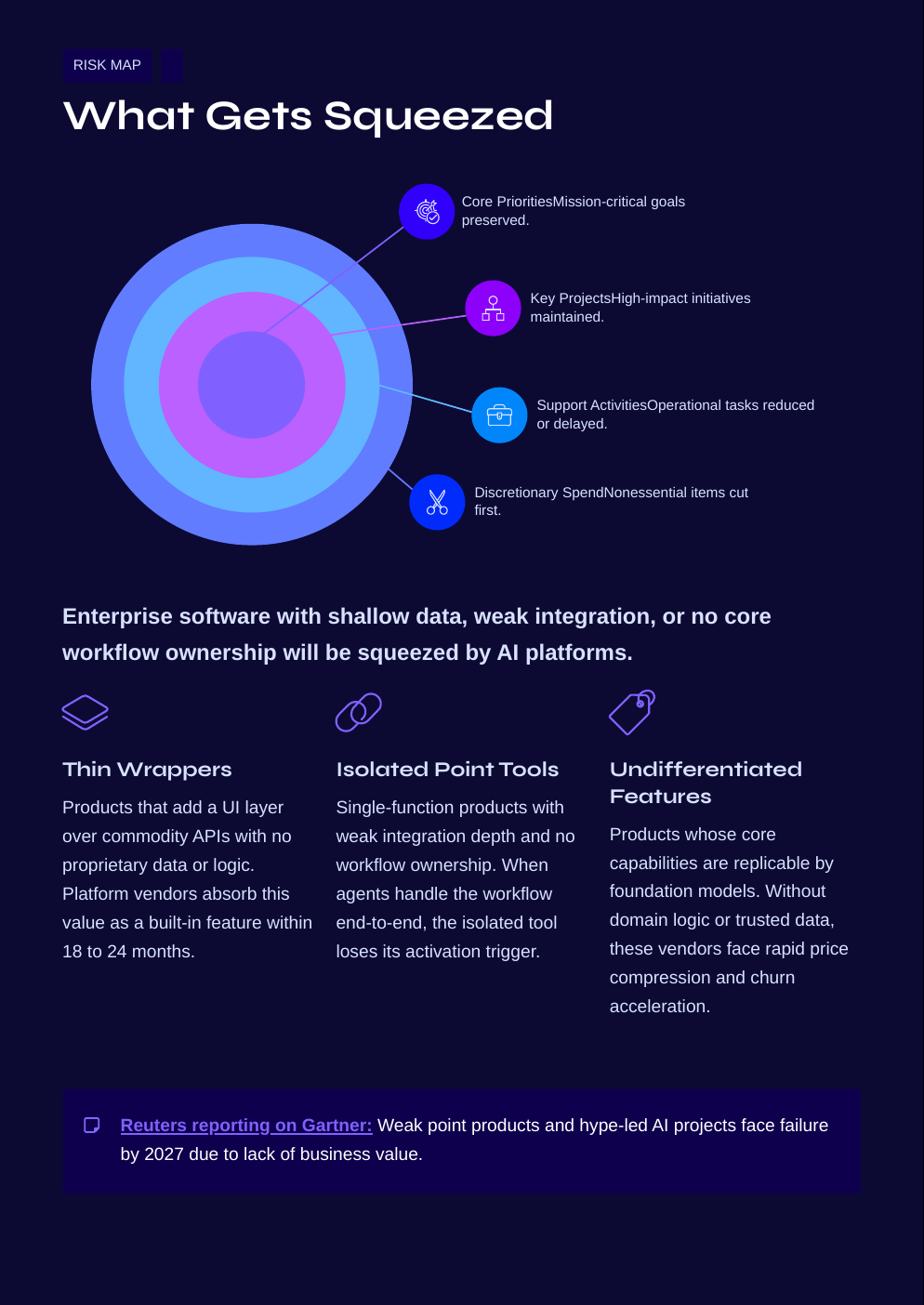
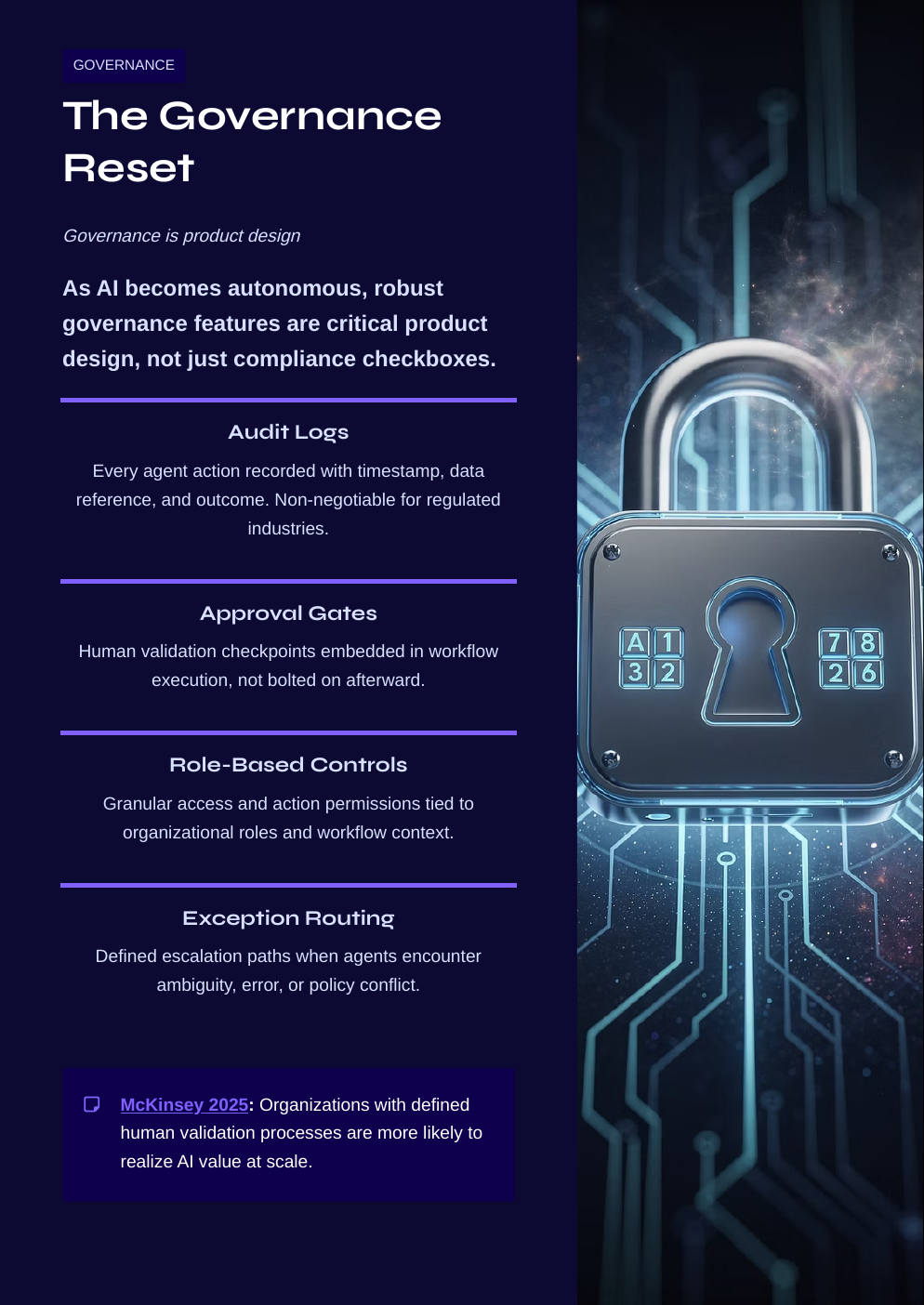
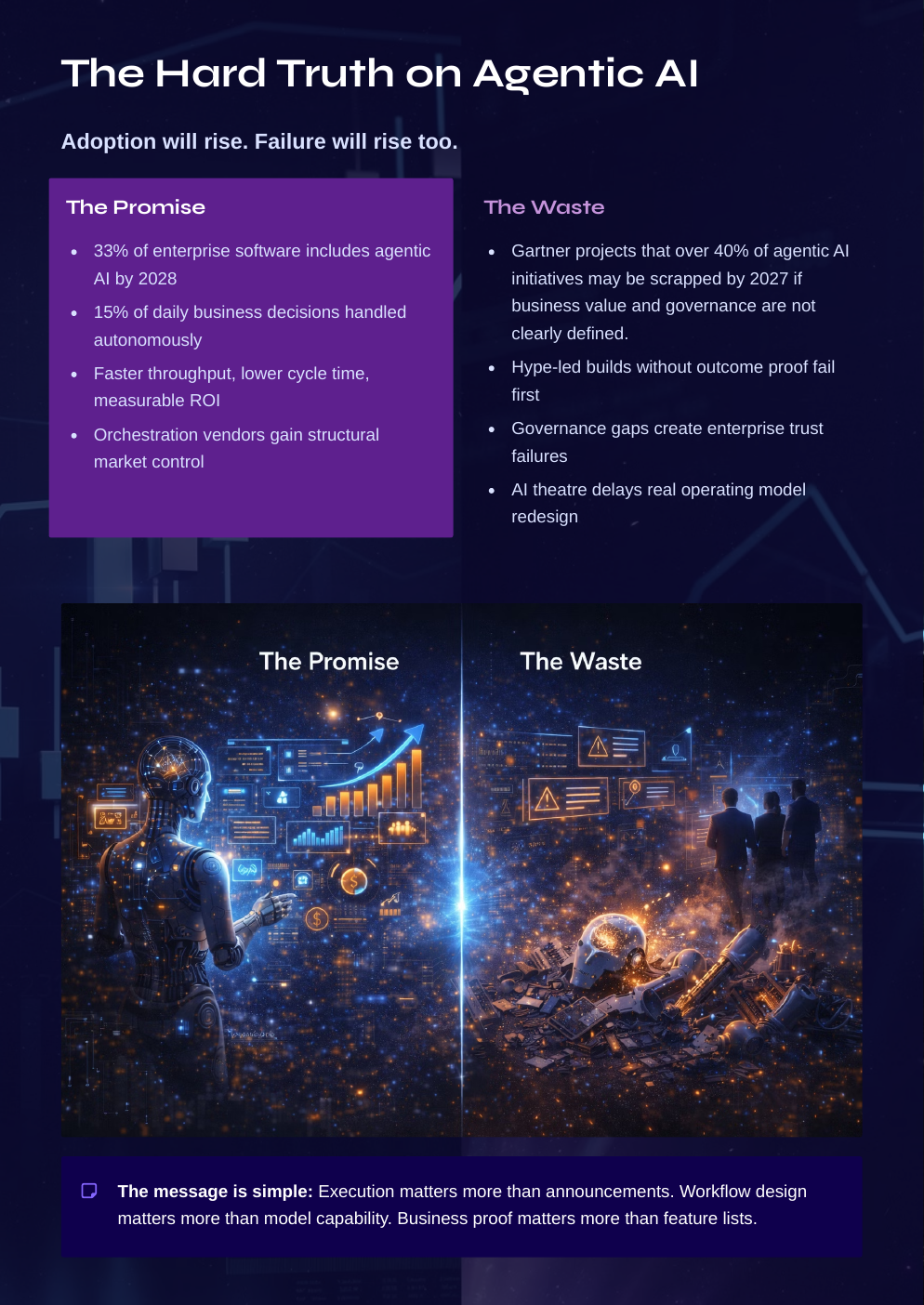
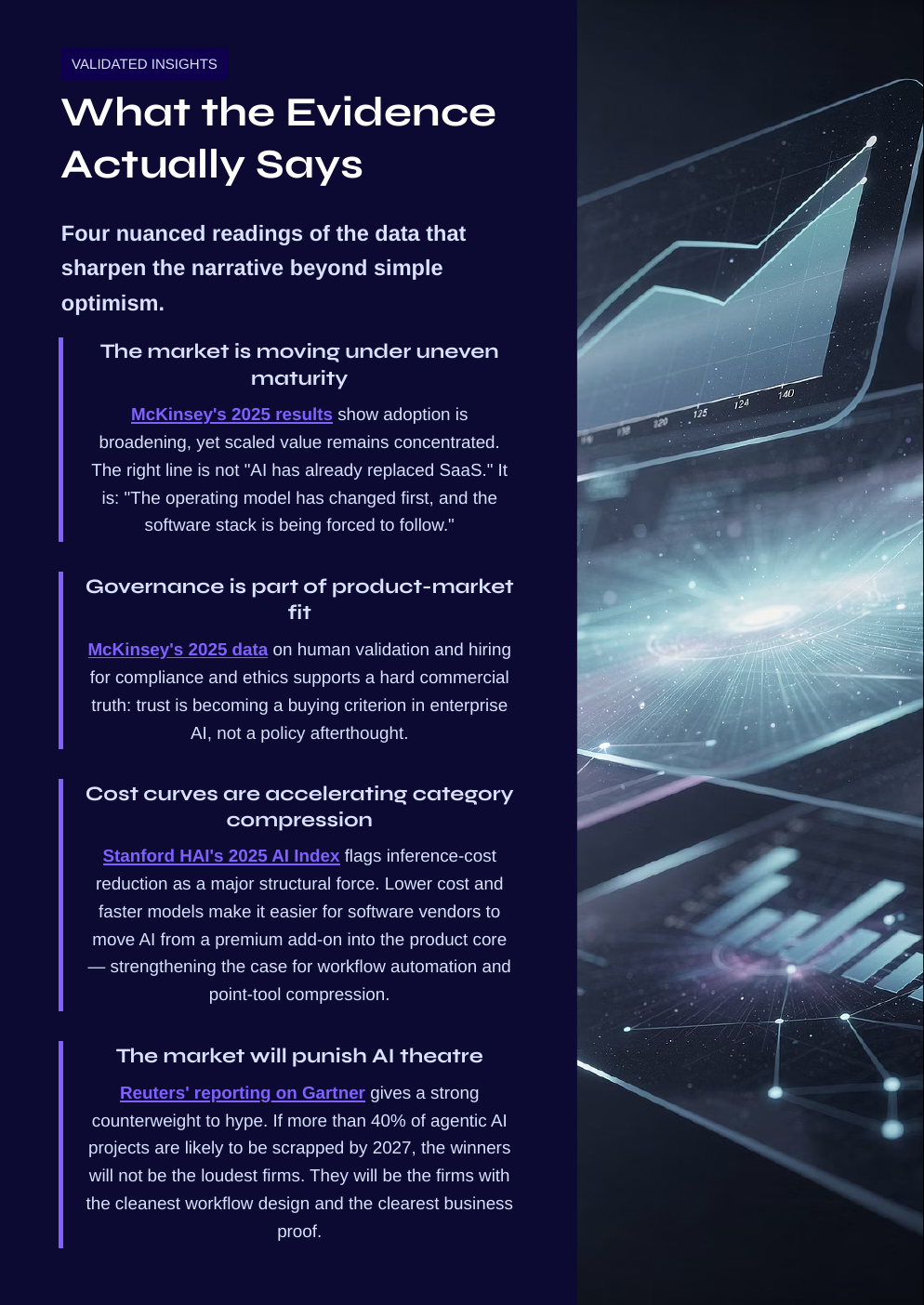
The old SaaS model of app sprawl, manual work, and fragmented workflows is breaking under new pressures. Redundant seat licensing across overlapping tools, manual handoffs between disconnected systems, and governance blind spots at integration seams. McKinsey↗ reports 78% of companies use gen AI but most report no meaningful bottom-line impact — the "gen AI paradox." Gartner↗ projects over 40% of agentic AI initiatives may be scrapped by 2027 if business value and governance are not clearly defined.
The Solution
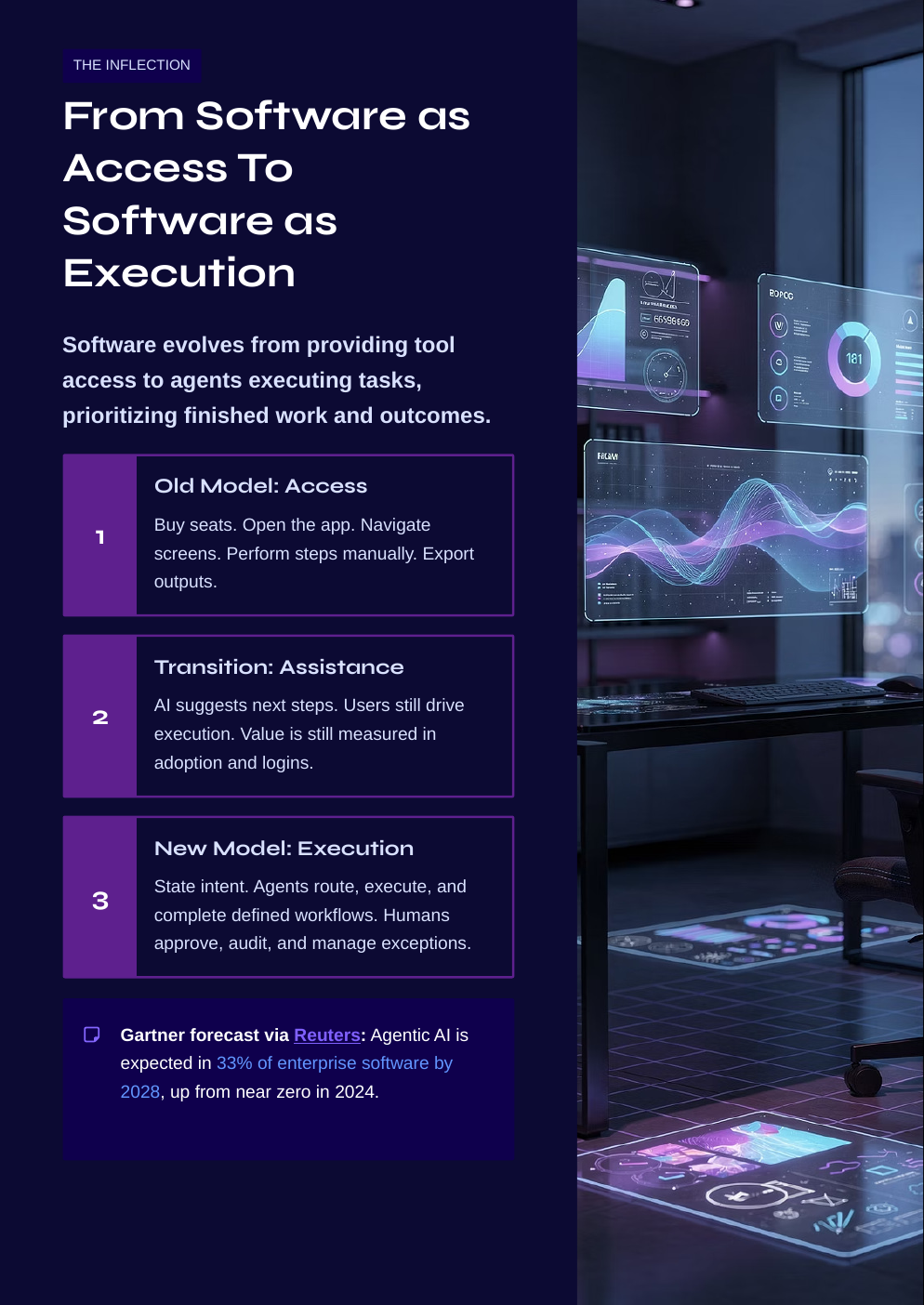
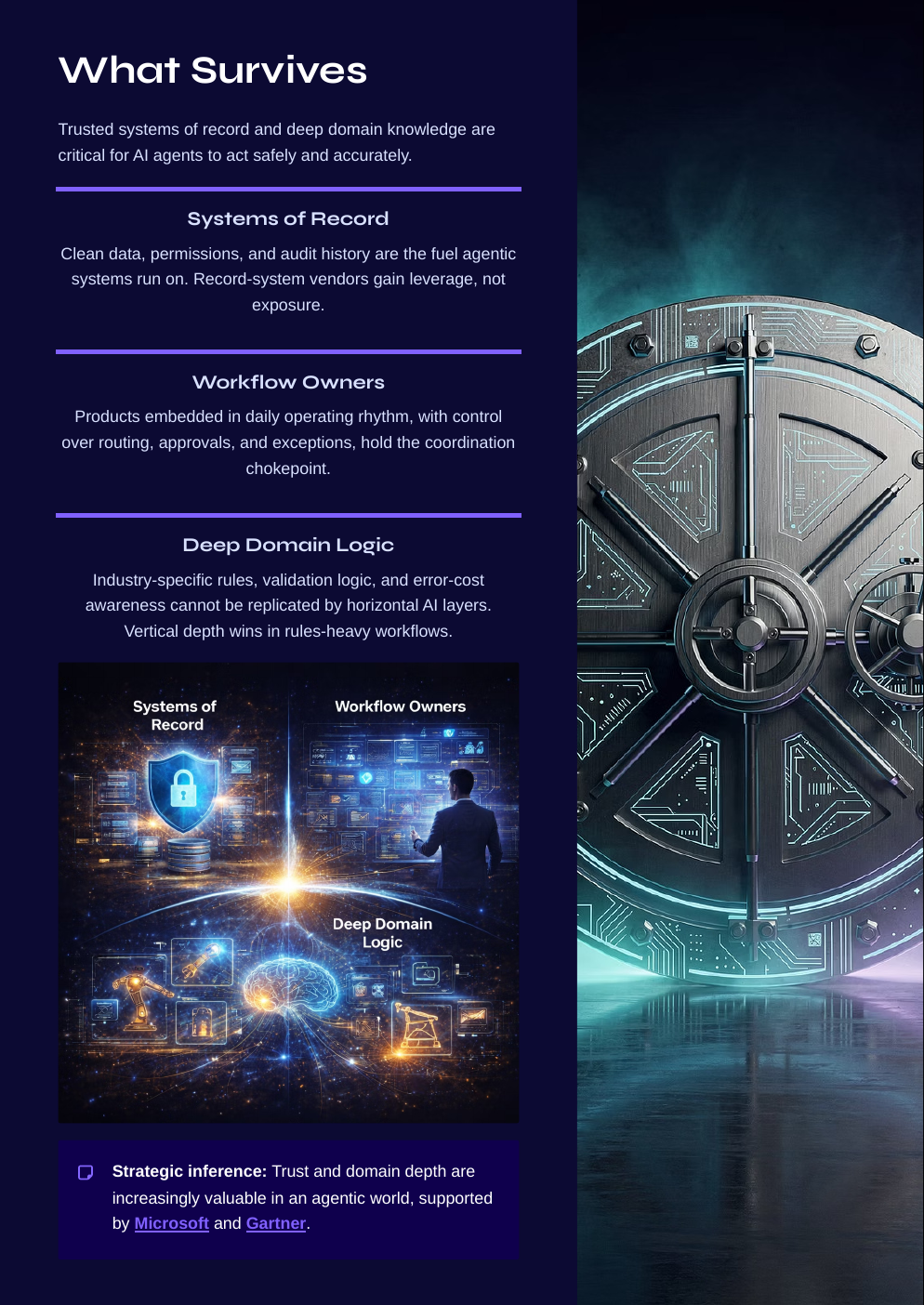
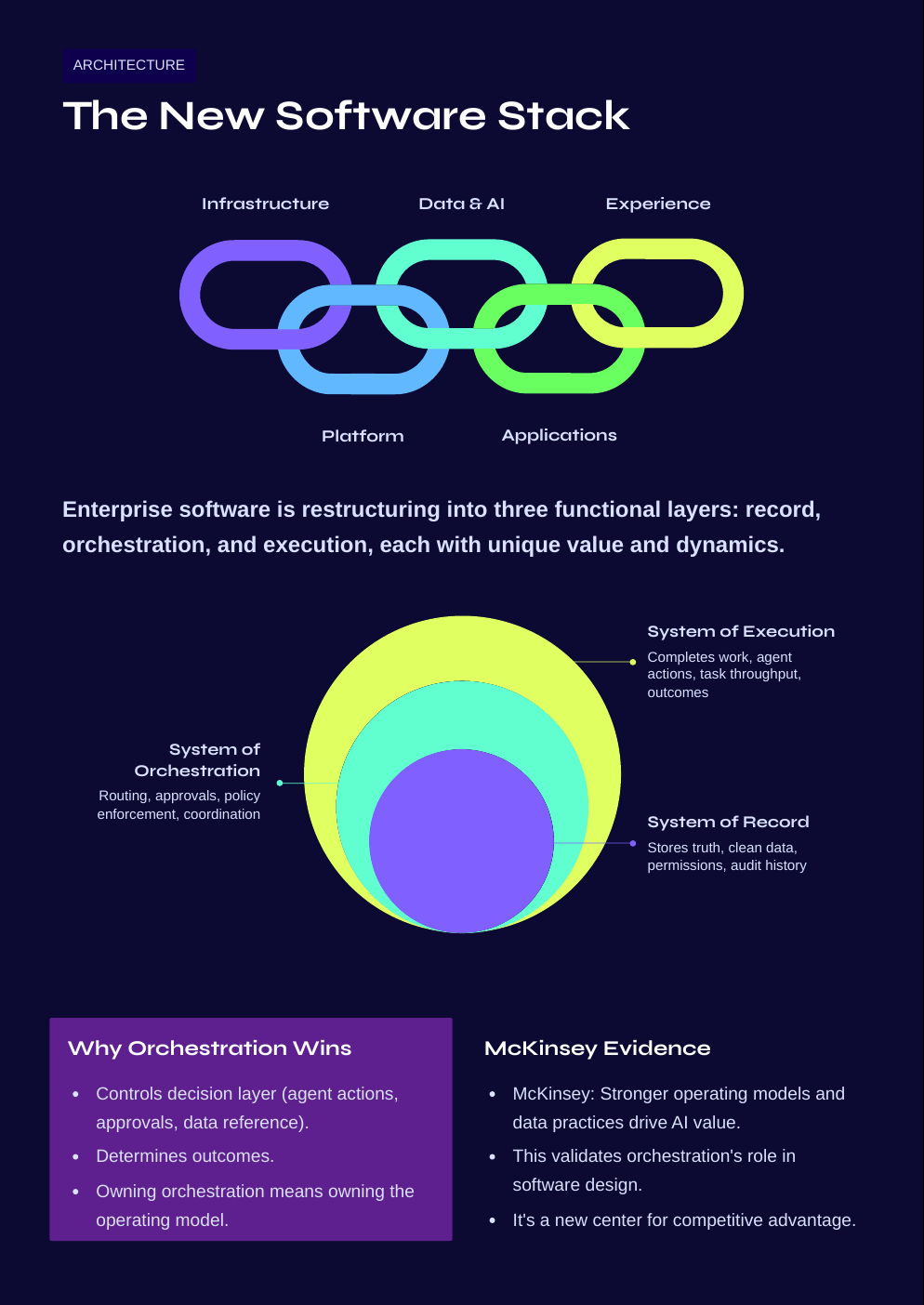
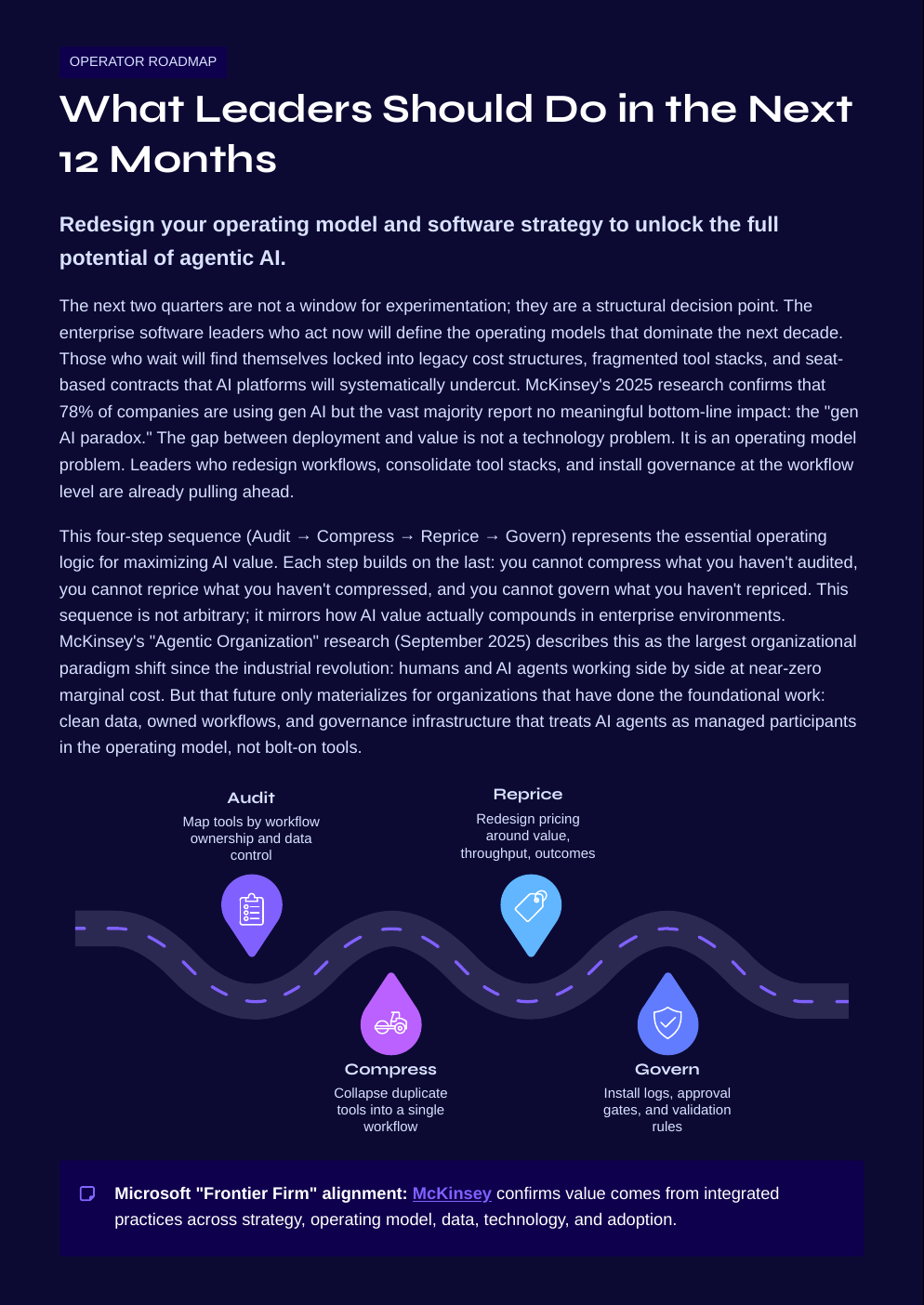
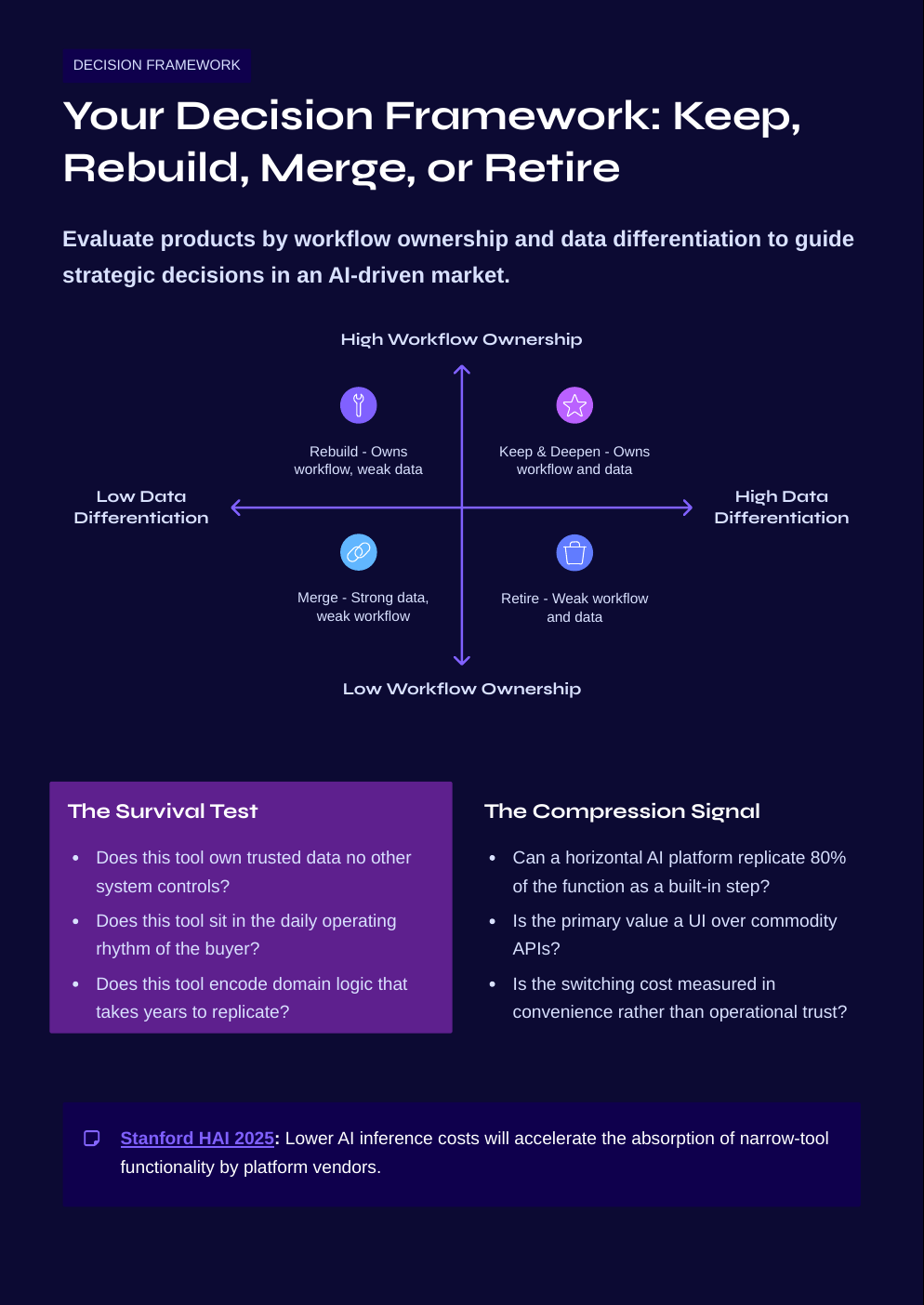
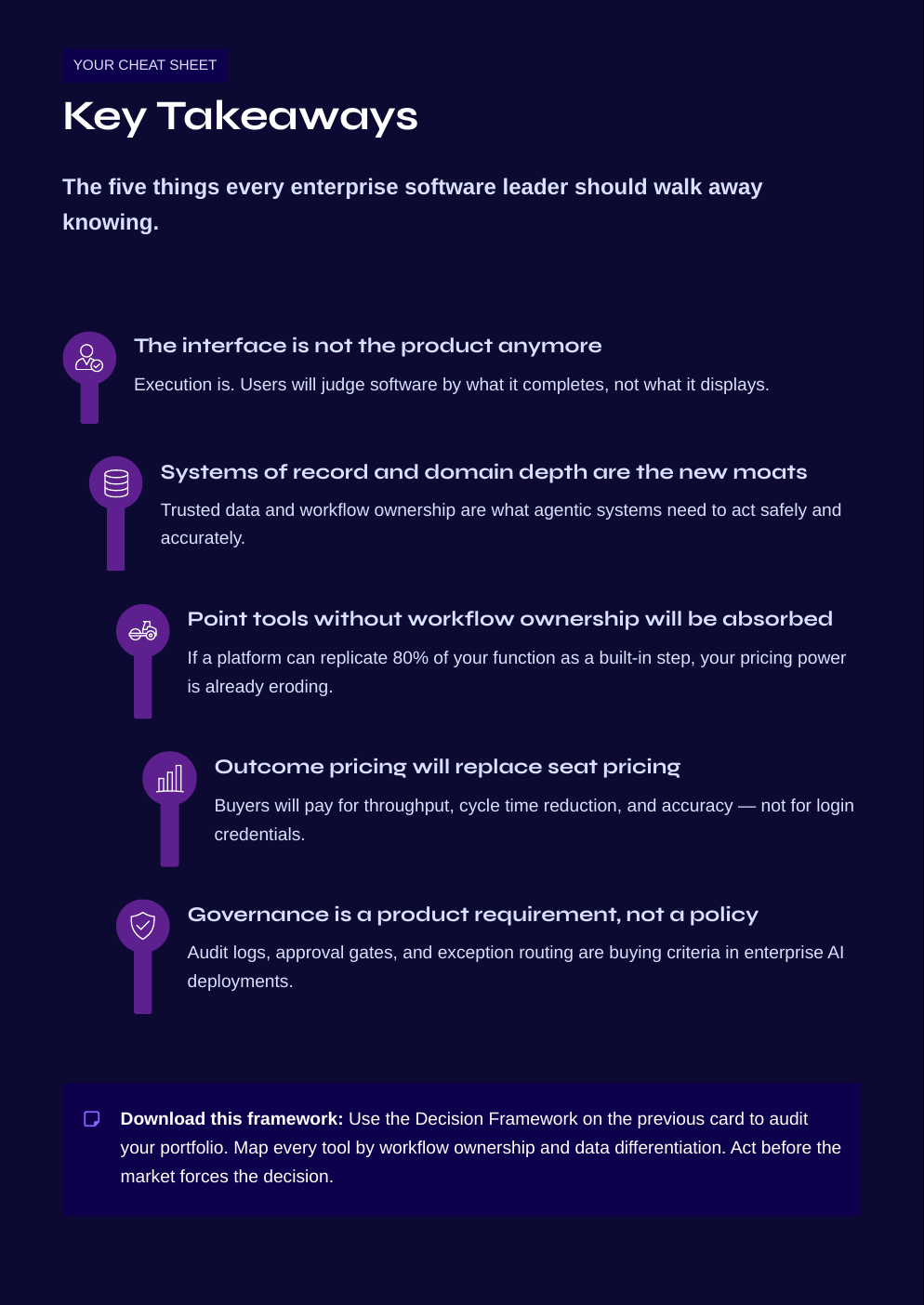
Developed a comprehensive framework for evaluating and restructuring enterprise software strategy in an agentic AI era. Introduces three functional layers (System of Record, System of Orchestration, System of Execution), a decision framework (Keep, Rebuild, Merge, or Retire) based on workflow ownership and data differentiation, and a four-step operator roadmap: Audit → Compress → Reprice → Govern. Incorporates Microsoft's "Frontier Firm"↗ thesis, Stanford HAI↗ inference cost analysis, and McKinsey's agentic organization↗ research.
Key Results
16 pages
Framework Scope
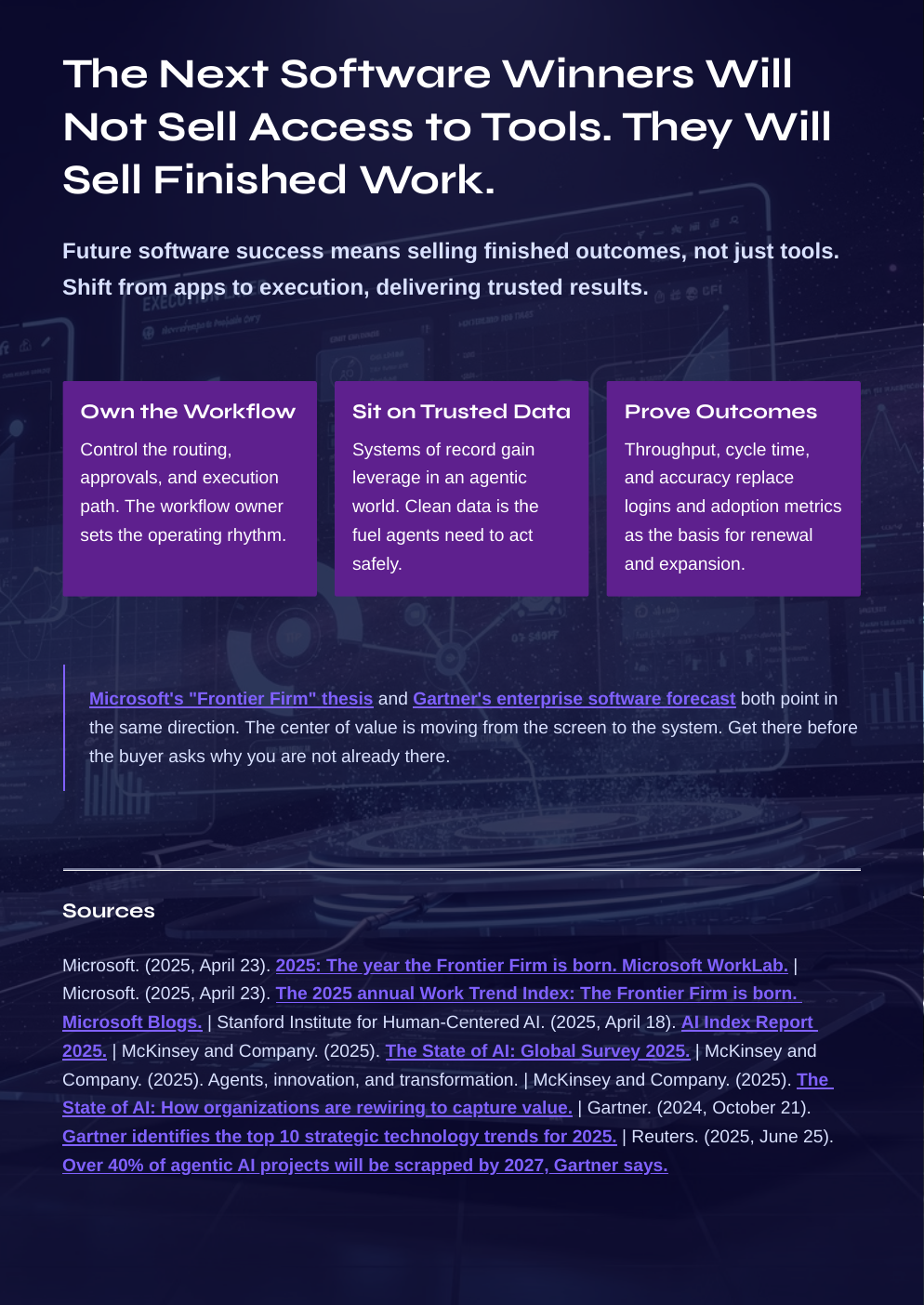
Microsoft, McKinsey, Gartner, Stanford HAI, Reuters
Research Sources
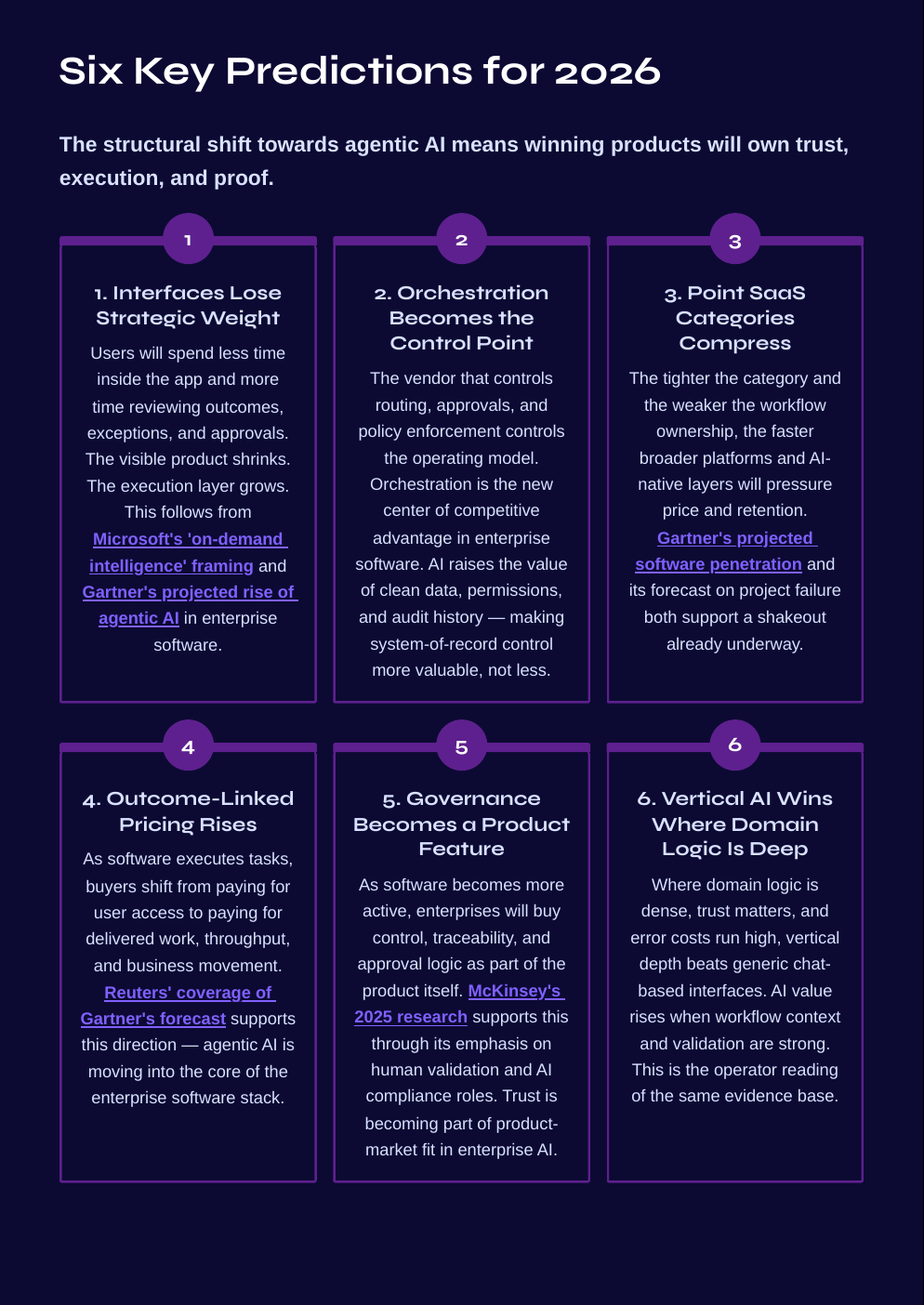
6 key predictions for 2026
Predictions
Keep/Rebuild/Merge/Retire matrix
Decision Framework
View Document
Download or Open in New Tab to access the links to download or access the tools / templates or research materials within the document.
Responsibilities
- Authored the full 16-page white paper on the future of SaaS in an agentic AI era
- Developed framework for evaluating software by workflow ownership and data differentiation
- Created the Audit-Compress-Reprice-Govern operator roadmap for enterprise software leaders
- Synthesized research from Microsoft, McKinsey, Gartner, Stanford HAI, and Reuters
- Designed decision framework (Keep, Rebuild, Merge, or Retire) for software portfolio evaluation
Outcomes
16
Pages
9
Chapter in Series
6
Key Predictions for 2026
1
Decision Framework